• Fri frakt över 249 kr
  • •
  • Snabba leveranser
  • •
  • Billiga böcker
Kundservice

Du är på sajten för privatpersoner.

Företag, bibliotek eller offentlig verksamhet?

Du handlar på classic.bokus.com, där alla dina funktioner finns intakta.
Till classic.bokus.com
Bokus logotyp. Gå till startsidan.
  • Erbjudanden
  • Student
  • Topplistor
  • Barn & ungdom
  • Bokus Play
  • E-böcker
  • Ljudböcker
  • Pocketböcker
  • Spel & pussel

Upp till 25% på utvalda nyheter →

Sidfot

Mina sidor

    Hjälp

    • Kundservice
    • Vanliga frågor och svar
    • Frakt och leverans
    • Retur vid ångerrätt
    • Reklamera vara
    • Betalning
    • Köpvillkor
    • Allmänna villkor
    • Information om webbplatsens tillgänglighet

    Om Bokus

    • Om oss
    • Pressrum
    • För studenter
    • För företag
    • För bibliotek och offentlig verksamhet
    • För leverantörer
    • Hållbarhet

    Populärt

    • Aktuella erbjudanden
    • Presentkort
    • Studentlitteratur
    • Nya böcker
    • Topplistor
    • Signerade böcker
    • Engelska böcker

    Inspiration

    • Boktips
    • BookTok
    • Populära bokserier
    • Barnbokskaraktärer
    • Populära författare
    Logotyp för Bokus
    Följ oss på Facebook (extern länk)Följ oss på Instagram (extern länk)Följ oss på YouTube (extern länk)Följ oss på TikTok (extern länk)
    bokus @ CookiesAnpassa cookiesIntegritetspolicyKöpvillkor
    Till Citymail hemsida (extern länk)Till Budbee hemsida (extern länk)Till Postnord hemsida (extern länk)Till Schenker hemsida (extern länk)Till Early Bird hemsida (extern länk)Till Walleys hemsida (extern länk)
    1. Naturvetenskap och teknik
    2. Geovetenskap
    3. Miljövetenskap och miljöpolitik

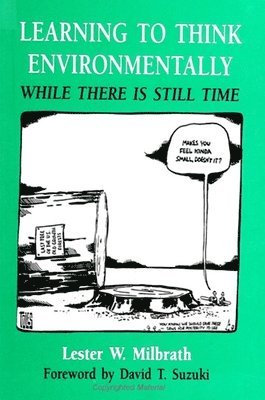
    Learning to Think Environmentally

    While There Is Still Time

    AvLester W. Milbrath

    Häftad, Engelska, 1996

    321 kr

    Tillfälligt slut

    Beskrivning

    The survival of planet Earth's nourishing life systems ultimately depends on how we humans think about them. Unfortunately, our culture's assumptions about the way the world works ignore recent scientific understanding of life systems. This book explains the interdependency and delicate balance of biological, geological, and chemical systems as environmental scientists now understand them. It communicates a new way of thinking.Written in everyday language as a conversation between two neighbors, Learning to Think Environmentally is illustrated with cartoons by Pulitzer Prize-winning cartoonist Tom Toles. It demonstrates that learning the basic principles of environmental thinking is essential to our social, physical, economic, and spiritual well-being. This new way of thinking is urgently needed in our public discourse if we are to take a sustainable pathway to the future.

    Produktinformation

    • Utgivningsdatum:1996-01-19
    • Mått:127 x 191 x 8 mm
    • Vikt:163 g
    • Format:Häftad
    • Språk:Engelska
    • Antal sidor:156
    • Förlag:State University of New York Press
    • ISBN:9780791429549

    Utforska kategorier

    • Miljövetenskap och miljöpolitik inom Naturvetenskap och teknik

    Mer om författaren

    Lester W. Milbrath is the Director of the Research Program in Environment and Society and Professor Emeritus of Political Science and Sociology at the State University of New York at Buffalo. He is the author of many books, including Envisioning a Sustainable Society: Learning Our Way Out and Environmentalists: Vanguard for a New Society, both published by SUNY Press.

    Recensioner i media

    "Milbrath's book is deceptively modest. It confronts inescapable facts of limits and our place as animals within the global biosphere. For all who care about what we are leaving for our children and grandchildren, this is an important contribution." — David T. Suzuki, from the Foreword

    Innehållsförteckning

    • List of Figures Foreword Preface Acknowledgments 1. Introduction 2. Beliefs Empower and Deceive Us 3. The Hidden Danger in Doubling Times 4. Learning to Think Systemically 5. Matter and Energy Cannot Be Destroyed 6. Driving a Car Has Multiple Consequences 7. The Greenhouse Effect and Global Warming 8. Scattering Matter and Energy 9. Dynamic Natural Systems Stabilized by Diversity 10. Limits to the Earth's Capacity to Support People 11. The Tragedy of the Commons 12. The Earth: Both Source and Sink 13. Distinguishing Development from Growth 14. Distinguishing Sustainability from Sustainable Development 15. Choosing Wise Policies 16. Theories of Social Change 17. Next Steps Recommended Further Reading Index of Key Concepts