• Fri frakt över 249 kr
  • •
  • Snabba leveranser
  • •
  • Billiga böcker
Kundservice

Du är på sajten för privatpersoner.

Företag, bibliotek eller offentlig verksamhet?

Du handlar på classic.bokus.com, där alla dina funktioner finns intakta.
Till classic.bokus.com
Bokus logotyp. Gå till startsidan.
  • Erbjudanden
  • Nyheter
  • Student
  • Topplistor
  • Barn & ungdom
  • Bokus Play
  • E-böcker
  • Pocketböcker
  • Spel & pussel

10% rabatt på allt med kod: NYSTART10 →

Sidfot

Mina sidor

    Hjälp

    • Kundservice
    • Vanliga frågor och svar
    • Frakt och leverans
    • Retur vid ångerrätt
    • Reklamera vara
    • Betalning
    • Köpvillkor
    • Allmänna villkor
    • Information om webbplatsens tillgänglighet

    Om Bokus

    • Om oss
    • Pressrum
    • För studenter
    • För företag
    • För bibliotek och offentlig verksamhet
    • För leverantörer
    • Hållbarhet

    Populärt

    • Aktuella erbjudanden
    • Presentkort
    • Studentlitteratur
    • Nya böcker
    • Topplistor
    • Signerade böcker
    • Engelska böcker

    Inspiration

    • Boktips
    • BookTok
    • Populära bokserier
    • Barnbokskaraktärer
    • Populära författare
    Logotyp för Bokus
    Följ oss på Facebook (extern länk)Följ oss på Instagram (extern länk)Följ oss på YouTube (extern länk)Följ oss på TikTok (extern länk)
    bokus @ CookiesAnpassa cookiesIntegritetspolicyKöpvillkor
    Till Citymail hemsida (extern länk)Till Budbee hemsida (extern länk)Till Postnord hemsida (extern länk)Till Schenker hemsida (extern länk)Till Early Bird hemsida (extern länk)Till Walleys hemsida (extern länk)
    1. Kultur
    2. Scenkonst och film
    3. Film

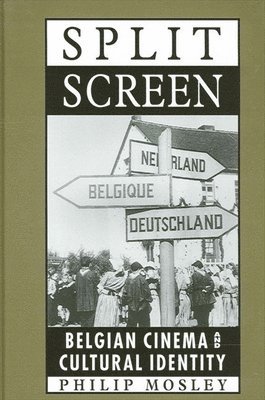
    Split Screen

    Belgian Cinema and Cultural Identity

    AvPhilip Mosley

    Häftad, Engelska, 2000

    Del i serien SUNY series, Cultural Studies in Cinema/Video

    391 kr

    Tillfälligt slut

    Fler format och utgåvor

    Inbunden

    Tillf. slut

    Beskrivning

    Explores the historical evolution of Belgian cinema as well as its contemporary situation within the evolving contexts of global media and European unity.In presenting the first English language study of Belgian cinema, Split Screen explores the fascinating history of a cinema largely determined by linguistic division and beset by problems of cultural identity. This "split screen" characterizes the Belgian cinema, which has not received the critical praise that it deserves, despite the recent international successes of films like Toto the Hero, and the achievements of individual directors such as Henri Storck, André Delvaux, and Chantal Akerman. In surveying the evolution of Belgian cinema from its beginnings to the present day, Philip Mosley locates all the major feature films, describes the crucial intervention of the state in film production, and reveals undervalued Belgian traditions in documentary, in animation, in short films, and in a colonial cinema created partly by missionaries in the former Belgian Congo. Due to the political and economic transformations affecting Europe, the reforms of the Belgian state, and the increasing globalization of world media industries, Belgian cinema can now inscribe itself within new national and international contexts.

    Produktinformation

    • Utgivningsdatum:2000-11-02
    • Mått:150 x 228 x 16 mm
    • Vikt:399 g
    • Format:Häftad
    • Språk:Engelska
    • Serie:SUNY series, Cultural Studies in Cinema/Video
    • Antal sidor:267
    • Förlag:State University of New York Press
    • ISBN:9780791447482

    Utforska kategorier

    • Film inom Kultur

    Mer om författaren

    Philip Mosley is Associate Professor of English, Communications, and Comparative Literature at Pennsylvania State University–Worthington Scranton.

    Recensioner i media

    "…a fine example of a nuanced, tentative approach to a marginalized cinema, with much to offer scholars interested in alternatives to Hollywood-centred film studies." — Canadian Journal of Film Studies"This book provides an historical overview of Belgian cinema from its inception to the present, as well as analysis of important films. But more essentially, the author places Belgian cinema in an international context and establishes the polyglot, crossroads country as a nexus of influences and interrelations. Mosley's analysis of the cultural/linguistic schisms within Belgium that led to allegiances with France, Holland, and Germany becomes the basis for scrutiny of Belgium's cultural role in the European Union and a transactional European film industry in its incipient stages."— Donald Flanell Friedman, author of Anthology of Belgian Symbolist Poets."Split Screen provides new information on a topic already coming to the forefront of cinema studies. Mosley's knowledge of the area and breadth of scholarship is exemplary." — Tony Williams, author of Structures of Desire: British Cinema, 1939–1955

    Innehållsförteckning

    • List of IllustrationsPrefaceAcknowledgments 1. Belgian Cinema and Cultural Identity 2. Beginnings to the Coming of Sound 3. Sound to Liberation, 1930-1945 4. The Postwar Period, 1945-1960 5. A New Era, 1960-1975 6. Reaction and Revival, 1975- 7. Belgian Cinema and the New Europe NotesWorks CitedIndex