• Fri frakt över 249 kr
  • •
  • Snabba leveranser
  • •
  • Billiga böcker
Kundservice

Du är på sajten för privatpersoner.

Företag, bibliotek eller offentlig verksamhet?

Du handlar på classic.bokus.com, där alla dina funktioner finns intakta.
Till classic.bokus.com
Bokus logotyp. Gå till startsidan.
  • Erbjudanden
  • Nyheter
  • Student
  • Topplistor
  • Barn & ungdom
  • Bokus Play
  • E-böcker
  • Pocketböcker
  • Spel & pussel

Må bättre, för mindre! Upp till 50% rabatt på hälsoböcker

Sidfot

Mina sidor

    Hjälp

    • Kundservice
    • Vanliga frågor och svar
    • Frakt och leverans
    • Retur vid ångerrätt
    • Reklamera vara
    • Betalning
    • Köpvillkor
    • Allmänna villkor
    • Information om webbplatsens tillgänglighet

    Om Bokus

    • Om oss
    • Pressrum
    • För studenter
    • För företag
    • För bibliotek och offentlig verksamhet
    • För leverantörer
    • Hållbarhet

    Populärt

    • Aktuella erbjudanden
    • Presentkort
    • Studentlitteratur
    • Nya böcker
    • Topplistor
    • Signerade böcker
    • Engelska böcker

    Inspiration

    • Boktips
    • BookTok
    • Populära bokserier
    • Barnbokskaraktärer
    • Populära författare
    Logotyp för Bokus
    Följ oss på Facebook (extern länk)Följ oss på Instagram (extern länk)Följ oss på YouTube (extern länk)Följ oss på TikTok (extern länk)
    bokus @ CookiesAnpassa cookiesIntegritetspolicyKöpvillkor
    Till Citymail hemsida (extern länk)Till Budbee hemsida (extern länk)Till Postnord hemsida (extern länk)Till Schenker hemsida (extern länk)Till Early Bird hemsida (extern länk)Till Walleys hemsida (extern länk)
    1. Samhälle och politik
    2. Politik och statsskick
    3. Centralt styre och förvaltning

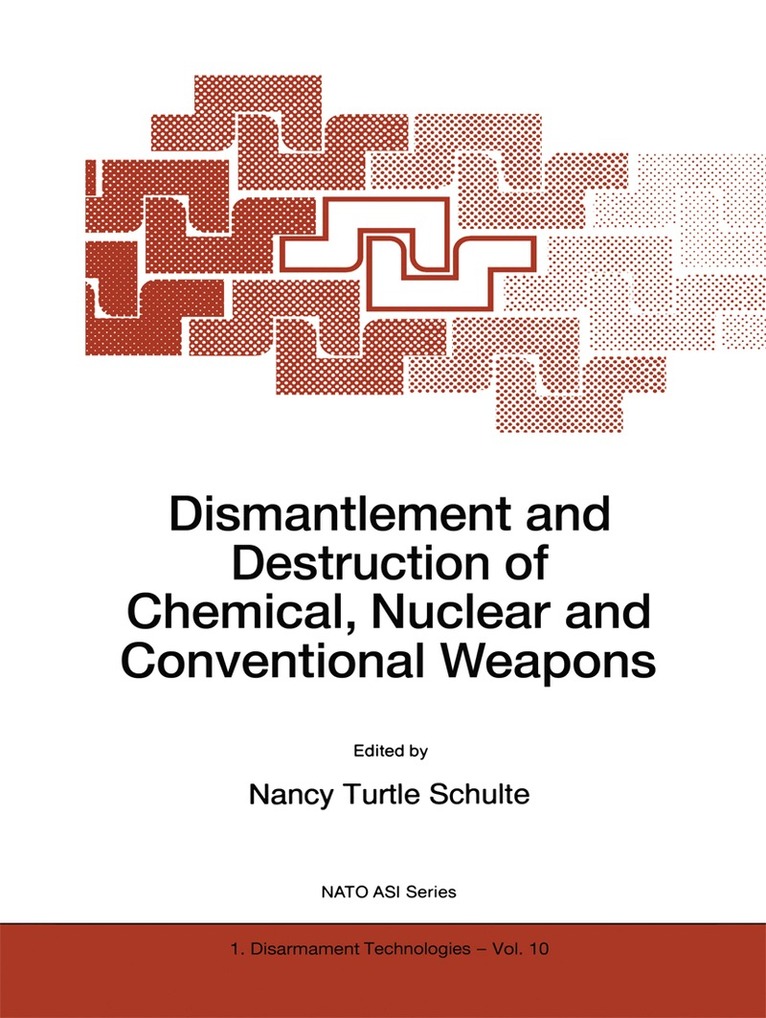
    Dismantlement and Destruction of Chemical, Nuclear and Conventional Weapons

    AvN. Schulte

    Inbunden, Engelska, 1997

    Del i serien NATO Science Partnership Subseries: 1

    1 634 kr

    Beställningsvara. Skickas inom 10-15 vardagar. Fri frakt över 249 kr.

    Beskrivning

    The safe destruction and dismantling of chemical, nuclear and conventional weapons is of fundamental importance to the security of a number of countries represented in this volume. Expertise in the field is not confined to one country or organization: all can benefit from each other. There is an ever present danger of proliferation of weapons of mass destruction: approximately two dozen countries have ongoing programmes to develop or acquire such weapons, and many are also gaining the capability to build air-surface delivery systems. But much can be done to prevent proliferation by reducing leakage of materials and know-how and by solving the problems of the destruction of surplus weapons systems, which has now come to be a key issue.

    Produktinformation

    • Utgivningsdatum:1997-02-28
    • Mått:155 x 235 x 20 mm
    • Vikt:571 g
    • Format:Inbunden
    • Språk:Engelska
    • Serie:NATO Science Partnership Subseries: 1
    • Antal sidor:246
    • Upplaga:1997
    • Förlag:Kluwer Academic Publishers
    • ISBN:9780792344704

    Utforska kategorier

    • Centralt styre och förvaltning inom Samhälle och politik
    • Kärnvapen inom Samhälle och politik

    Innehållsförteckning

    • 1. Cooperation as a Common Strategic Interest.- Session 1: Dismantlement and Destruction of Chemical, Nuclear and Conventional Weapons.- 2. Toward Peace with Ever-Fewer Weapons.- 3. Dismantlement and Destruction of Chemical, Nuclear and Conventional Weapons.- 4. Disarmament and Conversion.- Session 2: Status of Implementation of Arms Control Treaties and Voluntary Commitments.- 5. Challenges in Reducing the Legacy of the Cold War.- 6. French Policy on Arms Control and Disarmament.- Session 3: National Perspectives on Cooperation in Disarmament.- 7. The Netherlands: Participation in Chemical Weapons Destruction.- 8. Norwegian Perspectives and Participation in Nuclear and Chemical Weapons Disarmament.- 9. U.S. National Perspectives on Cooperation in Disarmament: The Cooperative Threat Reduction Program.- 10. Belarus: Problems of Disarmament and Arms Control.- 11. The French-Russian Programme for Nuclear Weapons Dismantlement: The “AIDA Plan”.- 12. German Perspectives on Cooperation in Disarmament.- 13. Japanese Perspectives on the Destruction of Nuclear and Chemical Weapons.- 14. Implementation of Arms Control Treaties: A U.K. Perspective.- Session 4: Stocktaking of National and Bilateral Disposal/Destruction Programmes: Chemical Weapons.- 15. The Destruction of Chemical Weapons under the Chemical Weapons Convention.- 16. Overview of the United States Chemical Demilitarization Program.- 17. Destruction of German Old Chemical Weapons in Munster.- 18. United States Support to the Russian Chemical Weapons Destruction Program.- 19. German-Russian Cooperation in the Destruction of Chemical Weapons.- 20. Swedish-Russian Cooperation Project Concerning the Lewisite Storage Facility in Kambarka.- Session 5: Stocktaking of National and Bilateral Disposal/Destruction Programmes:Nuclear Weapons.- 21. Status of Dismantlement of Nuclear Weapons: U.S. Department of Energy.- 22. Cooperative Threat Reduction: The View from Russia.- 23. Nuclear Disarmament: A French Perspective.- 24. German Bilateral Cooperative Programmes in the Nuclear Field.- 25. Cooperative Approaches to Disarmament and Non-Proliferation.- 26. Japan’s Technical Secretariat on Cooperation for the Elimination of Nuclear Weapons.- 27. Combatting Illicit Trafficking of Nuclear Materials: Cooperation Projects Financed by the European Union with Non-Member Countries.- Session 6: Stocktaking of National and Bilateral Disposal/Destruction Programmes: Conventional Weapons.- 28. Plans, Programmes and Challenges in the Destruction of Conventional Weapons.- 29. The CFE Treaty as the Foundation for European Security: Russia’s Participation and Perspectives.- 30. Dismantlement and Destruction of Conventional Weapons.- Session 7: Experience with Currently Employed Chemical Destruction Technologies.- 31. Currently Employed Destruction Technologies: An Introduction.- 32. Chemical Warfare Agents and Weapons Disposal Experience in the United States.- Session 8: Alternative Chemical Destruction Technologies.- 33. International Union of Pure and Applied Chemistry (IUPAC) Working Party on Chemical Weapons Destruction Technologies.- 34. Destruction of Chemical Weapons.- 35. Old Chemical Weapons in Belgium: Do We Need Alternative Destruction Technologies?.- Session 9: Deactivation, Dismantlement and Destruction of Delivery Systems and Infrastructure for Nuclear Weapons.- 36. Deactivation, Dismantlement and Destruction of Delivery Systems and Infrastructure.- 37. Dismantlement of Strategic Nuclear Delivery Vehicles and their Associated Infrastructure: Prospects and Problems.- Session 10: Storage,Safeguarding and Disposition of Fissile Materials.- 38. Storage and Safeguarding of Fissile Materials.- 39. Disposition of Weapons-Grade Plutonium in Russia: Evaluation of Different Options.- 40. Storage, Safeguarding and Disposition of Fissile Materials.- Session 11: Technologies for Conversion and Civil Use of Demilitarized Materials.- 41. Plans, Programmes and Challenges in the Destruction of Conventional Weapons.- 42. Conversion Technologies and the Civilian Use of Demilitarised Material.- Session 12: International Organizations.- 43. The NATO Science Committee Disarmament Technologies Programme.- 44. Redirection of Research Facilities and Scientific Personnel.- 45. The Science and Technology Centre of Ukraine.- Session 13: Environmental Challenges Posed by Chemical and Nuclear Disarmament.- 46. Cooperation in Solving Environmental Problems of the Armed Forces of Russia and Germany: Experience and Prospects.- 47. Aspects of Environmental Protection in the Destruction of Chemical Weapons.- 48. Environmental Policy Challenges in Connection with Disarmament and Contaminated Military Sites.- 49. Environmental Challenges Posed by Nuclear Disarmament in the North: The Finnish Response.- 50. Disarmament and Environment.- Conclusion.- 51. Accomplishments and Challenges of Disarmament.- Appendix: List of Participants.