• Fri frakt över 249 kr
  • •
  • Snabba leveranser
  • •
  • Billiga böcker
Kundservice

Du är på sajten för privatpersoner.

Företag, bibliotek eller offentlig verksamhet?

Du handlar på classic.bokus.com, där alla dina funktioner finns intakta.
Till classic.bokus.com
Bokus logotyp. Gå till startsidan.
  • Erbjudanden
  • Nyheter
  • Student
  • Topplistor
  • Barn & ungdom
  • Bokus Play
  • E-böcker
  • Pocketböcker
  • Spel & pussel

10% rabatt på allt med kod NYSTART10 →

Sidfot

Mina sidor

    Hjälp

    • Kundservice
    • Vanliga frågor och svar
    • Frakt och leverans
    • Retur vid ångerrätt
    • Reklamera vara
    • Betalning
    • Köpvillkor
    • Allmänna villkor
    • Information om webbplatsens tillgänglighet

    Om Bokus

    • Om oss
    • Pressrum
    • För studenter
    • För företag
    • För bibliotek och offentlig verksamhet
    • För leverantörer
    • Hållbarhet

    Populärt

    • Aktuella erbjudanden
    • Presentkort
    • Studentlitteratur
    • Nya böcker
    • Topplistor
    • Signerade böcker
    • Engelska böcker

    Inspiration

    • Boktips
    • BookTok
    • Populära bokserier
    • Barnbokskaraktärer
    • Populära författare
    Logotyp för Bokus
    Följ oss på Facebook (extern länk)Följ oss på Instagram (extern länk)Följ oss på YouTube (extern länk)Följ oss på TikTok (extern länk)
    bokus @ CookiesAnpassa cookiesIntegritetspolicyKöpvillkor
    Till Citymail hemsida (extern länk)Till Budbee hemsida (extern länk)Till Postnord hemsida (extern länk)Till Schenker hemsida (extern länk)Till Early Bird hemsida (extern länk)Till Walleys hemsida (extern länk)
    1. Naturvetenskap och teknik
    2. Geovetenskap
    3. Geovetenskap
    4. Meteorologi och klimatologi

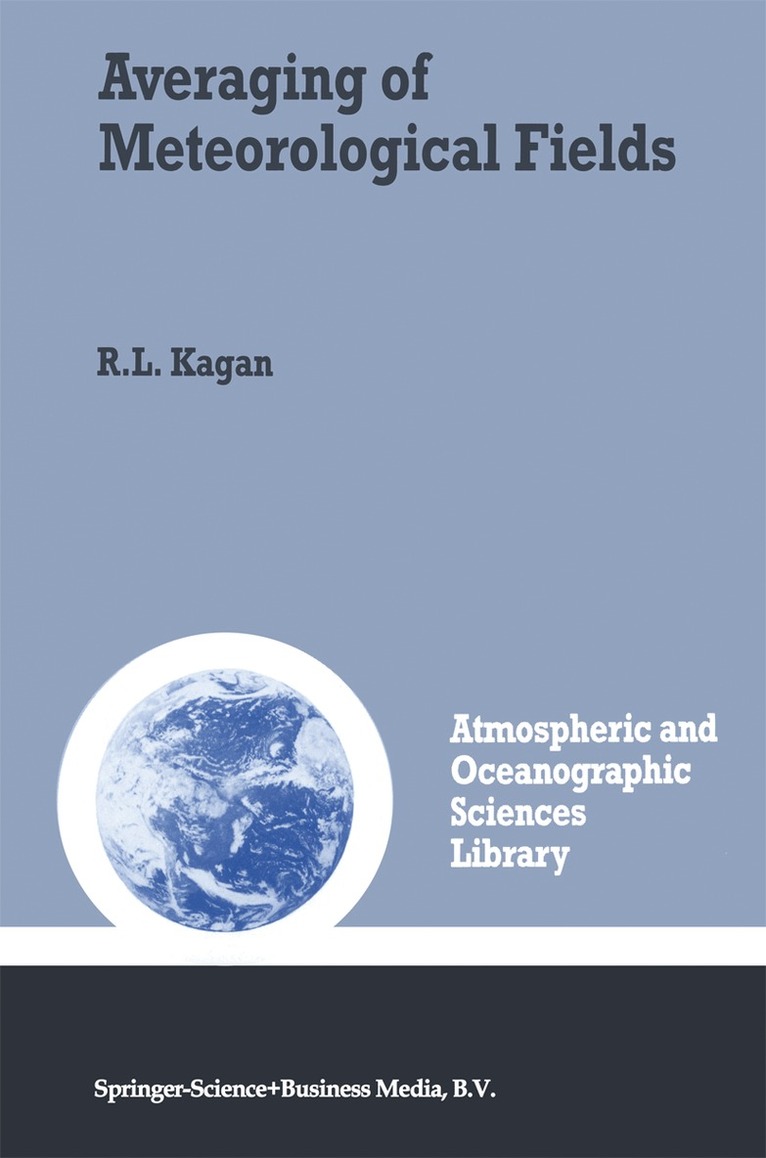
    Averaging of Meteorological Fields

    AvR.L. Kagan,Lev S. Gandin

    Inbunden, Engelska, 1997

    Del i serien Atmospheric and Oceanographic Sciences Library

    1 625 kr

    Beställningsvara. Skickas inom 10-15 vardagar. Fri frakt över 249 kr.

    Fler format och utgåvor

    Häftad

    1 625 kr

    Beskrivning

    Spatial and temporal averaging of observational data is widely used in many problems of meteorology, hydrology and related sciences. Several averaging methods have been proposed by various scientists and are used on a regular basis to obtain data averaged in space orfand in time, to yield data which are less influenced by random factors than initial point data are. The significance of averaging meteorological fields has substantially increased nowadays in connection with the problem of global climate change. However important as such change may be, it is very small as compared with the natural variability of atmospheric fields. An accurate averaging is absolutely necessary in order to discover a small climate change signal on the background of strong natural variability that acts as a random noise in this context. It is highly desirable not only to determine the averaged values themselves, but also to estimate the accuracy with which these values are known. To evaluate the accuracy of averaging is not a simple task mainly because the initial point values are not independent from each other, and interconnections between them substantially influence the averaging accuracy.

    Produktinformation

    • Utgivningsdatum:1997-10-31
    • Mått:156 x 234 x 21 mm
    • Vikt:612 g
    • Format:Inbunden
    • Språk:Engelska
    • Serie:Atmospheric and Oceanographic Sciences Library
    • Antal sidor:281
    • Upplaga:1997
    • Förlag:Kluwer Academic Publishers
    • ISBN:9780792348016

    Utforska kategorier

    • Meteorologi och klimatologi inom Naturvetenskap och teknik

    Innehållsförteckning

    • 1. Introduction.- 1.1 Spatial and temporal averaging in meteorological problems.- 1.2 Some information on the statistical characteristics of meteorological fields.- 2. Statistical Description of Averaged Fields.- 2.1 Statistical structure of averaged data.- 2.2 Representativeness of point measurements with respect to averaged values.- 2.3 Influence of area shape on the representativeness of a point value.- 3. The Accuracy of Averaging Discrete Data.- 3.1 The accuracy of representing average quantities by discrete data.- 3.2 Approximate evaluation of the averaging accuracy.- 3.3 Optimal averaging of discrete data.- 3.4 Accuracy of averaging the characteristics of statistical structure.- 4. Problems of Averaging Some Meteorological Fields.- 4.1 The representativeness of precipitation data.- 4.2 Accuracy of zonal averaging of air temperature.- 5. Practical Aspects of the Spatial Averaging of Meteorological Fields.- 5.1 Methods of averaging meteorological fields and numerical applications.- 5.2 A brief description of the averaging algorithms.- 5.3 Comparative accuracy of some averaging algorithms.- Conclusions.- List of Symbols.- References.