• Fri frakt över 249 kr
  • •
  • Snabba leveranser
  • •
  • Billiga böcker
Kundservice

Du är på sajten för privatpersoner.

Företag, bibliotek eller offentlig verksamhet?

Du handlar på classic.bokus.com, där alla dina funktioner finns intakta.
Till classic.bokus.com
Bokus logotyp. Gå till startsidan.
  • Erbjudanden
  • Nyheter
  • Student
  • Topplistor
  • Barn & ungdom
  • Bokus Play
  • E-böcker
  • Pocketböcker
  • Spel & pussel

10% rabatt på allt med kod: NYSTART10 →

Sidfot

Mina sidor

    Hjälp

    • Kundservice
    • Vanliga frågor och svar
    • Frakt och leverans
    • Retur vid ångerrätt
    • Reklamera vara
    • Betalning
    • Köpvillkor
    • Allmänna villkor
    • Information om webbplatsens tillgänglighet

    Om Bokus

    • Om oss
    • Pressrum
    • För studenter
    • För företag
    • För bibliotek och offentlig verksamhet
    • För leverantörer
    • Hållbarhet

    Populärt

    • Aktuella erbjudanden
    • Presentkort
    • Studentlitteratur
    • Nya böcker
    • Topplistor
    • Signerade böcker
    • Engelska böcker

    Inspiration

    • Boktips
    • BookTok
    • Populära bokserier
    • Barnbokskaraktärer
    • Populära författare
    Logotyp för Bokus
    Följ oss på Facebook (extern länk)Följ oss på Instagram (extern länk)Följ oss på YouTube (extern länk)Följ oss på TikTok (extern länk)
    bokus @ CookiesAnpassa cookiesIntegritetspolicyKöpvillkor
    Till Citymail hemsida (extern länk)Till Budbee hemsida (extern länk)Till Postnord hemsida (extern länk)Till Schenker hemsida (extern länk)Till Early Bird hemsida (extern länk)Till Walleys hemsida (extern länk)
    1. Ekonomi och Ledarskap
    2. Nationalekonomi

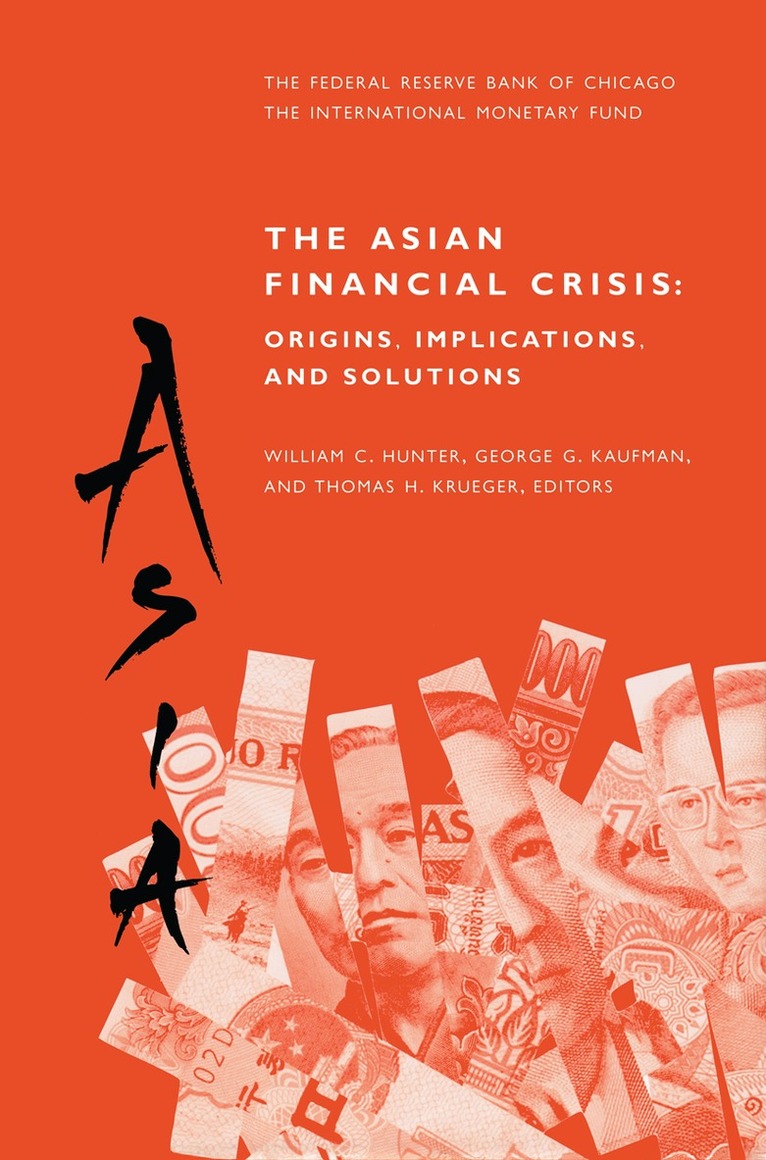
    Asian Financial Crisis: Origins, Implications, and Solutions

    AvGeorge G. Kaufman,Thomas H. Krueger

    Inbunden, Engelska, 1999

    2 230 kr

    Beställningsvara. Skickas inom 10-15 vardagar. Fri frakt över 249 kr.

    Beskrivning

    In the late 1990s, Korea, Thailand, Indonesia and Malaysia experienced a series of major financial crises evinced by widespread bank insolvencies and currency depreciations, as well as sharp declines in gross domestic production. This sudden disruption of the Asian economic `miracle' astounded many observers around the world, raised questions about the stability of the international financial system and caused widespread fear that this financial crisis would spread to other countries. What has been called the Asian crisis followed a prolonged slump in Japan dating from the early 1980s and came after the Mexican currency crisis in the mid-1990s. Thus, the Asian crisis became a major policy concern at the International Monetary Fund as well as among developed countries whose cooperation in dealing with such financial crises is necessary to maintain the stability and efficiency of global financial markets. This book collects the papers and discussions delivered at an October 1998 Conference co-sponsored by the Federal Reserve Bank of Chicago and the International Monetary Fund to examine the causes, implications and possible solutions to the crises. The conference participants included a broad range of academic, industry, and regulatory experts representing more than thirty countries. Topics discussed included the origin of the individual crises; early warning indicators; the role played by the global financial sector in this crisis; how, given an international safety net, potential risks of moral hazard might contribute to further crises; the lessons for the international financial system to be drawn from the Asian crisis; and what the role of the International Monetary Fund might be in future rescue operations. Because the discussions of these topics include a wide diversity of critical views and opinions, the book offers a particularly rich presentation of current and evolving thinking on the causes and preventions of international banking and monetary crises. The book promises to be one of the timeliest as well as one of the most complete treatments of the Asian financial crisis and its implications for future policymaking.

    Produktinformation

    • Utgivningsdatum:1999-05-31
    • Mått:155 x 235 x 35 mm
    • Vikt:980 g
    • Format:Inbunden
    • Språk:Engelska
    • Antal sidor:526
    • Upplaga:1999
    • Förlag:Kluwer Academic Publishers
    • ISBN:9780792384724

    Utforska kategorier

    • Nationalekonomi inom Ekonomi och Ledarskap
    • Finansiering inom Ekonomi och Ledarskap

    Innehållsförteckning

    • I Opening Remarks.- 1 The IMF and the Asian Crisis: A View from the Executive Board.- 2 The Asian Financial Crisis.- II Origins of the Asian Crisis.- 3 What Caused the Recent Asian Currency Crises?.- 4 Origins of the Crisis in Asia.- 5 Thoughts on the Origins of the Asian Crisis: Impulses and Propagation Mechanisms.- 6 Origins of the Asian Crisis: Discussion.- III Causes and Implications of the Asian Crisis—the Role of the Financial Sector, Domestic Policies, and Contagion.- 7 Precarious Credit Equilibria: Reflections on the Asian Financial Crisis.- 8 Causes and Implications of the Asian Crisis: An Indonesian View.- 9 The Korean Banking Crisis: Picking up the Pieces.- 10 Asian Currency Crisis.- 11 Causes and Implications of the Asian Crisis.- 12 The Yen and Boom—Bust Cycle in East Asia.- 13 Causes and Implications of the Asian Crisis: The Role of Financial Sector, Domestic Policies, and Contagion.- IV Response to the Crisis—Overview and Case Studies.- 14 Asian Crisis: Causes and Remedies.- 15 Korea’s Financial Sector Reforms.- 16 Whither Thailand?.- 17 Comment on “Asian Crisis: Causes and Remedies”.- 18 The East Asian Financial Crisis: A Year Later.- 19 Removing Financial Bottlenecks to Labor Productivity in Thailand.- V Containing the Risks of Future Crisis—Strengthening the Regulatory Framework.- 20 What’s Wrong with the IMF? What Would Be Better?.- 21 Containing the Risks of Future Crises: Strengthening the Regulatory Framework.- 22 Banking Fragility, Effectiveness, and Regulation in Less-Developed Countries.- 23 Comments on “What’s Wrong with the IMF” and “Containing the Risks”.- 24 Commentary on “What’s Wrong with the IMF” and “Containing the Risks”.- VI Early Warning Indicators, Transparency, and Market Response.- 25 ImprovingTransparency in Asian Banking Systems.- 26 Early Warning Indicators of Financial Crises.- 27 The Asian Crises: A New Breed or Déjà Vu?.- 28 The Inevitable Perils of a Precocious Giant.- 29 Banks and the Asian Crisis.- 30 The Signals Approach to Early Warning of Currency Crisis: Does It Work and Is There a Better Way?.- 31 Will Greater Disclosure and Transparency Prevent the Next Banking Crisis?.- VII Moral Hazard and the Role of International Rescue Programs.- 32 Moral Hazard Is Avoidable.- 33 Moral Hazard.- 34 Moral Hazard and the Role of International Rescue Programs.- 35 Moral Hazard and the Role of International Rescue Programs.- VIII The Future Role of the International Monetary Fund in International Rescue Operations.- 36 Bailing in the Private Sector.- 37 Does the IMF Have a Future? What Should It Be?.- 38 Comment on “Bailing in the Private Sector” and “Does the IMF Have a Future”.- 39 Less Is More in the New International Financial Architecture.- 40 Assessing IMF’s Crisis Prevention and Management Record.- IX Lessons from the Crisis for the International Financial System.- 41 Lessons for the International Financial System.- 42 Lessons from the Crisis.- 43 An Analysis of Financial Crisis: Lessons for the International Financial System.- 44 Lessons from the Asian Crisis.- 45 An Analysis of Financial Crisis.- 46 Lessons from the Asian Crisis for the International Financial System.- X Summary.- 47 Conference Summary.- Conference Program.- Contributors.