• Fri frakt över 249 kr
  • •
  • Snabba leveranser
  • •
  • Billiga böcker
Kundservice

Du är på sajten för privatpersoner.

Företag, bibliotek eller offentlig verksamhet?

Du handlar på classic.bokus.com, där alla dina funktioner finns intakta.
Till classic.bokus.com
Bokus logotyp. Gå till startsidan.
  • Erbjudanden
  • Nyheter
  • Student
  • Topplistor
  • Barn & ungdom
  • Bokus Play
  • E-böcker
  • Pocketböcker
  • Spel & pussel

10% rabatt på allt med kod: NYSTART10 →

Sidfot

Mina sidor

    Hjälp

    • Kundservice
    • Vanliga frågor och svar
    • Frakt och leverans
    • Retur vid ångerrätt
    • Reklamera vara
    • Betalning
    • Köpvillkor
    • Allmänna villkor
    • Information om webbplatsens tillgänglighet

    Om Bokus

    • Om oss
    • Pressrum
    • För studenter
    • För företag
    • För bibliotek och offentlig verksamhet
    • För leverantörer
    • Hållbarhet

    Populärt

    • Aktuella erbjudanden
    • Presentkort
    • Studentlitteratur
    • Nya böcker
    • Topplistor
    • Signerade böcker
    • Engelska böcker

    Inspiration

    • Boktips
    • BookTok
    • Populära bokserier
    • Barnbokskaraktärer
    • Populära författare
    Logotyp för Bokus
    Följ oss på Facebook (extern länk)Följ oss på Instagram (extern länk)Följ oss på YouTube (extern länk)Följ oss på TikTok (extern länk)
    bokus @ CookiesAnpassa cookiesIntegritetspolicyKöpvillkor
    Till Citymail hemsida (extern länk)Till Budbee hemsida (extern länk)Till Postnord hemsida (extern länk)Till Schenker hemsida (extern länk)Till Early Bird hemsida (extern länk)Till Walleys hemsida (extern länk)
    1. Filosofi och religion
    2. Religion och tro
    3. Religion: allmänt

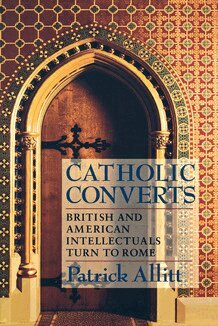
    Catholic Converts

    British and American Intellectuals Turn to Rome

    AvPatrick Allitt

    Inbunden, Engelska, 1997

    1 006 kr

    Beställningsvara. Skickas inom 10-15 vardagar. Fri frakt över 249 kr.

    Fler format och utgåvor

    Häftad

    354 kr

    Beskrivning

    From the early nineteenth to the mid-twentieth century, an impressive group of English speaking intellectuals converted to Catholicism. Outspoken and gifted, they intended to show the fallacies of religious skeptics and place Catholicism, once again, at the center of western intellectual life. The lives of individual converts—such as John Henry Newman, G. K. Chesterton, Thomas Merton, and Dorothy Day—have been well documented, but Patrick Allitt has written the first account of converts' collective impact on Catholic intellectual life. His book is also the first to characterize the distinctive style of Catholicism they helped to create and the first to investigate the extensive contacts among Catholic convert writers in the United States and Britain.Allitt explains how, despite the Church's dogmatic style and hierarchical structure, converts working in the areas of history, science, literature, and philosophy maintained that Catholicism was intellectually liberating. British and American converts followed each other's progress closely, visiting each other and sending work back and forth across the Atlantic.The outcome of their labors was not what the converts had hoped. Although they influenced the Catholic Church for three or four generations, they were unable to restore it to the central place in Western intellectual life that it had enjoyed before the Reformation.

    Produktinformation

    • Utgivningsdatum:1997-06-27
    • Mått:152 x 229 x 30 mm
    • Vikt:907 g
    • Format:Inbunden
    • Språk:Engelska
    • Antal sidor:360
    • Förlag:Cornell University Press
    • ISBN:9780801429965

    Utforska kategorier

    • Religion: allmänt inom Filosofi och religion
    • Kristendom inom Filosofi och religion

    Mer om författaren

    Patrick Allitt is Cahoon Family Professor of American History at Emory University. He is the author of Catholic Intellectuals and Conservative Politics in America, 1950-1985 and Catholic Converts: British and American Intellectuals Turn to Rome.

    Recensioner i media

    A generally well-informed study of intellectual converts to the Roman Catholic Church in the Anglo-American world, spanning the period from Newman to the Second Vatican Council. Catholic Converts is a fascinating and well-written book which makes a strong case for the importance of converts in Roman Catholic intellectual life.(Times Literary Supplement) Until World War II, in both England and the United States, converts supplied the church's intellectual leadership. They were much better prepared educationally than the working-class immigrants who constituted the bulk of the faithful, and they were conversant with the surrounding non-Catholic culture. In Catholic Converts, Patrick Allitt ushers a fascinating cast of these converts on and off his stage: major figures like John Henry Newman, Orestes Brownson, G. K. Chesterton, Graham Greene, Evelyn Waugh, Dorothy Day, Thomas Merton, and Marshall McLuhan, but also less well-known figures like Richard Simpson, a tireless critic of the temporal and spiritual claims made by the 19th-century papacy, and St. George Mivart, an expert in primate anatomy who criticized Darwin but argued his own form of evolution and was eventually excommunicated for his then-maverick views on everything from hell to church history.(New York Times Book Review) This volume is the first comprehensive treatment of the impact of British and American converts on the intellectual life of Catholicism from the early 19th to the mid-20th century. Allitt reviews the profound contributions of a wide variety of poets, artists, and intellectual converts—including such prominent figures as John Henry Newman, G. K. Chesterton, Isaac Hecker, Orestes Brownson, Evelyn Waugh, Dorothy Day, and Thomas Merton—who claimed that Catholicism was intellectually liberating despite its emphasis on tradition and its rejection of modernism. Elegantly written and well document, this volume represents an important contribution to Catholic studies. Highly recommended.(Choice) The century and a quarter before Vatican Council II saw quite a few American and British intellectuals enter the Roman Catholic Church. Through their writings, these converts, among them John Henry Newman, Dorothy Day, Thomas Merton, Christopher Dawson, and G. K. Chesterton, affected the life of the whole Catholic community and in fact often far outshone their born-Catholic contemporaries. While their stories have already been told individually, as well as by others, Allitt considers them as a group. And what a diverse group then were: liberals and conservatives, contemplatives and activists, apologists, spiritual writers, historians, and literary figures all evaluated here in the context of the wider church and society. Written in a lively style, this is intellectual history at its best. Recommended for all general collections.(Library Journal) A scholarly and stimulating history of the impact made by gifted thinkers who became Catholics on both sides of the Atlantic between 1825 and 1962, and of the problems they faced in their new Church and in society. Generations of penal legislation in Britain and in many parts of the American colonies had left Catholics an uneducated, suspect group. Allitt traces the fortunes of a rich variety of scholars and literary figures who 'went over to Rome,' often in the face of social and professional ostracism. Allitt makes good use of the extensive scholarship available on many of these figures, adding his own incisive observations and showing how their work tried but failed to restore the cultural visibility that the Church had enjoyed in former centuries.(Kirkus Reviews) Allitt offers an informed evaluation of the converts' lives and works and situates them in the larger arenas of British and American cultural history. He makes a convincing case. He offers concise examinations of issues in theology, philosophy, literature, and the social sciences.(Journal of American History) Patrick Allitt argues persuasively that in the past even a small band of intellectual converts has had a decisive influence. Allitt convinces us that converts, never more than 3 per cent of the Catholic population, wielded tremendous influence.(New Statesman) Catholic Converts succeeds admirably at showing the rich transatlantic religious culture that emerged after the early decades of the nineteenth century.... This clearly written, well-organized, and carefully documented overview of Catholic thinkers succeeds in providing a broad and necessary reminder that vibrant intellectual traditions can and do exist.... From the early theologians... through the twentieth-century converts... and event the media guru Marshall McLuhan—not to mention the dozens of other Catholic converts that crowd the pages of this generous intellectual history—the reiterated themes are resistance to progress, affection for the pleasures and pains of tradition, and deep suspicion about a troubled modernity arriving with increasing speed and on seemingly friction less rails.(New England Quarterly) Engaging.... Making a complicated 'big picture' seem obvious is the mark of an accomplished synthesist and storyteller; and Allitt, associate professor of history at Emory University, excels at drawing connections, charting trajectories of thought and behavior and discerning patterns embedded in huge chunks of historical material. Part of the delight in reading Catholic Converts lies in watching him skillfully weave together the insights and findings of a plethora of secondary works with carefully chose illustrations and quotations from the novels, treatises and memoirs of the converts themselves.... Catholic Converts reminds us... that a significant and influential company of modern thinkers, caught up in 'the quests for truth,' found Catholic traditions compelling and indeed irresistible. Eyes and ears wide open to the claims of its detractors, they freely chose the church as their intellectual home and them set about drawing its institutions ever closer, in practice, to the ideals for which they had sacrificed their old lives and livelihoods. It is a remarkable story, and Patrick Allitt has done it justice.(America) Exhaustively researched.... Allitt's book is a fine example of intellectual history. It is thoroughly researched and eminently readable. He has a genius for resurrecting little known, forgotten, obscure, minor figures and showing how important they were in their own time. He is a scholarly detective in searching out amusing anecdotes about the historical figures who are his subjects.... Every chapter of this book is a gem. Each is massively informed and extremely well-written.(Cithara)