• Fri frakt över 249 kr
  • •
  • Snabba leveranser
  • •
  • Billiga böcker
Kundservice

Du är på sajten för privatpersoner.

Företag, bibliotek eller offentlig verksamhet?

Du handlar på classic.bokus.com, där alla dina funktioner finns intakta.
Till classic.bokus.com
Bokus logotyp. Gå till startsidan.
  • Erbjudanden
  • Nyheter
  • Student
  • Topplistor
  • Barn & ungdom
  • Bokus Play
  • E-böcker
  • Pocketböcker
  • Spel & pussel

10% rabatt på allt med kod NYSTART10 →

Sidfot

Mina sidor

    Hjälp

    • Kundservice
    • Vanliga frågor och svar
    • Frakt och leverans
    • Retur vid ångerrätt
    • Reklamera vara
    • Betalning
    • Köpvillkor
    • Allmänna villkor
    • Information om webbplatsens tillgänglighet

    Om Bokus

    • Om oss
    • Pressrum
    • För studenter
    • För företag
    • För bibliotek och offentlig verksamhet
    • För leverantörer
    • Hållbarhet

    Populärt

    • Aktuella erbjudanden
    • Presentkort
    • Studentlitteratur
    • Nya böcker
    • Topplistor
    • Signerade böcker
    • Engelska böcker

    Inspiration

    • Boktips
    • BookTok
    • Populära bokserier
    • Barnbokskaraktärer
    • Populära författare
    Logotyp för Bokus
    Följ oss på Facebook (extern länk)Följ oss på Instagram (extern länk)Följ oss på YouTube (extern länk)Följ oss på TikTok (extern länk)
    bokus @ CookiesAnpassa cookiesIntegritetspolicyKöpvillkor
    Till Citymail hemsida (extern länk)Till Budbee hemsida (extern länk)Till Postnord hemsida (extern länk)Till Schenker hemsida (extern länk)Till Early Bird hemsida (extern länk)Till Walleys hemsida (extern länk)
    1. Samhälle och politik
    2. Politik och statsskick
    3. Internationella relationer

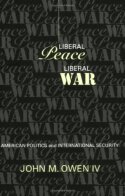
    Liberal Peace, Liberal War

    American Politics and International Security

    AvJohn M. Owen

    Inbunden, Engelska, 1998

    Del i serien Cornell Studies in Security Affairs

    729 kr

    Beställningsvara. Skickas inom 10-15 vardagar. Fri frakt över 249 kr.

    Fler format och utgåvor

    Häftad

    340 kr

    Beskrivning

    Liberal democracies very rarely fight wars against each other, even though they go to war just as often as other types of states do. John M. Owen IV attributes this peculiar restraint to a synergy between liberal ideology and the institutions that exist within these states. Liberal elites identify their interests with those of their counterparts in foreign states, Owen contends. Free discussion and regular competitive elections allow the agitations of the elites in liberal democracies to shape foreign policy, especially during crises, by influencing governmental decision makers. Several previous analysts have offered theories to explain liberal peace, but they have not examined the state.This book explores the chain of events linking peace with democracies. Owen emphasizes that peace is constructed by democratic ideas, and should be understood as a strong tendency built upon historically contingent perceptions and institutions. He tests his theory against ten cases drawn from over a century of U.S. diplomatic history, beginning with the Jay Treaty in 1794 and ending with the Spanish-American War in 1898. A world full of liberal democracies would not necessarily be peaceful. Were illiberal states to disappear, Owen asserts, liberal states would have difficulty identifying one another, and would have less reason to remain at peace.

    Produktinformation

    • Utgivningsdatum:1998-01-12
    • Mått:152 x 229 x 22 mm
    • Vikt:907 g
    • Format:Inbunden
    • Språk:Engelska
    • Serie:Cornell Studies in Security Affairs
    • Antal sidor:264
    • Förlag:Cornell University Press
    • ISBN:9780801433191

    Utforska kategorier

    • Internationella relationer inom Samhälle och politik
    • Referensverk och tvärvetenskap inom Samhälle och politik
    • Statsvetenskap och politisk teori inom Samhälle och politik

    Mer om författaren

    JOHN M. OWEN IV is Assistant Professor of Government and Foreign Affairs at the University of Virginia.

    Recensioner i media

    In an ambitious book that covers one hundred years of US diplomacy, Owen persuasively demonstrates that perceptions of a foreign state before an international crisis shape interpretations of its actions during the crisis: liberals 'judge states based on their domestic political institutions, and maintain those judgments through smooth and rocky relations with those states.' Thus, the extent to which US liberals perceived a foreign state to be liberal affected whether they were likely to treat it as potentially aggressive or benign.... Owen makes an important contribution to the democratic peace literature by highlighting the influence of domestic vision on foreign policy thinking: whether states interpret foreign powers as dangerous depends less on their material capabilities for war than on the attractiveness of their political ideologies and institutions.- Miriam Fendius Elman (The International History Review) This illuminating work, by a political scientist at the University of Virginia, seeks to explain why liberal states (those with free speech and competitive elections) avoid war with one another but not with illiberal states.- David C. Hendrickson (Foreign Affairs)