• Fri frakt över 249 kr
  • •
  • Snabba leveranser
  • •
  • Billiga böcker
Kundservice

Du är på sajten för privatpersoner.

Företag, bibliotek eller offentlig verksamhet?

Du handlar på classic.bokus.com, där alla dina funktioner finns intakta.
Till classic.bokus.com
Bokus logotyp. Gå till startsidan.
  • Erbjudanden
  • Nyheter
  • Student
  • Topplistor
  • Barn & ungdom
  • Bokus Play
  • E-böcker
  • Pocketböcker
  • Spel & pussel

10% rabatt på allt med kod: NYSTART10 →

Sidfot

Mina sidor

    Hjälp

    • Kundservice
    • Vanliga frågor och svar
    • Frakt och leverans
    • Retur vid ångerrätt
    • Reklamera vara
    • Betalning
    • Köpvillkor
    • Allmänna villkor
    • Information om webbplatsens tillgänglighet

    Om Bokus

    • Om oss
    • Pressrum
    • För studenter
    • För företag
    • För bibliotek och offentlig verksamhet
    • För leverantörer
    • Hållbarhet

    Populärt

    • Aktuella erbjudanden
    • Presentkort
    • Studentlitteratur
    • Nya böcker
    • Topplistor
    • Signerade böcker
    • Engelska böcker

    Inspiration

    • Boktips
    • BookTok
    • Populära bokserier
    • Barnbokskaraktärer
    • Populära författare
    Logotyp för Bokus
    Följ oss på Facebook (extern länk)Följ oss på Instagram (extern länk)Följ oss på YouTube (extern länk)Följ oss på TikTok (extern länk)
    bokus @ CookiesAnpassa cookiesIntegritetspolicyKöpvillkor
    Till Citymail hemsida (extern länk)Till Budbee hemsida (extern länk)Till Postnord hemsida (extern länk)Till Schenker hemsida (extern länk)Till Early Bird hemsida (extern länk)Till Walleys hemsida (extern länk)
    1. Filosofi och religion
    2. Filosofi
    3. Filosofiska discipliner

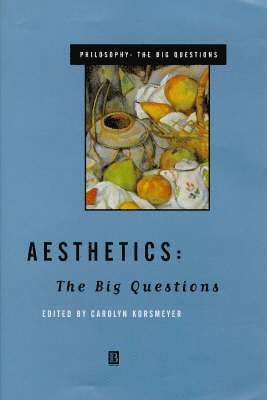
    Making Sense of Taste

    Food and Philosophy

    AvCarolyn Korsmeyer

    Inbunden, Engelska, 1999

    702 kr

    Beställningsvara. Skickas inom 10-15 vardagar. Fri frakt över 249 kr.

    Fler format och utgåvor

    Häftad

    285 kr

    Beskrivning

    Taste, perhaps the most intimate of the five senses, has traditionally been considered beneath the concern of philosophy, too bound to the body, too personal and idiosyncratic. Yet, in addition to providing physical pleasure, eating and drinking bear symbolic and aesthetic value in human experience, and they continually inspire writers and artists. Carolyn Korsmeyer explains how taste came to occupy so low a place in the hierarchy of senses and why it is deserving of greater philosophical respect and attention. Korsmeyer begins with the Greek thinkers who classified taste as an inferior, bodily sense; she then traces the parallels between notions of aesthetic and gustatory taste that were explored in the formation of modern aesthetic theories. She presents scientific views of how taste actually works and identifies multiple components of taste experiences. Turning to taste's objects—food and drink—she looks at the different meanings they convey in art and literature as well as in ordinary human life and proposes an approach to the aesthetic value of taste that recognizes the representational and expressive roles of food. Korsmeyer's consideration of art encompasses works that employ food in contexts sacred and profane, that seek to whet the appetite and to keep it at bay; her selection of literary vignettes ranges from narratives of macabre devouring to stories of communities forged by shared eating.

    Produktinformation

    • Utgivningsdatum:1999-10-26
    • Mått:155 x 235 x 22 mm
    • Vikt:907 g
    • Format:Inbunden
    • Språk:Engelska
    • Antal sidor:256
    • Förlag:Cornell University Press
    • ISBN:9780801436987

    Utforska kategorier

    • Filosofiska discipliner inom Filosofi och religion
    • Kokböcker inom Mat och dryck
    • Historia: särskilda händelser och ämnen inom Historia och arkeologi

    Mer om författaren

    Carolyn Korsmeyer is the author or editor of several books in aesthetics and philosophy of art, feminist philosophy, and emotion theory, including Savoring Disgust: The Foul and the Fair in Aesthetics (2011) and Things: In Touch with the Past (2019).

    Recensioner i media

    A book about how the divergent histories of taste and Taste have left us with an impoverished understanding of the former—and thus a deep skepticism about the aesthetic worth of food. Carolyn Korsmeyer suggests that her project will illuminate readers' understanding of food—and observes that it might well illuminate our understanding of art as well. She succeeds on both counts.(Hypatia) Anyone who critiques philosophy's 'venerable preoccupation with the 'mind' over the 'body' and 'matters of universal concern over particular experiences,' should read this book for the approach Korsmeyer uses to make her argument. Personally, I would add that anyone who thinks, who thinks about eating or drinking, who who even eats or drinks, should read it, too.(Leonardo) In this thoroughly researched, well-organized, tightly argued, clearly-written, and stylistic book, Carolyn Korsmeyer has presented enough food for thought to keep all but the most jaded aestheticians engaged for many happy hours.(Journal of Aesthetics and Art Criticism) It is to Korsmeyer's credit... that she has presented so strong a version of a philosophy of interpretation and shown how well it can be applied to food. As she insightfully establishes, philosophical tradition has not been able to find a place for gustatory taste within its framework, and it is a virtue of Korsmeyer's eloquent little study that she establishes a strong possibility for a cognitively rich philosophy of food.(Gastronomica) Of the five senses, two—sight and hearing—were higher and lent themselves to aesthetic perception, while the remaining three—touch, taste and smell—were lower and non-aesthetic senses. Korsmeyer, in this sensitive and judicious book, explores and exposes the errors misinforming this conventional ranking.... This is an illuminating book.(British Journal of Aesthetics)

    Innehållsförteckning

    • IntroductionChapter 1: The Hierarchy of the SensesChapter 2: Philosophies of Taste: Aesthetic and Nonasethetic SensesChapter 3: The Science of TasteChapter 4: The Meaning of Taste and the Taste of MeaningChapter 5: The Visual Appetite: Representing Taste and FoodChapter 6: Narratives of EatingIndex