• Fri frakt över 249 kr
  • •
  • Snabba leveranser
  • •
  • Billiga böcker
Kundservice

Du är på sajten för privatpersoner.

Företag, bibliotek eller offentlig verksamhet?

Du handlar på classic.bokus.com, där alla dina funktioner finns intakta.
Till classic.bokus.com
Bokus logotyp. Gå till startsidan.
  • Erbjudanden
  • Nyheter
  • Student
  • Topplistor
  • Barn & ungdom
  • Bokus Play
  • E-böcker
  • Pocketböcker
  • Spel & pussel

Må bättre, för mindre! Upp till 50% rabatt på hälsoböcker

Sidfot

Mina sidor

    Hjälp

    • Kundservice
    • Vanliga frågor och svar
    • Frakt och leverans
    • Retur vid ångerrätt
    • Reklamera vara
    • Betalning
    • Köpvillkor
    • Allmänna villkor
    • Information om webbplatsens tillgänglighet

    Om Bokus

    • Om oss
    • Pressrum
    • För studenter
    • För företag
    • För bibliotek och offentlig verksamhet
    • För leverantörer
    • Hållbarhet

    Populärt

    • Aktuella erbjudanden
    • Presentkort
    • Studentlitteratur
    • Nya böcker
    • Topplistor
    • Signerade böcker
    • Engelska böcker

    Inspiration

    • Boktips
    • BookTok
    • Populära bokserier
    • Barnbokskaraktärer
    • Populära författare
    Logotyp för Bokus
    Följ oss på Facebook (extern länk)Följ oss på Instagram (extern länk)Följ oss på YouTube (extern länk)Följ oss på TikTok (extern länk)
    bokus @ CookiesAnpassa cookiesIntegritetspolicyKöpvillkor
    Till Citymail hemsida (extern länk)Till Budbee hemsida (extern länk)Till Postnord hemsida (extern länk)Till Schenker hemsida (extern länk)Till Early Bird hemsida (extern länk)Till Walleys hemsida (extern länk)
    1. Psykologi och pedagogik
    2. Psykologi

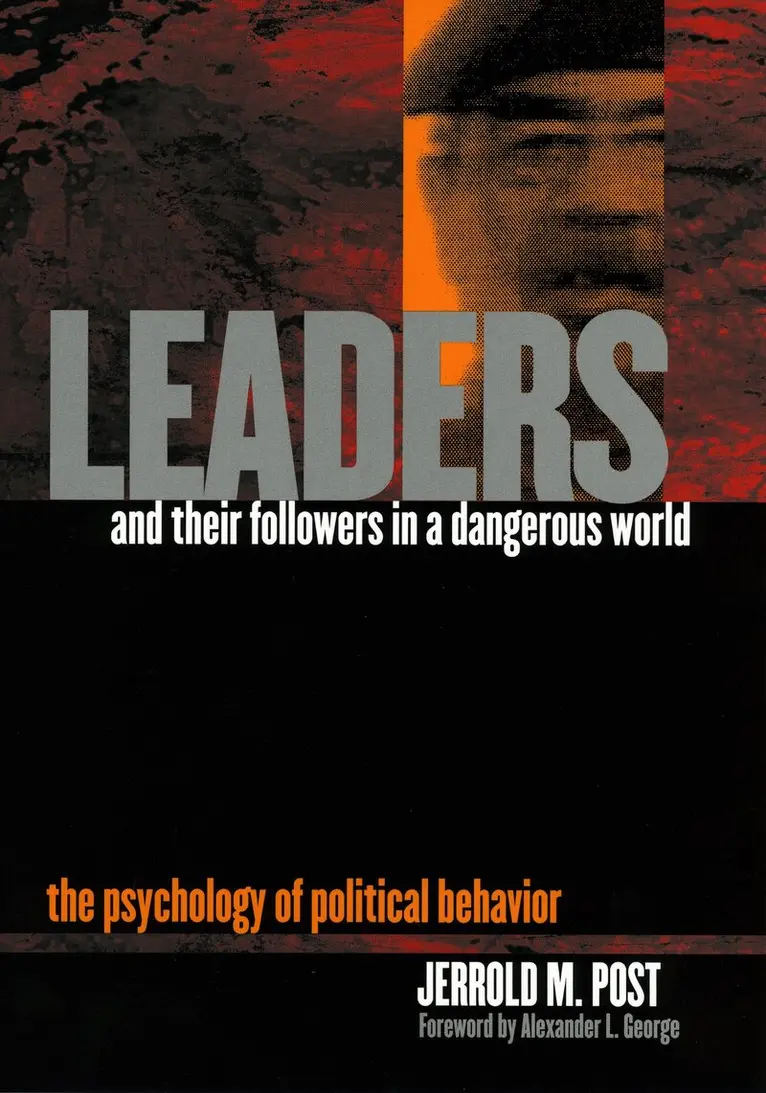
    Leaders and Their Followers in a Dangerous World

    The Psychology of Political Behavior

    AvJerrold M. Post

    Inbunden, Engelska, 2004

    Del i serien Psychoanalysis and Social Theory

    335 kr

    Beställningsvara. Skickas inom 3-6 vardagar. Fri frakt över 249 kr.

    Beskrivning

    "Post is a pioneer in the field of political-personality profiling. He may be the only psychiatrist who has specialized in the self-esteem problems of both Osama bin Laden and Saddam Hussein."—The New Yorker "Policy specialists and academic scholars have long agreed that for U.S. leaders to deal effectively with other actors in the international arena, they need images of their adversaries. Leaders must try to see events, and, indeed, their own behavior, from the perspective of opponents.... Faulty images are a source of misperceptions and miscalculations that have often led to major errors in policy, avoidable catastrophes, and missed opportunities. History supplies all too many examples."—from the ForewordWhat impels leaders to lead and followers to follow? How did Osama bin Laden, the son of a multibillionaire construction magnate in Saudi Arabia, become the world's number-one terrorist? What are the psychological foundations of man's inhumanity to man, ethnic cleansing, and genocide? Jerrold M. Post contends that such questions can be answered only through an understanding of the psychological foundations of leader personality and political behavior.Post was founding director of the Center for the Analysis of Personality and Political Behavior for the CIA. He developed the political personality profiles of Menachem Begin and Anwar Sadat for President Jimmy Carter's use at the Camp David talks and initiated the U.S. government's research program on the psychology of political terrorism. He was awarded the Intelligence Medal of Merit in 1979 for his leadership of the center.In this book, he draws on psychological and personality theories, as well as interviews with individual terrorists and those who have interacted with particular leaders, to discuss a range of issues: the effects of illness and age on a leader's political behavior; narcissism and the relationship between followers and a charismatic leader; the impact of crisis-induced stress on policymakers; the mind of the terrorist, with a consideration of "killing in the name of God"; and the need for enemies and the rise of ethnic conflict and terrorism in the post-Cold War environment. The leaders he discusses include Fidel Castro, Osama bin Laden, Saddam Hussein, Kim Jong Il, and Slobodan Milosevic.

    Produktinformation

    • Utgivningsdatum:2004-04-15
    • Mått:152 x 229 x 28 mm
    • Vikt:907 g
    • Format:Inbunden
    • Språk:Engelska
    • Serie:Psychoanalysis and Social Theory
    • Antal sidor:320
    • Förlag:Cornell University Press
    • Medarbetare:Alexander George
    • ISBN:9780801441691

    Utforska kategorier

    • Psykologi inom Psykologi och pedagogik
    • Statsvetenskap och politisk teori inom Samhälle och politik

    Mer om författaren

    Jerrold M. Post is Professor of Psychiatry, Political Psychology, and International Affairs at the Elliott School of International Affairs, George Washington University. His books include When Illness Strikes the Leader: The Dilemma of the Captive King.; Political Paranoia: The Psychopolitics of Hatred; Know Thy Enemy: Profiles of Adversary Leaders and Their Strategic Cultures; and The Psychological Assessment of Political Leaders, with Profiles of Saddam Hussein and Bill Clinton. He received the Nevitt Sanford Award of the International Society of Political Psychology for Distinguished Professional Contributions to Political Psychology in 2002. Alexander George is Graham Stuart Professor of International Relations, Emeritus, at Stanford University.

    Recensioner i media

    "It is no surprise to Jerrold M. Post, the founder of the Center for the Analysis of Personality and Political Behavior at the C.I.A., that Saddam Hussein grew up to be one of the world's most dangerous dictators and a member of President Bush's axis of evil. . . . As Dr. Post recounts in his new book, Leaders and Their Followers in a Dangerous World, Mr. Hussein's father died, probably of cancer, in the fourth month of his mother's pregnancy with Saddam. Mr. Hussein's 12-year-old brother died, also of cancer, a few months later. The trauma left Saddam's mother, Sabha, so desperately depressed that she tried and failed to abort Saddam and kill herself. When Saddam was born, she would have nothing to do with him and sent him away to an uncle. . . . 'Most people with that kind of background would be highly ineffective as adults and be faltering, insecure human beings.' But there is, Dr. Post said, an alternative path that a minority of wounded selves take: 'malignant narcissism,' the personality disorder that Dr. Post believes fueled Mr. Hussein's rise in Iraq. Perhaps most important, Dr. Post says, is that Mr. Hussein is a 'judicious political calculator,' not a madman."—The New York Times, May 15, 2004