• Fri frakt över 249 kr
  • •
  • Snabba leveranser
  • •
  • Billiga böcker
Kundservice

Du är på sajten för privatpersoner.

Företag, bibliotek eller offentlig verksamhet?

Du handlar på classic.bokus.com, där alla dina funktioner finns intakta.
Till classic.bokus.com
Bokus logotyp. Gå till startsidan.
  • Erbjudanden
  • Nyheter
  • Student
  • Topplistor
  • Barn & ungdom
  • Bokus Play
  • E-böcker
  • Pocketböcker
  • Spel & pussel

10% rabatt på allt med kod NYSTART10 →

Sidfot

Mina sidor

    Hjälp

    • Kundservice
    • Vanliga frågor och svar
    • Frakt och leverans
    • Retur vid ångerrätt
    • Reklamera vara
    • Betalning
    • Köpvillkor
    • Allmänna villkor
    • Information om webbplatsens tillgänglighet

    Om Bokus

    • Om oss
    • Pressrum
    • För studenter
    • För företag
    • För bibliotek och offentlig verksamhet
    • För leverantörer
    • Hållbarhet

    Populärt

    • Aktuella erbjudanden
    • Presentkort
    • Studentlitteratur
    • Nya böcker
    • Topplistor
    • Signerade böcker
    • Engelska böcker

    Inspiration

    • Boktips
    • BookTok
    • Populära bokserier
    • Barnbokskaraktärer
    • Populära författare
    Logotyp för Bokus
    Följ oss på Facebook (extern länk)Följ oss på Instagram (extern länk)Följ oss på YouTube (extern länk)Följ oss på TikTok (extern länk)
    bokus @ CookiesAnpassa cookiesIntegritetspolicyKöpvillkor
    Till Citymail hemsida (extern länk)Till Budbee hemsida (extern länk)Till Postnord hemsida (extern länk)Till Schenker hemsida (extern länk)Till Early Bird hemsida (extern länk)Till Walleys hemsida (extern länk)
    1. Historia och arkeologi
    2. Historia
    3. Historia: särskilda händelser och ämnen
    4. Socialhistoria och kulturhistoria

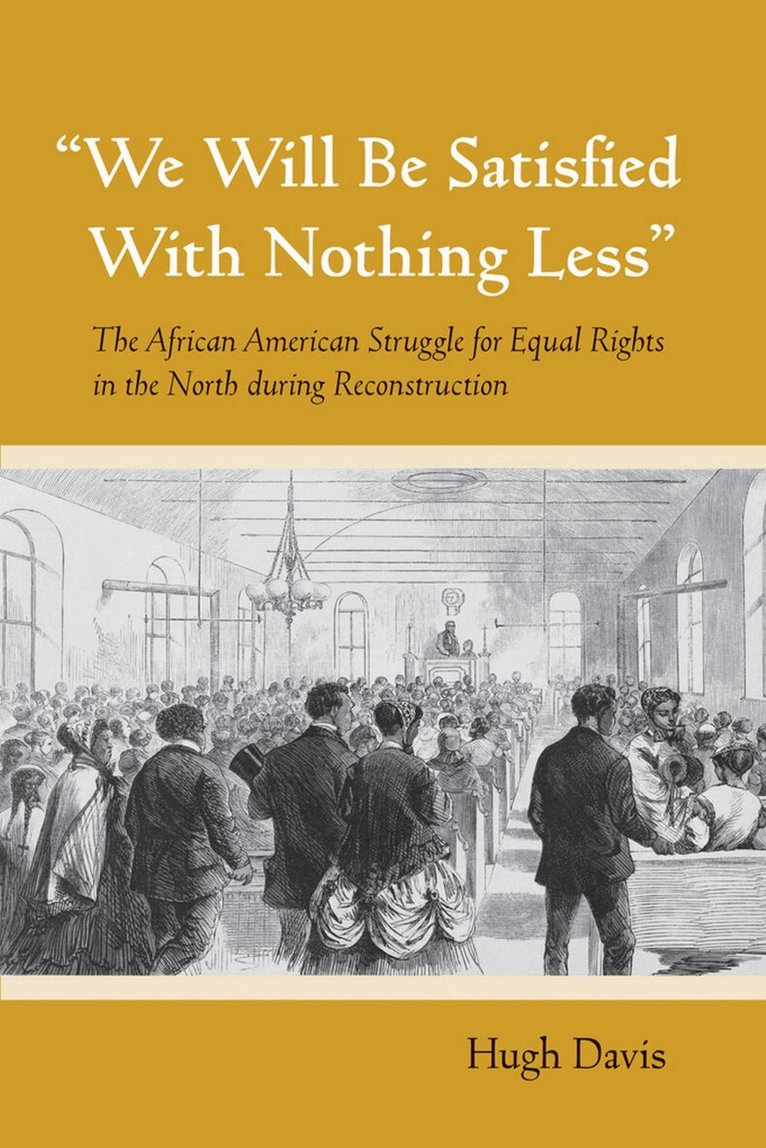
    "We Will Be Satisfied with Nothing Less"

    The African American Struggle for Equal Rights in the North During Reconstruction

    AvHugh Davis

    Inbunden, Engelska, 2011

    679 kr

    Beställningsvara. Skickas inom 10-15 vardagar. Fri frakt över 249 kr.

    Beskrivning

    Historians have focused almost entirely on the attempt by southern African Americans to attain equal rights during Reconstruction. However, the northern states also witnessed a significant period of struggle during these years. Northern blacks vigorously protested laws establishing inequality in education, public accommodations, and political life and challenged the Republican Party to live up to its stated ideals. In "We Will Be Satisfied With Nothing Less", Hugh Davis concentrates on the two issues that African Americans in the North considered most essential: black male suffrage rights and equal access to the public schools. Davis connects the local and the national; he joins the specifics of campaigns in places such as Cincinnati, Detroit, and San Francisco with the work of the National Equal Rights League and its successor, the National Executive Committee of Colored Persons. The narrative moves forward from their launching of the equal rights movement in 1864 to the "end" of Reconstruction in the North two decades later.The struggle to gain male suffrage rights was the centerpiece of the movement's agenda in the 1860s, while the school issue remained a major objective throughout the period. Following the ratification of the Fifteenth Amendment in 1870, northern blacks devoted considerable attention to assessing their place within the Republican Party and determining how they could most effectively employ the franchise to protect the rights of all citizens.

    Produktinformation

    • Utgivningsdatum:2011-08-15
    • Mått:152 x 229 x 24 mm
    • Vikt:454 g
    • Format:Inbunden
    • Språk:Engelska
    • Antal sidor:232
    • Förlag:Cornell University Press
    • ISBN:9780801450099

    Utforska kategorier

    • Socialhistoria och kulturhistoria inom Historia och arkeologi
    • Amerikas historia inom Historia och arkeologi
    • Etnicitet inom Samhälle och politik

    Mer om författaren

    Hugh Davis is Professor Emeritus of History at Southern Connecticut State University. He is the author of Leonard Bacon: New England Reformer and Antislavery Moderate and Joshua Leavitt: Evangelical Abolitionist.

    Recensioner i media

    Building upon literature focusing on local movements, Davis makes a strong case for the ability of northern African American activists to overcome internal divisions and significant external challenges (especially tepid support from white Republicans) to champion male suffrage and civil rights legislation. Davis argues persuasively that despite comprising but 2 percent of the northern population during Reconstruction, African American organizations placed 'relentless pressure on the white power structure at all levels of government,' and as a result were able to achieve universal male suffrage and some important civil rights gains, especially greater access to public education. Recommended.(Choice) Davis contributes significantly to intensifying interest in moving beyond misplaced regionalism to understand the embedded power of racism nationwide in America.... Davis nicely connects blacks' postwar activism with their antebellum abolitionism and their wartime military service.(Journal of American History) With this book, Hugh Davis demonstrates the importance of including the North, and especially northern African Americans, in any account of the Reconstruction era. It concisely and persuasively charts northern black activism on behalf of campaigns for universal male voting rights, access to public education, and the abolition of all racial and caste discrimination.... Among the insights that Davis offers is the continuity in tactics and ideology that connected black northern activism before the Civil War with black activism later in the century.... Written in crisp and clear prose, this book is a valuable addition to the crowded field of Reconstruction scholarship.- W. Fitzhugh Brundage (Pennsylvania Magazine of History and Biography)

    Innehållsförteckning

    • Prologue1. Launching the Equal Rights Movement2. Toward the Fifteenth Amendment3. The Crusade for Equal Access to Public Schools, 1864–18704. The Equal Rights Struggle in the 1870s5. The Republican Retreat from ReconstructionEpilogueNotesBibliographyIndex