• Fri frakt över 249 kr
  • •
  • Snabba leveranser
  • •
  • Billiga böcker
Kundservice

Du är på sajten för privatpersoner.

Företag, bibliotek eller offentlig verksamhet?

Du handlar på classic.bokus.com, där alla dina funktioner finns intakta.
Till classic.bokus.com
Bokus logotyp. Gå till startsidan.
  • Erbjudanden
  • Nyheter
  • Student
  • Topplistor
  • Barn & ungdom
  • Bokus Play
  • E-böcker
  • Pocketböcker
  • Spel & pussel

10% rabatt på allt med kod NYSTART10 →

Sidfot

Mina sidor

    Hjälp

    • Kundservice
    • Vanliga frågor och svar
    • Frakt och leverans
    • Retur vid ångerrätt
    • Reklamera vara
    • Betalning
    • Köpvillkor
    • Allmänna villkor
    • Information om webbplatsens tillgänglighet

    Om Bokus

    • Om oss
    • Pressrum
    • För studenter
    • För företag
    • För bibliotek och offentlig verksamhet
    • För leverantörer
    • Hållbarhet

    Populärt

    • Aktuella erbjudanden
    • Presentkort
    • Studentlitteratur
    • Nya böcker
    • Topplistor
    • Signerade böcker
    • Engelska böcker

    Inspiration

    • Boktips
    • BookTok
    • Populära bokserier
    • Barnbokskaraktärer
    • Populära författare
    Logotyp för Bokus
    Följ oss på Facebook (extern länk)Följ oss på Instagram (extern länk)Följ oss på YouTube (extern länk)Följ oss på TikTok (extern länk)
    bokus @ CookiesAnpassa cookiesIntegritetspolicyKöpvillkor
    Till Citymail hemsida (extern länk)Till Budbee hemsida (extern länk)Till Postnord hemsida (extern länk)Till Schenker hemsida (extern länk)Till Early Bird hemsida (extern länk)Till Walleys hemsida (extern länk)
    1. Naturvetenskap och teknik
    2. Matematik och naturvetenskap
    3. Biologi
    4. Däggdjur

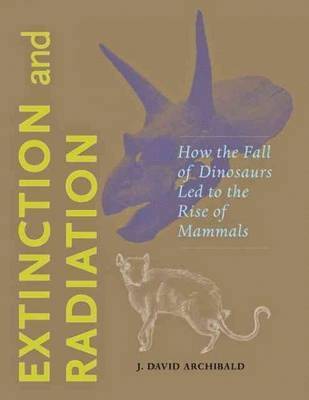
    Extinction and Radiation

    How the Fall of Dinosaurs Led to the Rise of Mammals

    AvJ. David Archibald

    Inbunden, Engelska, 2011

    788 kr

    Beställningsvara. Skickas inom 5-8 vardagar. Fri frakt över 249 kr.

    Beskrivning

    In the geological blink of an eye, mammals moved from an obscure group of vertebrates into a class of planetary dominance. Why? J. David Archibald's provocative study identifies the fall of dinosaurs as the factor that allowed mammals to evolve into the dominant tetrapod form. Archibald refutes the widely accepted single-cause impact theory for dinosaur extinction. He demonstrates that multiple factors-massive volcanic eruptions, loss of shallow seas, and extraterrestrial impact-likely led to their demise. While their avian relatives ultimately survived and thrived, terrestrial dinosaurs did not. Taking their place as the dominant land and sea tetrapods were mammals, whose radiation was explosive following nonavian dinosaur extinction. Archibald argues that because of dinosaurs, Mesozoic mammals changed relatively slowly for 145 million years compared to the prodigious Cenozoic radiation that followed. Finally out from under the shadow of the giant reptiles, Cenozoic mammals evolved into the forms we recognize today in a mere ten million years after dinosaur extinction. Extinction and Radiation is the first book to convincingly link the rise of mammals with the fall of dinosaurs.Piecing together evidence from both molecular biology and the fossil record, Archibald shows how science is edging closer to understanding exactly what happened during the mass extinctions near the K/T boundary and the radiation that followed.

    Produktinformation

    • Utgivningsdatum:2011-05-10
    • Mått:216 x 279 x 14 mm
    • Vikt:590 g
    • Format:Inbunden
    • Språk:Engelska
    • Antal sidor:120
    • Förlag:Johns Hopkins University Press
    • ISBN:9780801898051

    Utforska kategorier

    • Däggdjur inom Naturvetenskap och teknik
    • Däggdjur inom Djur och Natur
    • Dinosaurieböcker inom Djur och Natur

    Mer om författaren

    J. David Archibald is a professor of biology and curator of mammals at San Diego State University and coeditor of The Rise of Placental Mammals: Origins and Relationships of the Major Extant Clades, also published by Johns Hopkins.

    Recensioner i media

    Highly recommended. Choice A learned essay, written clearly and attractively for students and the public. -- Michael J. Benton Cambridge Archaeological Journal What makes Archibald's book a highly recommendable example of the scientific process is that the author carefully lays out all the paleontological evidence available to him and uses that evidence to evaluate the many possible explanations of the extinction, discussing the strengths, weaknesses, and limitations of each explanation in the process. Reports of the National Center for Science Education This is a learned essay, written clearly and attractively for students and the public. -- Michael J. Benton Geological Magazine An excellent compendium of the current state of paleontological knowledge about the contemporaneous histories of these two groups. -- Mark A. McPeek Quarterly Review of Biology A highly recommendable example of the scientific process is that the author carefully lays out all the paleontological evidence available to him and uses that evidence to evaluate the many possible explanations of the extinction. -- P David Polly Reports of the National Center for Science Education The book itself is a handsome quarto volume illustrated by good drawings and graphs. It will be most useful to paleontologists, evolutionary biologists and biogeographers. It will stand as a good example of what can be accomplished in academia. Priscum, Newsletter of the Paleontological Society Books like Extinction and Radiation enable interested members of the general public to share in the excitement of the arugment. -- Nicholas Gould International Zoo News This volume is logically organized, easily readable, and a noteworthy synthesis of the current state of our knowledge of the disappearance of nonavian dinosaurs and mammalian radiation. It is a useful reference from an acknowledged authority in the field and valuable for students, teachers, scientists, and all people interested in the evolution and fate of our planet and its biodiversity. Journal of Mammalogy

    Innehållsförteckning

    • Preface1. The Late Cretaceous Nonavian Dinosaur Record2. In the Shadow of Nonavian Dinosaurs3. In Search of Our Most Ancient Eutherian Ancestors4. Patterns of Extinction at the K/ T Boundary5. Causes of Extinction at the K/ T Boundary6. After the Impact: Modern Mammals, When and WhenceEpilogueNotesReferencesIndex