• Fri frakt över 249 kr
  • •
  • Snabba leveranser
  • •
  • Billiga böcker
Kundservice

Du är på sajten för privatpersoner.

Företag, bibliotek eller offentlig verksamhet?

Du handlar på classic.bokus.com, där alla dina funktioner finns intakta.
Till classic.bokus.com
Bokus logotyp. Gå till startsidan.
  • Erbjudanden
  • Nyheter
  • Student
  • Topplistor
  • Barn & ungdom
  • Bokus Play
  • E-böcker
  • Pocketböcker
  • Spel & pussel

10% rabatt på allt med kod: NYSTART10 →

Sidfot

Mina sidor

    Hjälp

    • Kundservice
    • Vanliga frågor och svar
    • Frakt och leverans
    • Retur vid ångerrätt
    • Reklamera vara
    • Betalning
    • Köpvillkor
    • Allmänna villkor
    • Information om webbplatsens tillgänglighet

    Om Bokus

    • Om oss
    • Pressrum
    • För studenter
    • För företag
    • För bibliotek och offentlig verksamhet
    • För leverantörer
    • Hållbarhet

    Populärt

    • Aktuella erbjudanden
    • Presentkort
    • Studentlitteratur
    • Nya böcker
    • Topplistor
    • Signerade böcker
    • Engelska böcker

    Inspiration

    • Boktips
    • BookTok
    • Populära bokserier
    • Barnbokskaraktärer
    • Populära författare
    Logotyp för Bokus
    Följ oss på Facebook (extern länk)Följ oss på Instagram (extern länk)Följ oss på YouTube (extern länk)Följ oss på TikTok (extern länk)
    bokus @ CookiesAnpassa cookiesIntegritetspolicyKöpvillkor
    Till Citymail hemsida (extern länk)Till Budbee hemsida (extern länk)Till Postnord hemsida (extern länk)Till Schenker hemsida (extern länk)Till Early Bird hemsida (extern länk)Till Walleys hemsida (extern länk)
    1. Samhälle och politik
    2. Sociologi och antropologi
    3. Antropologi

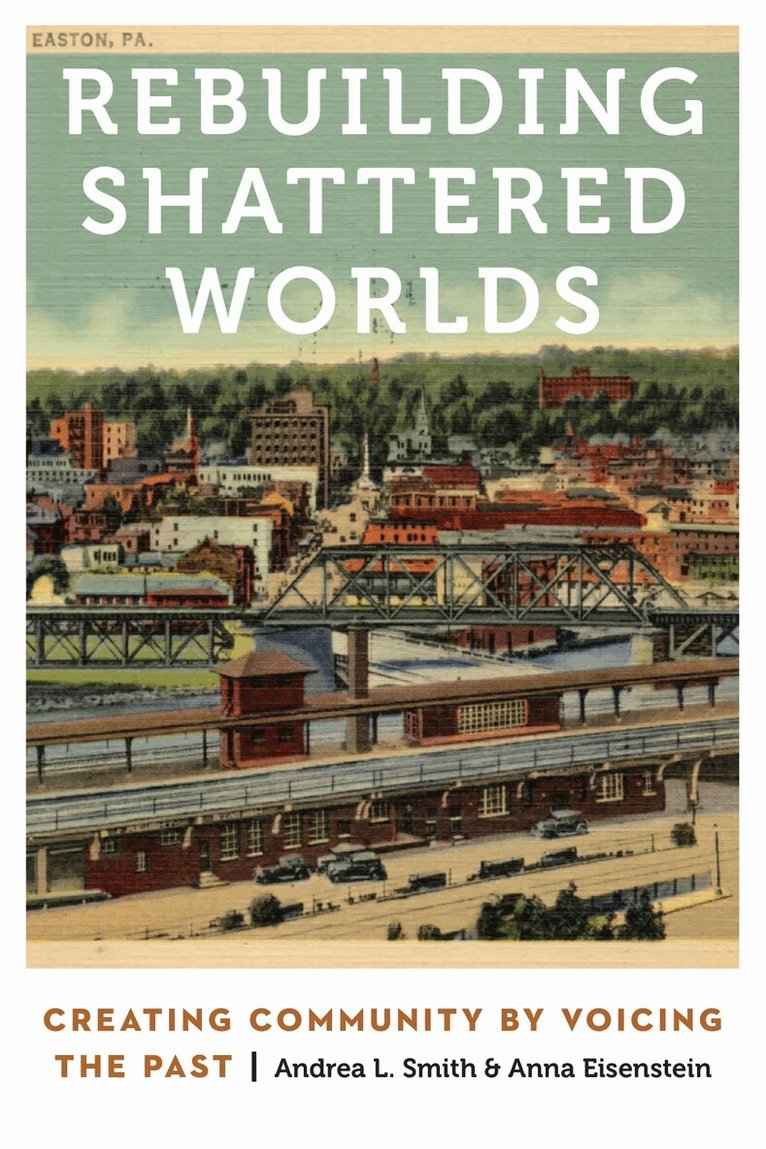
    Rebuilding Shattered Worlds

    Creating Community by Voicing the Past

    AvA. Lynn Smith,Anna Eisenstein

    Häftad, Engelska, 2016

    Del i serien Anthropology of Contemporary North America

    336 kr

    Beställningsvara. Skickas inom 10-15 vardagar. Fri frakt över 249 kr.

    Beskrivning

    Rebuilding Shattered Worlds explores the ways a demolished neighborhood in Easton, Pennsylvania, still resonates in the imaginations of displaced residents. Drawing on six years of ethnographic research, the authors highlight the intersecting languages of blight, race, and place as elderly interlocutors attempt to make sense of the world they lost when urban renewal initiatives razed “Syrian Town”-a densely packed neighborhood of Lebanese American, Italian American, and African American residents.This ethnography of remembering shows how former residents engage collective memory-making through their shared place, language, and class position within the larger cityscape. Demonstrating the creative power of linguistic resources, material traces, and absent spaces, Rebuilding Shattered Worlds brings together insights from linguistic anthropology and material studies, foregrounding the role language plays in signaling “pastness.”

    Produktinformation

    • Utgivningsdatum:2016-10-01
    • Mått:152 x 229 x 12 mm
    • Vikt:313 g
    • Format:Häftad
    • Språk:Engelska
    • Serie:Anthropology of Contemporary North America
    • Antal sidor:210
    • Förlag:University of Nebraska Press
    • ISBN:9780803290587

    Utforska kategorier

    • Antropologi inom Samhälle och politik
    • Amerikas historia inom Historia och arkeologi
    • Lokalhistoria och kulturhistoria inom Historia och arkeologi

    Mer om författaren

    Andrea L. Smith is a professor of anthropology at Lafayette College, the author of Colonial Memory and Postcolonial Europe: Maltese Settlers in Algeria and France, and the editor of Europe’s Invisible Migrants: Consequences of the Colonists’ Return. Anna Eisenstein is a doctoral candidate in the department of anthropology at the University of Virginia.

    Recensioner i media

    "If a neighborhood is destroyed in the name of urban renewal, does its community cease to exist? In this deft ethnography, Andrea Smith and Anna Eisenstein explore the interplay of social memory, place, segregation, and language in Easton, a small city in eastern Pennsylvania."-Alex K. Ruuska, American Ethnologist “A model of an involved anthropology, and of deep and subtle analysis of memory, place, race, and class, with implications that extend far beyond the boundaries of the vanished blocks of ‘Syrian Town.’”-Jane H. Hill, author of The Everyday Language of White Racism“Rebuilding Shattered Worlds speaks to anyone interested in the operations of memory and nostalgia. And it makes a major contribution to the understanding of everyday historical consciousness by detecting forms of time travel that have not, thus far, been on the radar of historians and anthropologists.”-Charles Stewart, author of Dreaming and Historical Consciousness in Island Greece  “Smith and Eisenstein vividly capture the loss and reconnection experienced by the residents of ‘Syrian Town.’ This book will serve as an instructive text for ethnographers interested in collective memory and urban change.”-Sarah Mayorga-Gallo, author of Behind the White Picket Fence: Power and Privilege in a Multiethnic Neighborhood“[Rebuilding Shattered Worlds] is not only innovative in its method to the study of memory and urban politics of a changing American neighborhood, but also in its ethnographic approach. . . . [It is] situated in a broad spectrum of theoretical and methodological views that span cultural anthropology, linguistic anthropology, urban studies, history, and migration studies.”-Aomar Boum, assistant professor of anthropology at the University of California, Los Angeles and author of Memories of Absence: How Muslims Remember Jews in Morocco

    Innehållsförteckning

    • List of Illustrations                                         Acknowledgments                                          Terminology and Transcription Conventions            1. Ethnography of the Expelled                     2. The Language of Blight                             3. Narrating Diversity                                     4. Voices from the Past                                  5. The Material of Memory                            6. Nostalgia as Engine of Change                  Notes Bibliography  Index