• Fri frakt över 249 kr
  • •
  • Snabba leveranser
  • •
  • Billiga böcker
Kundservice

Du är på sajten för privatpersoner.

Företag, bibliotek eller offentlig verksamhet?

Du handlar på classic.bokus.com, där alla dina funktioner finns intakta.
Till classic.bokus.com
Bokus logotyp. Gå till startsidan.
  • Erbjudanden
  • Nyheter
  • Student
  • Topplistor
  • Barn & ungdom
  • Bokus Play
  • E-böcker
  • Pocketböcker
  • Spel & pussel

10% rabatt på allt med kod NYSTART10 →

Sidfot

Mina sidor

    Hjälp

    • Kundservice
    • Vanliga frågor och svar
    • Frakt och leverans
    • Retur vid ångerrätt
    • Reklamera vara
    • Betalning
    • Köpvillkor
    • Allmänna villkor
    • Information om webbplatsens tillgänglighet

    Om Bokus

    • Om oss
    • Pressrum
    • För studenter
    • För företag
    • För bibliotek och offentlig verksamhet
    • För leverantörer
    • Hållbarhet

    Populärt

    • Aktuella erbjudanden
    • Presentkort
    • Studentlitteratur
    • Nya böcker
    • Topplistor
    • Signerade böcker
    • Engelska böcker

    Inspiration

    • Boktips
    • BookTok
    • Populära bokserier
    • Barnbokskaraktärer
    • Populära författare
    Logotyp för Bokus
    Följ oss på Facebook (extern länk)Följ oss på Instagram (extern länk)Följ oss på YouTube (extern länk)Följ oss på TikTok (extern länk)
    bokus @ CookiesAnpassa cookiesIntegritetspolicyKöpvillkor
    Till Citymail hemsida (extern länk)Till Budbee hemsida (extern länk)Till Postnord hemsida (extern länk)Till Schenker hemsida (extern länk)Till Early Bird hemsida (extern länk)Till Walleys hemsida (extern länk)
    1. Samhälle och politik
    2. Samhälle och kultur

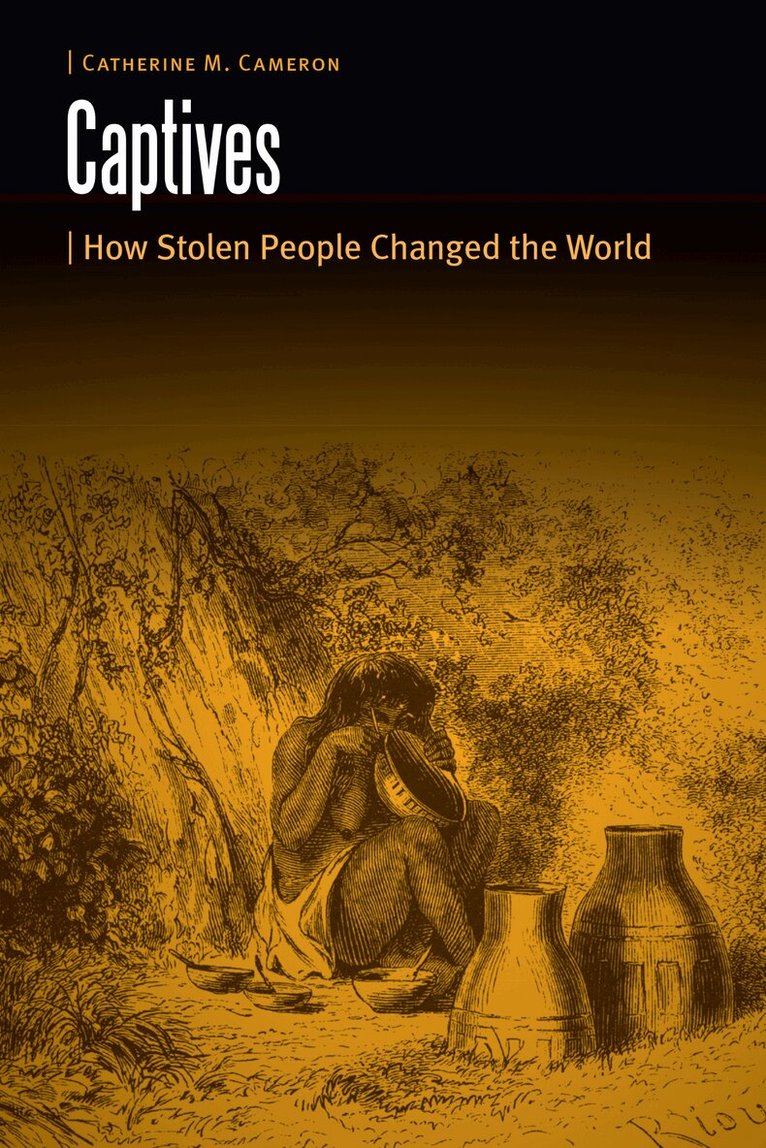
    Captives

    How Stolen People Changed the World

    AvCatherine M. Cameron

    E-bok
    PDF, Engelska, 2016

    Del i serien Borderlands and Transcultural Studies

    396 kr

    Läs direkt i Bokus Reader – eller ladda ned till din enhet (PDF kräver ofta zoom och scroll på små skärmar).

    Fler format och utgåvor

    Inbunden

    465 kr

    E-bok

    396 kr

    Häftad

    279 kr

    Beskrivning

    In Captives: How Stolen People Changed the World archaeologist Catherine M. Cameron provides an eye-opening comparative study of the profound impact captives of warfare and raiding have had on small-scale societies through time. Cameron provides a new point of orientation for archaeologists, anthropologists, historians, and other scholars by illuminating the impact that captive-taking and enslavement have had on cultural change, with important implications for understanding the past.Focusing primarily on indigenous societies in the Americas while extending the comparative reach to include Europe, Africa, and Island Southeast Asia, Cameron draws on ethnographic, ethnohistoric, historic, and archaeological data to examine the roles that captives played in small-scale societies. In such societies, captives represented an almost universal social category consisting predominantly of women and children and constituting 10 to 50 percent of the population in a given society. Cameron demonstrates how captives brought with them new technologies, design styles, foodways, religious practices, and more, all of which changed the captor culture.This book provides a framework that will enable archaeologists to understand the scale and nature of cultural transmission by captives, and it will also interest anthropologists, historians, and other scholars who study captive-taking and slavery. Cameron’s exploration of the peculiar amnesia that surrounds memories of captive-taking and enslavement around the world also establishes a connection with unmistakable contemporary relevance.

    Produktinformation

    • Utgivningsdatum:2016-11-01
    • Språk:Engelska
    • Antal sidor:232
    • Filformat:PDF
    • Kopieringsskydd:LCP
    • ISBN:9780803295780
    • Förlag:University of Nebraska Press
    • Serie:Borderlands and Transcultural Studies

    Utforska kategorier

    • Samhälle och kultur inom Samhälle och politik

    Mer om författaren

    Catherine M. Cameron is a professor of anthropology at the University of Colorado, Boulder. She is the author of Chaco and After in the Northern San Juan: Excavations at the Bluff Great House and Invisible Citizens: Captives and Their Consequences.

    Recensioner i media

    “In this ambitious and learned work, award-winning archaeologist Catherine Cameron explores how violence against the few may transform the cultures of the many.”-James Brooks, author of Captives and Cousins: Slavery, Kinship, and Community in the Southwest Borderlands “[Captives] could have a significant impact on archaeological studies.”-Eric E. Bowne, Journal of Anthropological Research"Cameron accomplishes exactly what she set out to do: opening up a new space for investigation and laying out an agenda for further research. . . . She makes it clear that Captives is intended not to be the final word but, rather, the opening salvo. Archaeologists, anthropologists, historians, and ethnohistorians should heed her call."-Matthew Kruer, Ethnohistory "This is a well-written text. . . . Equally accessible to advanced undergraduate students and researchers, with a wide range of studies and well-structured approach to captives as social beings that are organized in a coherent manner throughout. It should be the starting point for anyone seeking to understand the various facets of captive-taking and the lives of captives in small-scale societies."-Liza Gijanto, Historical Archaeology "[Captives] is useful for scholars in many fields interested in the topic, for classroom use, and the public. It is a significant contribution to the topic of captives and slaves, which remains urgent as we struggle with our own national legacy of slavery, as well human trafficking across the world and down the street."-Kenneth M. Ames, Oregon Historical Quarterly “This moving book helps us understand: What was it like to be a slave? A slave-owner? How does slavery affect society? It demonstrates that archaeology-the social science of the past-can ask big questions about the human experience.”-Michelle Hegmon, professor in the School of Human Evolution and Social Change at Arizona State University and editor of The Archaeology of the Human Experience “Captives challenges archaeologists to broaden their scope of inquiry to recognize the temporal depth, geographical breadth, and nearly universal presence of captives in small-scale societies of the past. Catherine Cameron’s comparative approach to captives lays the groundwork, methodologically and theoretically, for understanding the lives of captives, their social locations, and their significance as agents of change in societies of all scales throughout human prehistory and, indeed, into the present.”-Brenda J. Bowser, associate professor of anthropology at California State University–Fullerton, coeditor of Cultural Transmission and Material Culture: Breaking Down Boundaries  "Captives: How Stolen People Changed the World challenges archaeologists to consider captive-taking, an ancient and almost universal practice in human history, as a significant mode of cultural transmissionand a source of culture change. . . . Here Cameron provides a framework that enables archaeologists to investigate the nature and scale of the roles that captives have played in small-scale societies."-David H. Dye, American Antiquity "Captives is foremost an invitation to begin to see the past in a new way-to make visible individuals who have long been made invisible in archaeological interpretations but have nonetheless been there all along."cLydia Wilson Marshall, KIVA: Journal of Southwestern Anthropology and History "This book will be an eye-opener for archaeology."-European Journal of Archaeology

    Innehållsförteckning

    • List of IllustrationsAcknowledgments1. The Captive in Space, Time, and Mind2. Captive Taking in Global Perspective3. The Captive as Social Person4. Captives and the Creation of Power5. Captives, Social Boundaries, and Ethnogenesis6. Captives and Cultural Transmission7. Captives in PrehistoryNotesReferencesIndex