Kapitalet, överheten och alla vi andra: Klassamhället i Sverige - det rådan
Göran Therborn
Häftad, 2018
492 kr
Du är på sajten för privatpersoner.
3 975 kr
Beställningsvara. Skickas inom 3-6 vardagar. Fri frakt över 249 kr.
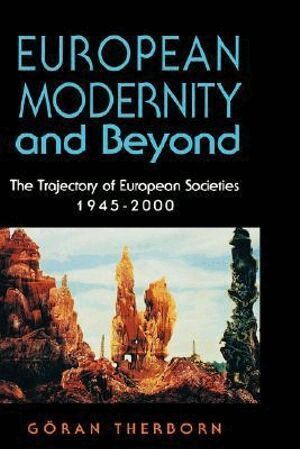
Combining theoretical depth with factual analysis, Göran Therborn addresses the questions that underpin an understanding of the nature of European modernity, including: To what extent is the period 1945-2000 producing fundamental change and what are the areas of continuity? Have the societies of Europe become more similar to others on the globe or more distinctively European? What are the prospects of Europe after decades of postwar change and the end of the Cold War?
Issues covered include the division of paid and unpaid labour, patterns of rights in different social spheres, the development of mass consumption, the evolution of risks, the spatial range of economic and cultural change, collective memory and identities, the geography of happiness, and modes of collective action. The author relates these issues to the two great social steering projects of the period - socialism in the East and the European Union in the West.
Göran Therborn is Professor of Sociology at the University of Göteborg, Sweden. His previous books include The Ideology of Power and the Power of Ideology (1980), Why Some Peoples are More Unemployed than Others (1986) and Can the Welfare State Compete? (with A. Pfaller & L. Gough, 1991). He is a former President of the Nordic Sociological Association.
`There is a dearth of serious, analytical informed sociological accounts of the significance of modern Europe. Yet there is a wealth of data available and a core theoretical tradition of historical sociology and comparative analysis. Therborn′s book is an impressive marriage of painstakingly collected and superbly organised information with directing theory. He calls it "sociological history" and says it is aimed at a generally interested public. It is this and much more. It is a highly accessible compendium of current sociological data about a wide range of European (east and west) social structural and cultural organisation and behaviour and a clear account of the directions of European social change within an unfinished project of modernity.... The reach is very ambitious. The macro-sociological grasp is impressive within the bounds of a single volume.... The book does not have a thesis or a big idea. Indeed this is explicitly disavowed by Therborn. But it is a remarkably focused, precise and extensive treatment of a huge topic. As a useful teaching text it has, to my knowledge, no rival. Its coverage and comparison of issues and societies both eastern and western, its enormously usable collection of data (74 tables), its Europe-wide contextualisation of the substantial issues important in contemporary empirical sociology and, lest this sound too sombre, the clarity and frequent vividness of its writing and its reasoned political hopefulness make it a most significant book in this area′ - Sociology`Therborn′s concern in this stimulating and highly ambitious work is nothing less than to take stock of European modernity in the period since the Second World War. How has it related to its traditions of Enlightenment and citizenship? What have been the basic patterns of development, economic, social, cultural and political? Where does Europe fit now, in a world where there are not simply different routes to modernity but different conceptions of the end-point, `alternative modernities′? The strength of this book is that Therborn does not address these questions mainly speculatively but historically and empirically. In this he has achieved an astonishing feat of compression. Nowhere else can one find, within the compass of one volume, such an array of statistics and researching findings... It is difficult to imagine anyone other than Therborn who might have attempted this gigantic task of comprehension and compression. He has also given us many glimpses of his enterprises... One has the distinct impression, too, that this is only the first of a series of syntheses covering the European story in the second half of the twentieth century. If so, there is much to look forward to. Meanwhile what we have here is a splendid achievement, and a godsend to hard-pressed students and teachers of courses on contemporary European politics and society′ - Political Studies`Göran Therborn′s trajectory of European societies is a masterful work of erudition and a synthesis of recent social theories grounded on empirical evidence. Written at the cross-road of sociology, political science and social history, this cross-national comparison deserves to be required reading for senior students on both sides of the Atlantic′ - Professor Mattei Dogan, Director, CNRS, Paris
Göran Therborn
Häftad, 2018
492 kr
Linnea Swedenmark, Camilla Salazar Atías, Johan Sjölander, Lisa Nåbo, Rebecka Prentell, Andrea Törnestam, Malin Hansson, Marika Lindgren Åsbrink, Emma Fastesson Lindgren, Daniel Färm, Johan Enfeldt, Niklas Blomqvist, Kajsa Borgnäs, Göran Therborn, Petter Martinsson, Anders Thor, Per Molander
Häftad, 2023
205 kr
Rolf Å. Gustafsson, Ulf Bjereld, Marco d’Eramo, Jon Sunnerfjell, Mats Benner, Jonny Hjelm, Göran Therborn, Bengt Olle Bengtsson, Anders Björnsson, Bo Rothstein, Christian Andersson
Häftad, 2024
197 kr
Göran Therborn
Häftad, 2018
232 kr
Anders Mellbourn, Olle Törnquist, Åsa Melldahl, Karin Edberg, Emelie Hantelius, Mats Benner, Lena Sohl, Tomas Wedin, Mikael Svensson, Rita Augestad Knudsen, Mats Svegfors, Sven Hort, Göran Therborn
Häftad, 2023
203 kr
Göran Therborn
Häftad, 2013
244 kr
Egil J. Skorstad, Ingvar Johansson, Jonas Axelsson, Jan Ch Karlsson, Tage Alalehto, Christian Gerdov, Sigrid Saveljeff, Björn Fryklund, Göran Therborn
Häftad, 2019
194 kr
Martin W Bauer, George D. Gaskell
Inbunden, 2000
3 975 kr
Du är på sajten för privatpersoner.
3 975 kr
Beställningsvara. Skickas inom 3-6 vardagar. Fri frakt över 249 kr.
Combining theoretical depth with factual analysis, Göran Therborn addresses the questions that underpin an understanding of the nature of European modernity, including: To what extent is the period 1945-2000 producing fundamental change and what are the areas of continuity? Have the societies of Europe become more similar to others on the globe or more distinctively European? What are the prospects of Europe after decades of postwar change and the end of the Cold War?
Issues covered include the division of paid and unpaid labour, patterns of rights in different social spheres, the development of mass consumption, the evolution of risks, the spatial range of economic and cultural change, collective memory and identities, the geography of happiness, and modes of collective action. The author relates these issues to the two great social steering projects of the period - socialism in the East and the European Union in the West.
Göran Therborn is Professor of Sociology at the University of Göteborg, Sweden. His previous books include The Ideology of Power and the Power of Ideology (1980), Why Some Peoples are More Unemployed than Others (1986) and Can the Welfare State Compete? (with A. Pfaller & L. Gough, 1991). He is a former President of the Nordic Sociological Association.
`There is a dearth of serious, analytical informed sociological accounts of the significance of modern Europe. Yet there is a wealth of data available and a core theoretical tradition of historical sociology and comparative analysis. Therborn′s book is an impressive marriage of painstakingly collected and superbly organised information with directing theory. He calls it "sociological history" and says it is aimed at a generally interested public. It is this and much more. It is a highly accessible compendium of current sociological data about a wide range of European (east and west) social structural and cultural organisation and behaviour and a clear account of the directions of European social change within an unfinished project of modernity.... The reach is very ambitious. The macro-sociological grasp is impressive within the bounds of a single volume.... The book does not have a thesis or a big idea. Indeed this is explicitly disavowed by Therborn. But it is a remarkably focused, precise and extensive treatment of a huge topic. As a useful teaching text it has, to my knowledge, no rival. Its coverage and comparison of issues and societies both eastern and western, its enormously usable collection of data (74 tables), its Europe-wide contextualisation of the substantial issues important in contemporary empirical sociology and, lest this sound too sombre, the clarity and frequent vividness of its writing and its reasoned political hopefulness make it a most significant book in this area′ - Sociology`Therborn′s concern in this stimulating and highly ambitious work is nothing less than to take stock of European modernity in the period since the Second World War. How has it related to its traditions of Enlightenment and citizenship? What have been the basic patterns of development, economic, social, cultural and political? Where does Europe fit now, in a world where there are not simply different routes to modernity but different conceptions of the end-point, `alternative modernities′? The strength of this book is that Therborn does not address these questions mainly speculatively but historically and empirically. In this he has achieved an astonishing feat of compression. Nowhere else can one find, within the compass of one volume, such an array of statistics and researching findings... It is difficult to imagine anyone other than Therborn who might have attempted this gigantic task of comprehension and compression. He has also given us many glimpses of his enterprises... One has the distinct impression, too, that this is only the first of a series of syntheses covering the European story in the second half of the twentieth century. If so, there is much to look forward to. Meanwhile what we have here is a splendid achievement, and a godsend to hard-pressed students and teachers of courses on contemporary European politics and society′ - Political Studies`Göran Therborn′s trajectory of European societies is a masterful work of erudition and a synthesis of recent social theories grounded on empirical evidence. Written at the cross-road of sociology, political science and social history, this cross-national comparison deserves to be required reading for senior students on both sides of the Atlantic′ - Professor Mattei Dogan, Director, CNRS, Paris
Göran Therborn
Häftad, 2018
492 kr
Linnea Swedenmark, Camilla Salazar Atías, Johan Sjölander, Lisa Nåbo, Rebecka Prentell, Andrea Törnestam, Malin Hansson, Marika Lindgren Åsbrink, Emma Fastesson Lindgren, Daniel Färm, Johan Enfeldt, Niklas Blomqvist, Kajsa Borgnäs, Göran Therborn, Petter Martinsson, Anders Thor, Per Molander
Häftad, 2023
205 kr
Rolf Å. Gustafsson, Ulf Bjereld, Marco d’Eramo, Jon Sunnerfjell, Mats Benner, Jonny Hjelm, Göran Therborn, Bengt Olle Bengtsson, Anders Björnsson, Bo Rothstein, Christian Andersson
Häftad, 2024
197 kr
Göran Therborn
Häftad, 2018
232 kr
Anders Mellbourn, Olle Törnquist, Åsa Melldahl, Karin Edberg, Emelie Hantelius, Mats Benner, Lena Sohl, Tomas Wedin, Mikael Svensson, Rita Augestad Knudsen, Mats Svegfors, Sven Hort, Göran Therborn
Häftad, 2023
203 kr
Göran Therborn
Häftad, 2013
244 kr
Egil J. Skorstad, Ingvar Johansson, Jonas Axelsson, Jan Ch Karlsson, Tage Alalehto, Christian Gerdov, Sigrid Saveljeff, Björn Fryklund, Göran Therborn
Häftad, 2019
194 kr
Martin W Bauer, George D. Gaskell
Inbunden, 2000
3 975 kr