• Fri frakt över 249 kr
  • •
  • Snabba leveranser
  • •
  • Billiga böcker
Kundservice

Du är på sajten för privatpersoner.

Företag, bibliotek eller offentlig verksamhet?

Du handlar på classic.bokus.com, där alla dina funktioner finns intakta.
Till classic.bokus.com
Bokus logotyp. Gå till startsidan.
  • Erbjudanden
  • Nyheter
  • Student
  • Topplistor
  • Barn & ungdom
  • Bokus Play
  • E-böcker
  • Pocketböcker
  • Spel & pussel

Må bättre, för mindre! Upp till 50% rabatt på hälsoböcker

Sidfot

Mina sidor

    Hjälp

    • Kundservice
    • Vanliga frågor och svar
    • Frakt och leverans
    • Retur vid ångerrätt
    • Reklamera vara
    • Betalning
    • Köpvillkor
    • Allmänna villkor
    • Information om webbplatsens tillgänglighet

    Om Bokus

    • Om oss
    • Pressrum
    • För studenter
    • För företag
    • För bibliotek och offentlig verksamhet
    • För leverantörer
    • Hållbarhet

    Populärt

    • Aktuella erbjudanden
    • Presentkort
    • Studentlitteratur
    • Nya böcker
    • Topplistor
    • Signerade böcker
    • Engelska böcker

    Inspiration

    • Boktips
    • BookTok
    • Populära bokserier
    • Barnbokskaraktärer
    • Populära författare
    Logotyp för Bokus
    Följ oss på Facebook (extern länk)Följ oss på Instagram (extern länk)Följ oss på YouTube (extern länk)Följ oss på TikTok (extern länk)
    bokus @ CookiesAnpassa cookiesIntegritetspolicyKöpvillkor
    Till Citymail hemsida (extern länk)Till Budbee hemsida (extern länk)Till Postnord hemsida (extern länk)Till Schenker hemsida (extern länk)Till Early Bird hemsida (extern länk)Till Walleys hemsida (extern länk)
    1. Skönlitteratur
    2. Litteraturvetenskap
    3. Litteraturvetenskap

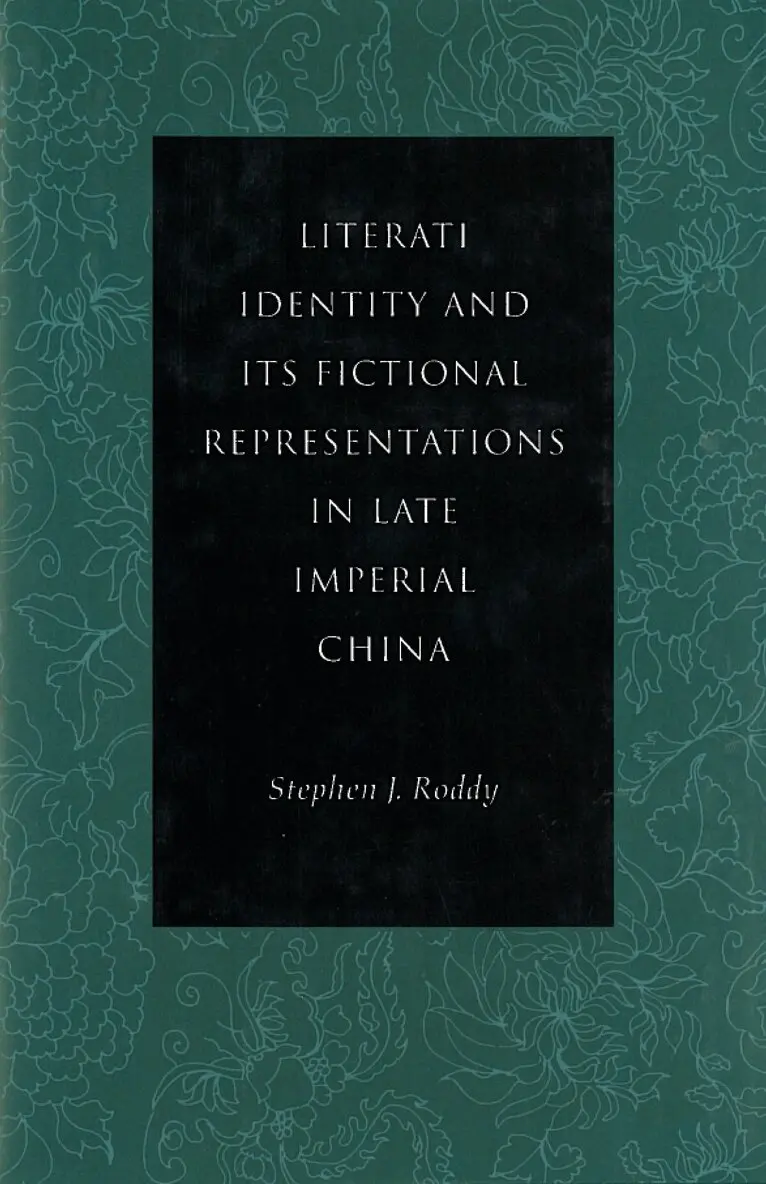
    Literati Identity and Its Fictional Representations in Late Imperial China

    AvStephen J. Roddy

    Inbunden, Engelska, 1998

    1 030 kr

    Beställningsvara. Skickas inom 10-15 vardagar. Fri frakt över 249 kr.

    Beskrivning

    This book is a study of the intellectual and literary factors that in the mid-Qing dynasty contributed to the development of vernacular fiction of unprecedented scholarly and satirical sophistication. The author examines three works of vernacular fiction—Rulin waishi (ca. 1750), Yesou puyan (ca. 1780), and Jinghua yuan (1821/1828)—for their articulation of new perceptions of the literati, or Confucian scholar-gentry. He places the reevaluation of literati roles and privilege found in these novels within the context of scholarly and cultural developments, notably the ascendance of the philological or evidential studies movement of the Qianlong and Jiaqing periods (1736-1820).The author cites a broad range of contemporary discursive writings to corroborate evidence of a clearly discernible trend to modify or negate the ethical and epistemological certainties that had long served as the ideological basis of literati social eminence. These writings implicitly redefined the tasks and interests by which the literati constructed their self-identity. The widespread predilection of these various discourses toward intellectualizing literati identity is in turn brought to bear on the three texts of vernacular fiction. By reading vernacular fiction, scholarly and exegetical texts, and aesthetic treatises as parallel if not wholly identical aims to redefine literati identity, the book attempts to advance our understanding of the intersections and overlaps between literary and discursive practices of late traditional China.

    Produktinformation

    • Utgivningsdatum:1998-02-01
    • Mått:152 x 229 x 30 mm
    • Vikt:612 g
    • Format:Inbunden
    • Språk:Engelska
    • Antal sidor:328
    • Förlag:Stanford University Press
    • ISBN:9780804731317

    Utforska kategorier

    • Litteraturvetenskap inom Skönlitteratur

    Mer om författaren

    Stephen J. Roddy is Assistant Professor of Chinese and Japanese at the University of San Francisco.

    Recensioner i media

    "What makes this book so outstanding is that unlike the plethora of books that talk in generalities about 'the literati' as an undifferentiated group, Roddy disaggregates the literati, discussing the recognized literati vocations in turn and making clear that literati at different social levels were differently situated in terms of their ability to realize the potential of each vocation. Roddy is rare among scholars of Ming and Qing fiction in combining analysis of literati novels with this sort of responsible historical scholarship." -Katherine Carlitz,University of Pittsburgh

    Innehållsförteckning

    • Introduction; Part I. The Image of the Literati in Qing Discourse: 1. Literati identity and the Qing epistemological crisis; 2. Discourses of the literati and the literati in discourse; 3. The intellectual milieus of three novelists; Part II. The Deconstruction of Literati Identity in Rulin Waishi: 4. Scholars, poets, painters and essayists; 5. The decline of literati mores; 6. The use and abuse of ritual; Part III. Fictional Reconstruction of Literati Identity: 7. Yesou Puyan: a Confucian-feminist utopia?; 8. The philological musings of Jinghua Yuan; Conclusion; Appendix; Notes; Bibliography; Index.