• Fri frakt över 249 kr
  • •
  • Snabba leveranser
  • •
  • Billiga böcker
Kundservice

Du är på sajten för privatpersoner.

Företag, bibliotek eller offentlig verksamhet?

Du handlar på classic.bokus.com, där alla dina funktioner finns intakta.
Till classic.bokus.com
Bokus logotyp. Gå till startsidan.
  • Erbjudanden
  • Student
  • Topplistor
  • Barn & ungdom
  • Bokus Play
  • E-böcker
  • Ljudböcker
  • Pocketböcker
  • Spel och pussel

5% studentrabatt – använd koden KURSBOK27 →

Sidfot

Mina sidor

    Hjälp

    • Kundservice
    • Vanliga frågor och svar
    • Frakt och leverans
    • Retur vid ångerrätt
    • Reklamera vara
    • Betalning
    • Köpvillkor
    • Allmänna villkor
    • Information om webbplatsens tillgänglighet

    Om Bokus

    • Om oss
    • Pressrum
    • För studenter
    • För företag
    • För bibliotek och offentlig verksamhet
    • För leverantörer
    • Hållbarhet

    Populärt

    • Aktuella erbjudanden
    • Presentkort
    • Studentlitteratur
    • Nya böcker
    • Topplistor
    • Signerade böcker
    • Engelska böcker

    Inspiration

    • Boktips
    • BookTok
    • Barnbokskaraktärer
    • Populära författare
    Logotyp för Bokus
    Följ oss på Facebook (extern länk)Följ oss på Instagram (extern länk)Följ oss på YouTube (extern länk)Följ oss på TikTok (extern länk)
    bokus @ CookiesAnpassa cookiesIntegritetspolicyKöpvillkor
    Till Citymail hemsida (extern länk)Till Budbee hemsida (extern länk)Till Postnord hemsida (extern länk)Till Schenker hemsida (extern länk)Till Early Bird hemsida (extern länk)Till Walleys hemsida (extern länk)
    1. Samhälle och politik
    2. Sociologi och antropologi
    3. Antropologi

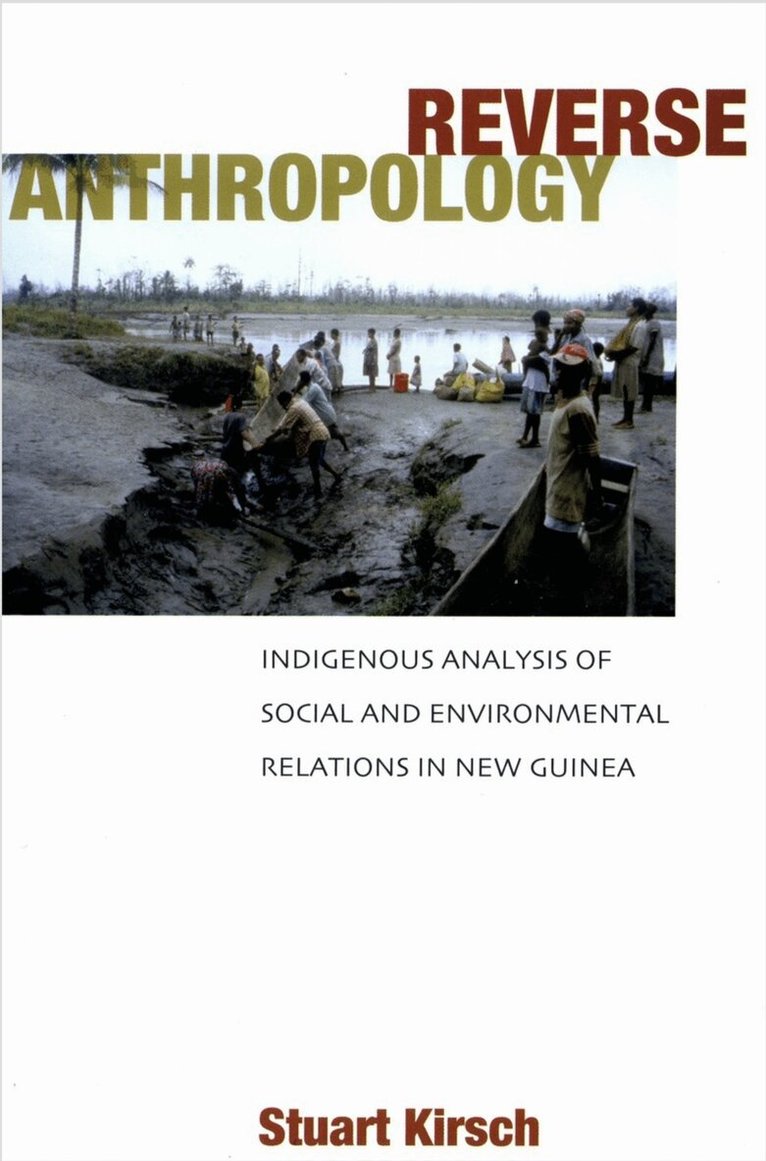
    Reverse Anthropology

    Indigenous Analysis of Social and Environmental Relations in New Guinea

    AvStuart Kirsch

    Inbunden, Engelska, 2006

    1 225 kr

    Beställningsvara. Skickas inom 10-15 vardagar. Fri frakt över 249 kr.

    Fler format och utgåvor

    Häftad

    294 kr

    Beskrivning

    While ethnography ordinarily privileges anthropological interpretations, this book attempts the reciprocal process of describing indigenous modes of analysis. Drawing on long-term ethnographic research with the Yonggom people of New Guinea, the author examines how indigenous analysis organizes local knowledge and provides a framework for interpreting events, from first contact and colonial rule to contemporary interactions with a multinational mining company and the Indonesian state.This book highlights Yonggom participation in two political movements: an international campaign against the Ok Tedi mine, which is responsible for extensive deforestation and environmental problems, and the opposition to Indonesian control over West Papua, including Yonggom experiences as political refugees in Papua New Guinea. The author challenges a prevailing homogenization in current representations of indigenous peoples, showing how Yonggom modes of analysis specifically have shaped these political movements.

    Produktinformation

    • Utgivningsdatum:2006-08-03
    • Mått:152 x 229 x 21 mm
    • Vikt:517 g
    • Format:Inbunden
    • Språk:Engelska
    • Antal sidor:296
    • Förlag:Stanford University Press
    • ISBN:9780804753418

    Utforska kategorier

    • Antropologi inom Samhälle och politik

    Mer om författaren

    Stuart Kirsch is Assistant Professor of Anthropology at the University of Michigan.

    Recensioner i media

    "In a sensitive and nuanced discussion of Yonggom emotions and morality, he effectively illustrates that Yonggom identify sorcerers by examining human emotions and intentionality." - American Anthropologist "This is an important story that will draw many audiences. It weaves personal experience, politics, and activism in and out of a scholarly analysis made possible by the way Kirsch draws on the analytical skills of his subjects. In this it is nothing short of a brilliant and sympathetic enterprise." - Dame Marilyn Strathern FBA, William Wyse Professor of Social Anthropology (University of Cambridge) "Kirsch's ethnographic passages sing with the immediacy of deep and vibrant experience . . . Because of its rich detail and moral clarity, Reverse Anthropology is a productive contribution to anthropological understandings of indigenous social analysis and it deserves a wide readership." - Expedition "Kirsch's ethnography is compelling on several levels. It is an excellent example of using indigenous frames of reference for understanding contemporary issues of globalization, colonialism and modernization. It is also a groundbreaking approach to the study of indigenous movements that yields alternative interpretations of political relationships and historical events going back to the first contact between European explorers and Melanesian indigenous groups. Finally, for students of anthropology, it is a highly personal account of the multiple roles of the anthropologist as analyst, participant and advocate for an indigenous group in a precedent-setting legal case against a powerful multinational mining corporation." - Canadian Review of Sociology "What is masterful about this . . . book is that the author, all the while telling the stories of these contemporary environmental and political struggles, contextualizes them in deeply indigenous ways of knowing and understanding history and the natural and social world." - Journal of Anthropological Research "Kirsch deserves recognition for this refreshing and intellectually stimulating monograph . . . That this work combines such an emancipatory potential for anthropology with descriptive, theoretically compelling, and well-written ethnography is a testament to Kirsch's scholarship and activism." - Anthropos "Stuart Kirsch's work is distinquished by his unusual analytic approach to collaborative work with the Yonggom people in pursuing environmental and civil rights. Inspired by Roy Wagners study of Melanesian cargo cults in terms of indigenous analyses of land, labor, capital, and consumption, Dr. Kirschs Reverse Anthropology links two traditions of research in Melanesia: classic ethnographic studies of reciprocity, religion, kinship, ecology, and personhood, dating from the works of Malinowski and Mauss, to contemporary research on class, commodification, citizenship, environmental pollution, and political violence. This compelling study demonstrates the conceptual and political contribution of reverse anthropology to our common understanding of the workings of local communities, nation-states, transnational corporations, and so-called modernization, thus creating a new synergy in the scholarship of Melanesia relevant to anthropological work much more broadly." - Gillian Feeley-Harnik (University of Michigan) "Kirsch documents and explains how Yonggom people construct social worlds and relationships through exchange and what happens when these patterns are disrupted or unreciprocated. The ethnographic descriptions of everyday life, conversations, complex rituals, myths, magic, and sorcery are rich in detail—reflecting his long association with people there and his empathic identification with the sorrow and loss they have experienced." - Current Anthropology "Reverse Anthropology is an uncommonly sophisticated work of engaged ethnography, and a book that provides an impressive and uncompromising model of equal accountability to scholarly research and indigenous advocacy. With patience, insight, and brilliant attention to Yonggom subjectivity, Stuart Kirsch reveals what it means to turn anthropology inside out. This is a standout book in the new anthropology of modern Melanesia." - Steven Feld (University of New Mexico) "Perhaps, if one thing can save our species hurtling to a collective global suicide through the nightmare of over industrialization, it's Reverse Anthropology: making our own society the subject of an objective analysis from the view-point of other cultures, and drawing on this insight . . . Kirsch's book is a significant contribution to this exercise." - Mines & Communities "This book . . . serves as a model for culturally appropriate solutions to contemporary local problems." - CHOICE

    Innehållsförteckning

    • @fmct:Contents @toc4:A note to the readeriii List of illustrationsiii Acknowledgementsiii A note on languageiii @toc2:Introduction000 1Historical encounters000 2The enchantment of place000 3Unrequited reciprocity000 4Sorcery and the mine000 5Mythical encounters000 6Divining violence000 7Loss and the future imagined000 Conclusions000 @toc4:Notes000 References000 Index000