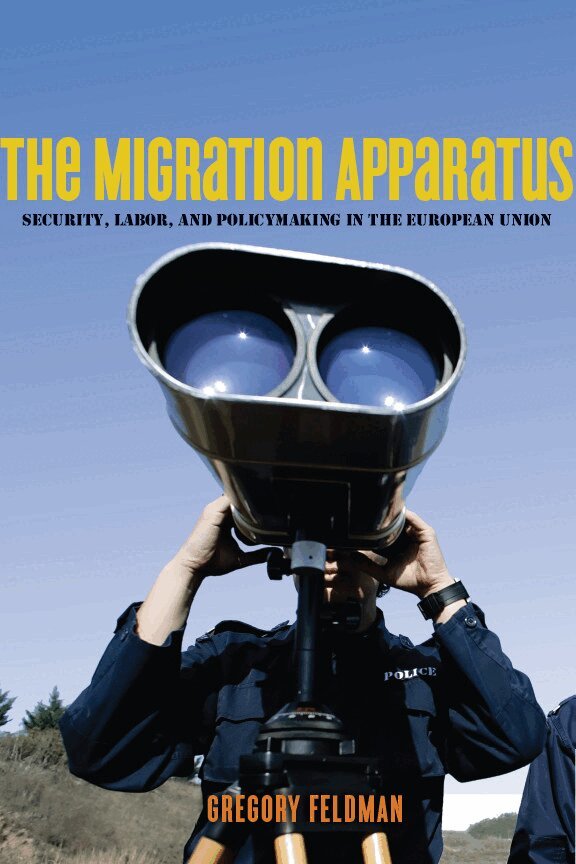
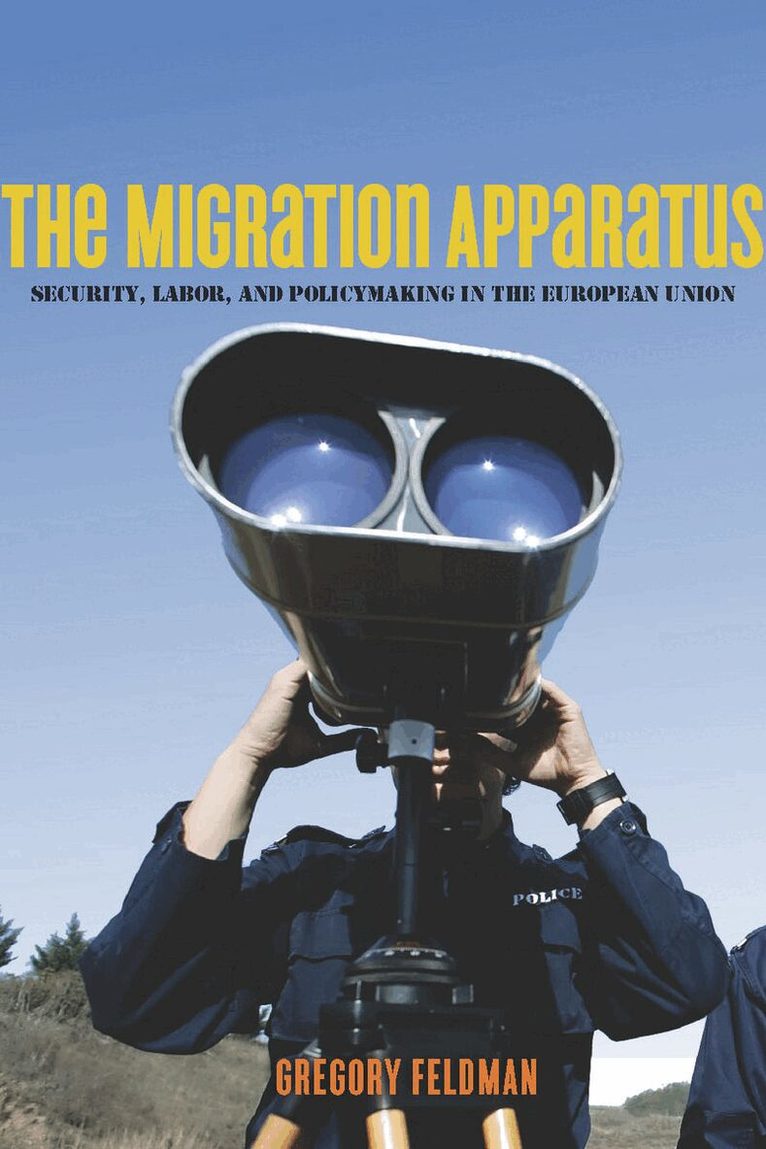
"Gregory Feldman's The Migration Apparatus: Security, Labor and Policymaking in the European Union not only provides an ethnography of the wider policies of the European migration apparatus that determine [irregular migration, borders, and migration policy], but also offers some inspiring Foucauldian interpretation about the securitization of migration . . . [The Migration Apparatus] also offers a grander global perspective on EU migration and security policy that offers a wider frame [than other] books."—Franck Düvell, Migration Studies "This is a thoughtful and thought-provoking book, which ends on a passionate note as the author gives expression to his fears that the creeping moral indifference induced by the language and culture of the 'migration apparatus' will give rise to ever more brutality beyond our borders."—Frances Webber, Race and Class "The Migration Apparatus is an informative and innovative book. . . I recommend this book to students and scholars who are interested in migration, the European Union, apparatuses of security, networks, and non-local ethnography."—Malene H. Jacobsen, Antipode: A Radical Journal of Geography "If we are to work as anthropologists and ethnographers on the most pressing of social issues, we must attend to apparatuses; we must, following Foucault, attend to tools, tactics, and devices that appear mundane but actually carry great weight. Gregory Feldman's The Migration Apparatus challenges anthropologists to think in terms of non-local ethnographic encounters with the specific intellectuals of EU policy and security. This is an extraordinary book on tools, tactics, and devices filled with conceptual tools and devices, and tactics for ethnography in the present moment."—Mark Maguire, Irish Journal of Anthropology "The Migration Apparatus is a well-sourced, timely, and stimulating analysis, a significant contribution to the study of international migration and of how contemporary migration movements become governed in the EU. The author provides an innovative methodology, setting the course for a novel research agenda that does not attempt to reduce complexity but seeks instead to trace heterogeneous actors, narratives, and rationales which, while camouflaged in a language of freedom and rights, contain and create novel forms of control, social inequality, and violence. This engaging and thought-provoking read is a much-needed ethnographic contribution to the interrelated fields of international migration, policy-making, and security studies. It is relevant for scholars and policymakers alike and suggests multiple avenues for further research into the intricate world of migration governance."—Maurice Stierl, International Migration Review "Based on an innovative methodology in anthropology of public policy, this rich book makes an useful contribution to, and is critical to, the debate on migration policies in Europe."—Romain Felli, Le Temps [Translated from French] "This book has a most intriguing title—the migration apparatus—which promises not only an anthropological and ethnographic approach to analyzing European Union (EU) migration policy but also tantalizes Foucauldians interested in the use of the concept of 'apparatus' in such a field. The book delivers on both promises to excellent effect . . . [A] very interesting book, well researched and well constructed."—Elspeth Guild, Ethnic and Racial Studies "Feldman provides a distinctive, thought-provoking look at the interacting welter of agencies, companies, and institutions central to shaping EU immigration policies. This is a signal contribution to the literature on immigration, mobility, citizenship, and new non-state nexuses of control—as well as to innovations in anthropological methodology. A fascinating book."—Donald Brenneis, University of Calfornia, Santa Cruz "This book deals with some truly imperative, topical issues—from refugees and migrants, to cross-border policing, to the curious processes by which an integrated EU immigration policy has evolved. Feldman provides a new method for studying highly mediated connections and opens up an important space for thinking about contemporary migration policy."—Cris Shore, University of Auckland "The Migration Apparatus will make major, cutting-edge contributions to several fields. Both the specific arguments-for example, about how the concept of circular migration is easing tensions-and the general arguments-about how EU policy is made and works-are fresh and exciting. An important book about an important topic."—Susan Greenhalgh, Harvard University "Recommended."—D. B. Robertson, CHOICE