• Fri frakt över 249 kr
  • •
  • Snabba leveranser
  • •
  • Billiga böcker
Kundservice

Du är på sajten för privatpersoner.

Företag, bibliotek eller offentlig verksamhet?

Du handlar på classic.bokus.com, där alla dina funktioner finns intakta.
Till classic.bokus.com
Bokus logotyp. Gå till startsidan.
  • Erbjudanden
  • Nyheter
  • Student
  • Topplistor
  • Barn & ungdom
  • Bokus Play
  • E-böcker
  • Pocketböcker
  • Spel & pussel

10% rabatt på allt med kod: NYSTART10 →

Sidfot

Mina sidor

    Hjälp

    • Kundservice
    • Vanliga frågor och svar
    • Frakt och leverans
    • Retur vid ångerrätt
    • Reklamera vara
    • Betalning
    • Köpvillkor
    • Allmänna villkor
    • Information om webbplatsens tillgänglighet

    Om Bokus

    • Om oss
    • Pressrum
    • För studenter
    • För företag
    • För bibliotek och offentlig verksamhet
    • För leverantörer
    • Hållbarhet

    Populärt

    • Aktuella erbjudanden
    • Presentkort
    • Studentlitteratur
    • Nya böcker
    • Topplistor
    • Signerade böcker
    • Engelska böcker

    Inspiration

    • Boktips
    • BookTok
    • Populära bokserier
    • Barnbokskaraktärer
    • Populära författare
    Logotyp för Bokus
    Följ oss på Facebook (extern länk)Följ oss på Instagram (extern länk)Följ oss på YouTube (extern länk)Följ oss på TikTok (extern länk)
    bokus @ CookiesAnpassa cookiesIntegritetspolicyKöpvillkor
    Till Citymail hemsida (extern länk)Till Budbee hemsida (extern länk)Till Postnord hemsida (extern länk)Till Schenker hemsida (extern länk)Till Early Bird hemsida (extern länk)Till Walleys hemsida (extern länk)
    1. Skönlitteratur
    2. Litteraturvetenskap

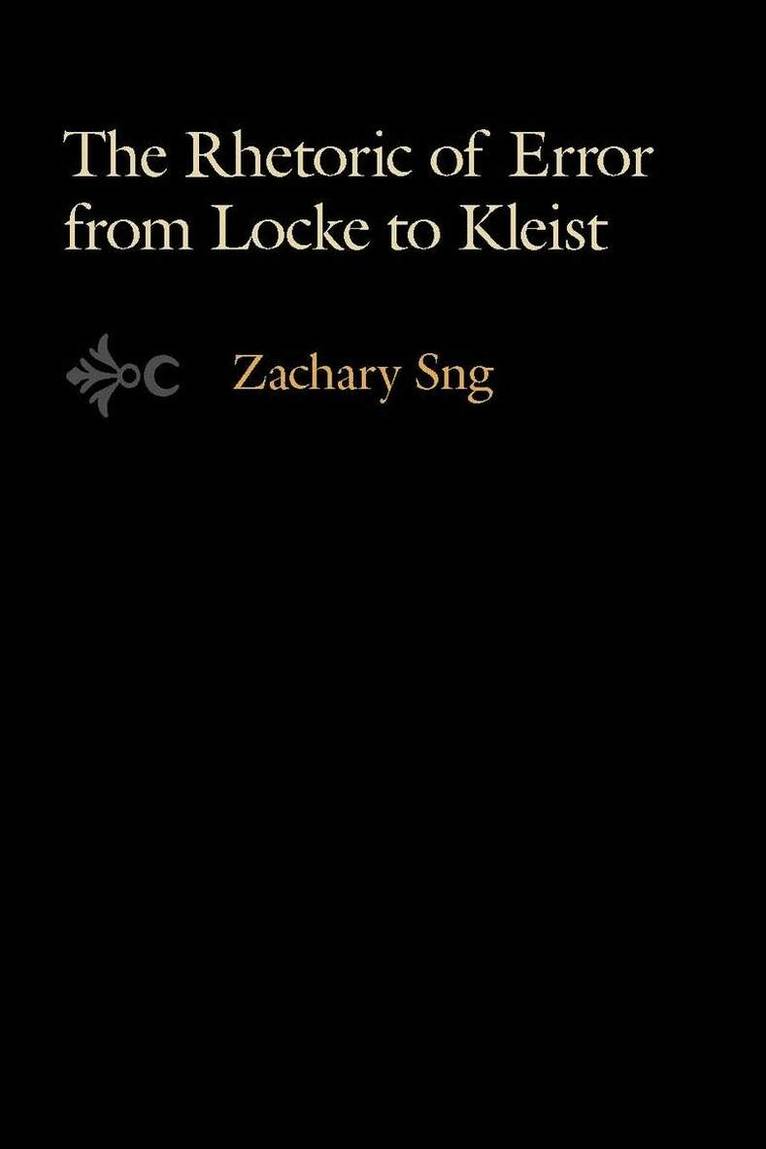
    Rhetoric of Error from Locke to Kleist

    AvZachary Sng

    E-bok
    Engelska, 2010

    1 022 kr

    Läs direkt i Bokus Reader – eller ladda ned till din enhet

    Fler format och utgåvor

    Inbunden

    902 kr

    Beskrivning

    Eighteenth-century Europe, preoccupied with both the origins and the defense of reason, was naturally concerned with what might be the root of all error. A topic any systematic account of knowledge must grapple with, error became a frequent point of debate in new scientific, aesthetic, and philosophical investigations. Taking John Locke's Essay Concerning Human Understanding as his point of departure, Sng examines a number of such debates, focusing on literary and philosophical accounts of the relationship between language and thought. Rather than approaching its topic conceptually or historically, he takes on canonical texts of the Enlightenment and Romanticism and engages with their rhetorical strategies. In so doing, Sng elucidates how people wrote about error and how texts claimed to produce reliable and error-free modes of knowledge. The range of authors addressed—Leibniz, Adam Smith, Coleridge, Kant, and Goethe—demonstrates the diversity and heterogeneity underlying the textual production of the age.

    Produktinformation

    • Utgivningsdatum:2010-07-20
    • Språk:Engelska
    • Antal sidor:216
    • Filformat:EPUB
    • Kopieringsskydd:LCP
    • ISBN:9780804775090
    • Förlag:Stanford University Press

    Utforska kategorier

    • Litteraturvetenskap inom Skönlitteratur
    • Litteraturvetenskap inom Skönlitteratur
    • Filosofiska discipliner inom Filosofi och religion

    Mer om författaren

    Zachary Sng is Assistant Professor of German Studies at Brown University.

    Recensioner i media

    "With clarity, precision, and deftness, Zachary Sng analyzes in The Rhetoric of Error from Locke to Kleist the topic of error as it is thematized and figured in an array of philosophical and literary texts from Britain to Germany in the eighteenth century . . . The topic is a demanding and potentially unwieldy one that Sng handles with athleticism and elegance."—Emily Sun, Studies in Romanticism "The Rhetoric of Error from Locke to Kleist is highly ambitious and shows a remarkable erudition in a broad spectrum of fields: philosophy, literature, and above all literary theory. This is theoretical thinking and literary criticism at its best."—Carol Jacobs, Yale University "This elegant, lucid book addresses itself to one of the most imposingly significant topics imaginable. Sng manages the remarkable feat of writing with knife-like precision about error—the very figure of figurative drift. His study not only contributes richly to our understanding of classic eighteenth-century literary and philosophical texts, but offers the rare spectacle of a work fearlessly committed to the task of thinking about reading."—Marc Redfield, Claremont Graduate University