• Fri frakt över 249 kr
  • •
  • Snabba leveranser
  • •
  • Billiga böcker
Kundservice

Du är på sajten för privatpersoner.

Företag, bibliotek eller offentlig verksamhet?

Du handlar på classic.bokus.com, där alla dina funktioner finns intakta.
Till classic.bokus.com
Bokus logotyp. Gå till startsidan.
  • Erbjudanden
  • Nyheter
  • Student
  • Topplistor
  • Barn & ungdom
  • Bokus Play
  • E-böcker
  • Pocketböcker
  • Spel & pussel

10% rabatt på allt med kod: NYSTART10 →

Sidfot

Mina sidor

    Hjälp

    • Kundservice
    • Vanliga frågor och svar
    • Frakt och leverans
    • Retur vid ångerrätt
    • Reklamera vara
    • Betalning
    • Köpvillkor
    • Allmänna villkor
    • Information om webbplatsens tillgänglighet

    Om Bokus

    • Om oss
    • Pressrum
    • För studenter
    • För företag
    • För bibliotek och offentlig verksamhet
    • För leverantörer
    • Hållbarhet

    Populärt

    • Aktuella erbjudanden
    • Presentkort
    • Studentlitteratur
    • Nya böcker
    • Topplistor
    • Signerade böcker
    • Engelska böcker

    Inspiration

    • Boktips
    • BookTok
    • Populära bokserier
    • Barnbokskaraktärer
    • Populära författare
    Logotyp för Bokus
    Följ oss på Facebook (extern länk)Följ oss på Instagram (extern länk)Följ oss på YouTube (extern länk)Följ oss på TikTok (extern länk)
    bokus @ CookiesAnpassa cookiesIntegritetspolicyKöpvillkor
    Till Citymail hemsida (extern länk)Till Budbee hemsida (extern länk)Till Postnord hemsida (extern länk)Till Schenker hemsida (extern länk)Till Early Bird hemsida (extern länk)Till Walleys hemsida (extern länk)
    1. Medicin
    2. Kirurgi
    3. Transplantationskirurgi

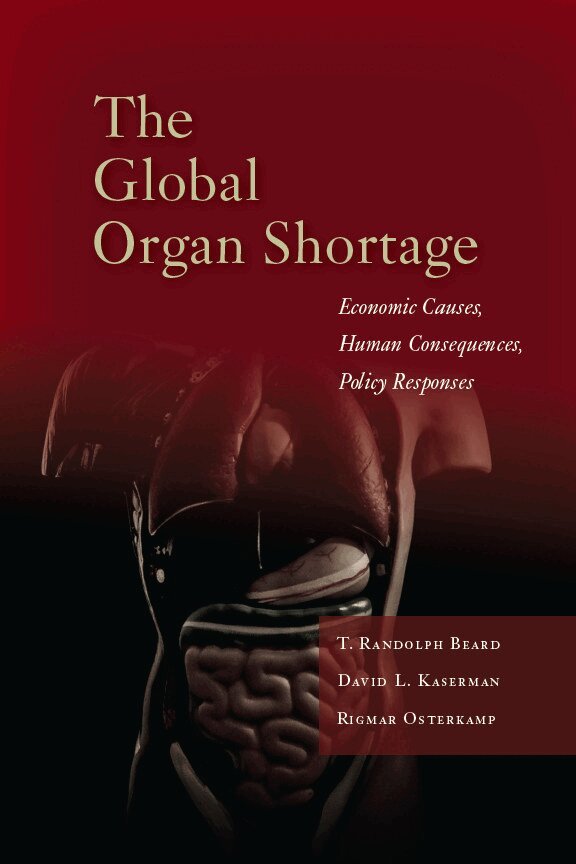
    Global Organ Shortage

    Economic Causes, Human Consequences, Policy Responses

    AvT. Randolph Beard,David L. Kaserman

    Inbunden, Engelska, 2013

    853 kr

    Beställningsvara. Skickas inom 5-8 vardagar. Fri frakt över 249 kr.

    Fler format och utgåvor

    E-bok

    967 kr

    Beskrivning

    Although organ transplants provide the best, and often the only, effective therapy for many otherwise fatal conditions, the great benefits of transplantation go largely unrealized because of failures in the organ acquisition process. In the United States, for instance, more than 10,000 people die every year either awaiting transplantation, or as a result of deteriorating health exacerbated by the shortage of organs. Issues pertaining to organ donation and transplantation represent, perhaps, the most complex and morally controversial medical dilemmas aside from abortion and euthanasia. However, these quandaries are not unsolvable. This book proposes compensating organ donors within a publicly controlled monopsony. This proposal is quite similar to current practice in Spain, where compensation for cadaveric donation now occurs "in secret," as this text reveals.To build their recommendations, the authors provide a medical history of transplantation, a history of the development of national laws and waiting lists, a careful examination of the social costs and benefits of transplantation, a discussion of the causes of organ shortages, an evaluation of "partial" reforms tried or proposed, an extensive ethical evaluation of the current system and its competitors.

    Produktinformation

    • Utgivningsdatum:2013-01-09
    • Mått:152 x 229 x 14 mm
    • Vikt:454 g
    • Format:Inbunden
    • Språk:Engelska
    • Antal sidor:264
    • Förlag:Stanford University Press
    • ISBN:9780804784092

    Utforska kategorier

    • Transplantationskirurgi inom Medicin
    • Miljöekonomi inom Ekonomi och Ledarskap
    • Hälso- och sjukvård inom Medicin

    Mer om författaren

    T. Randolph "Randy" Beard is Professor of Economics at Auburn University. Rigmar Osterkamp is Fellow at the School for Political Studies at University of Munich. The late David L. Kaserman was Torchmark Professor of Economics at Auburn University.

    Recensioner i media

    "[The authors] build an interesting model distinguishing between deceased-donor and living-donor kidneys . . . and generate comparative-static predictions . . . Overall, this book constitutes a courageous and well-researched attempt at coming to grips with a major problem in the current organization of health care that is becoming more critical and global by the day."—Peter Zweifel, Public Choice "A growing number of transplant professionals, ethicists, and economists recognize the potential for incentives to improve access to transplants, but rarely has the argument for incentives been put forward with so much clarity, logic, and in-depth knowledge of transplantation."—David Howard, Emory University "In most countries, the channels for organ procurement impose intolerable burdens on ill patients. This book examines the organ shortage from many different angles in search of resolution. Big problems generally require market-based solutions, and the authors show that this issue is no exception to that rule. Their proposal for a compensated system of organ procurement deserves to be widely read and debated."—Julio Jorge Elias, Universidad del CEMA, Argentina