• Fri frakt över 249 kr
  • •
  • Snabba leveranser
  • •
  • Billiga böcker
Kundservice

Du är på sajten för privatpersoner.

Företag, bibliotek eller offentlig verksamhet?

Du handlar på classic.bokus.com, där alla dina funktioner finns intakta.
Till classic.bokus.com
Bokus logotyp. Gå till startsidan.
  • Erbjudanden
  • Nyheter
  • Student
  • Topplistor
  • Barn & ungdom
  • Bokus Play
  • E-böcker
  • Pocketböcker
  • Spel & pussel

10% rabatt på allt med kod: NYSTART10 →

Sidfot

Mina sidor

    Hjälp

    • Kundservice
    • Vanliga frågor och svar
    • Frakt och leverans
    • Retur vid ångerrätt
    • Reklamera vara
    • Betalning
    • Köpvillkor
    • Allmänna villkor
    • Information om webbplatsens tillgänglighet

    Om Bokus

    • Om oss
    • Pressrum
    • För studenter
    • För företag
    • För bibliotek och offentlig verksamhet
    • För leverantörer
    • Hållbarhet

    Populärt

    • Aktuella erbjudanden
    • Presentkort
    • Studentlitteratur
    • Nya böcker
    • Topplistor
    • Signerade böcker
    • Engelska böcker

    Inspiration

    • Boktips
    • BookTok
    • Populära bokserier
    • Barnbokskaraktärer
    • Populära författare
    Logotyp för Bokus
    Följ oss på Facebook (extern länk)Följ oss på Instagram (extern länk)Följ oss på YouTube (extern länk)Följ oss på TikTok (extern länk)
    bokus @ CookiesAnpassa cookiesIntegritetspolicyKöpvillkor
    Till Citymail hemsida (extern länk)Till Budbee hemsida (extern länk)Till Postnord hemsida (extern länk)Till Schenker hemsida (extern länk)Till Early Bird hemsida (extern länk)Till Walleys hemsida (extern länk)
    1. Skönlitteratur
    2. Litteraturvetenskap

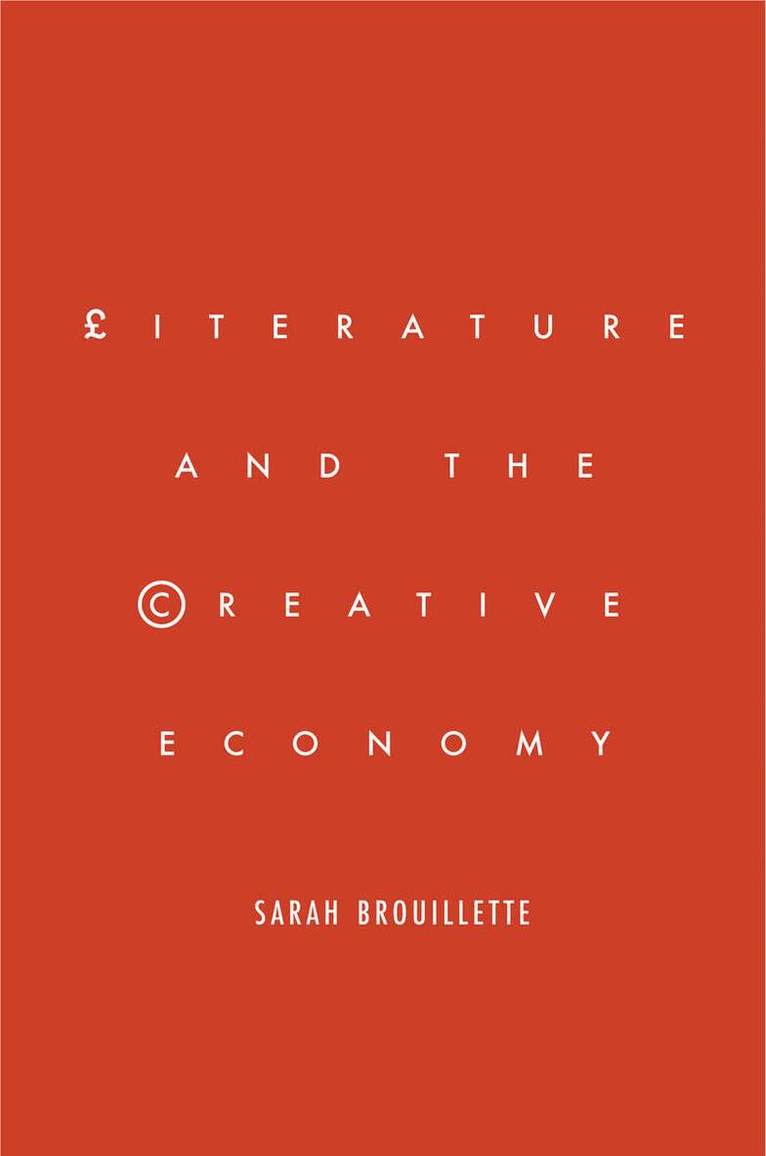
    Literature and the Creative Economy

    AvSarah Brouillette

    Inbunden, Engelska, 2014

    1 392 kr

    Beställningsvara. Skickas inom 5-8 vardagar. Fri frakt över 249 kr.

    Fler format och utgåvor

    E-bok

    405 kr

    Häftad

    338 kr

    Beskrivning

    This book contends that mainstream considerations of the economic and social force of culture, including theories of the creative class and of cognitive and immaterial labor, are indebted to historic conceptions of the art of literary authorship. It shows how contemporary literature has been involved in and has responded to creative-economy phenomena, including the presentation of artists as models of contentedly flexible and self-managed work, the treatment of training in and exposure to art as a pathway to social inclusion, the use of culture and cultural institutions to increase property values, and support for cultural diversity as a means of growing cultural markets. Contemporary writers have tended to explore how their own critical capacities have become compatible with or even essential to a neoliberal economy that has embraced art's autonomous gestures as proof that authentic self-articulation and social engagement can and should occur within capitalism. Taking a sociological approach to literary criticism, Sarah Brouillette interprets major works of contemporary fiction by Monica Ali, Aravind Adiga, Daljit Nagra, and Ian McEwan alongside government policy, social science, and theoretical explorations of creative work and immaterial labor.

    Produktinformation

    • Utgivningsdatum:2014-04-15
    • Mått:152 x 229 x 19 mm
    • Vikt:463 g
    • Format:Inbunden
    • Språk:Engelska
    • Antal sidor:248
    • Förlag:Stanford University Press
    • ISBN:9780804789486

    Utforska kategorier

    • Litteraturvetenskap inom Skönlitteratur

    Mer om författaren

    Sarah Brouillette is Professor of English at Carleton University. She is the author of Postcolonial Writers and the Global Literary Marketplace (2007).

    Recensioner i media

    "Brouillette has written what will quickly become the definitive account of contemporary British literature—and of the now pandemic effort to monetize creativity. Over the last twenty years, management gurus, policy wonks, and academics of all stripes have set out to calculate the value of self-expression, both to local and national economies and the legions of precarious workers now encouraged to style themselves self-promoting entrepreneurs. Poets and novelists have made similar if far more complex calculations, argues Brouillette's brilliant study, even as they've kept a melancholy eye fixed on the slow but seemingly unstoppable erosion of their art's autonomy."—Michael Szalay, University of California, Irvine "Sarah Brouillete's Literature and the Creative Economy is a pathbreaking work that does not simply critique the idea of the creative economy, but rather shows us how it actually works—most innovatively, in the changes it has produced in the institution of literature itself."—Nicholas Brown, University of Illinois at Chicago