• Fri frakt över 249 kr
  • •
  • Snabba leveranser
  • •
  • Billiga böcker
Kundservice

Du är på sajten för privatpersoner.

Företag, bibliotek eller offentlig verksamhet?

Du handlar på classic.bokus.com, där alla dina funktioner finns intakta.
Till classic.bokus.com
Bokus logotyp. Gå till startsidan.
  • Erbjudanden
  • Nyheter
  • Student
  • Topplistor
  • Barn & ungdom
  • Bokus Play
  • E-böcker
  • Pocketböcker
  • Spel & pussel

10% rabatt på allt med kod: NYSTART10 →

Sidfot

Mina sidor

    Hjälp

    • Kundservice
    • Vanliga frågor och svar
    • Frakt och leverans
    • Retur vid ångerrätt
    • Reklamera vara
    • Betalning
    • Köpvillkor
    • Allmänna villkor
    • Information om webbplatsens tillgänglighet

    Om Bokus

    • Om oss
    • Pressrum
    • För studenter
    • För företag
    • För bibliotek och offentlig verksamhet
    • För leverantörer
    • Hållbarhet

    Populärt

    • Aktuella erbjudanden
    • Presentkort
    • Studentlitteratur
    • Nya böcker
    • Topplistor
    • Signerade böcker
    • Engelska böcker

    Inspiration

    • Boktips
    • BookTok
    • Populära bokserier
    • Barnbokskaraktärer
    • Populära författare
    Logotyp för Bokus
    Följ oss på Facebook (extern länk)Följ oss på Instagram (extern länk)Följ oss på YouTube (extern länk)Följ oss på TikTok (extern länk)
    bokus @ CookiesAnpassa cookiesIntegritetspolicyKöpvillkor
    Till Citymail hemsida (extern länk)Till Budbee hemsida (extern länk)Till Postnord hemsida (extern länk)Till Schenker hemsida (extern länk)Till Early Bird hemsida (extern länk)Till Walleys hemsida (extern länk)
    1. Psykologi och pedagogik
    2. Pedagogik
    3. Pedagogisk teori och filosofi

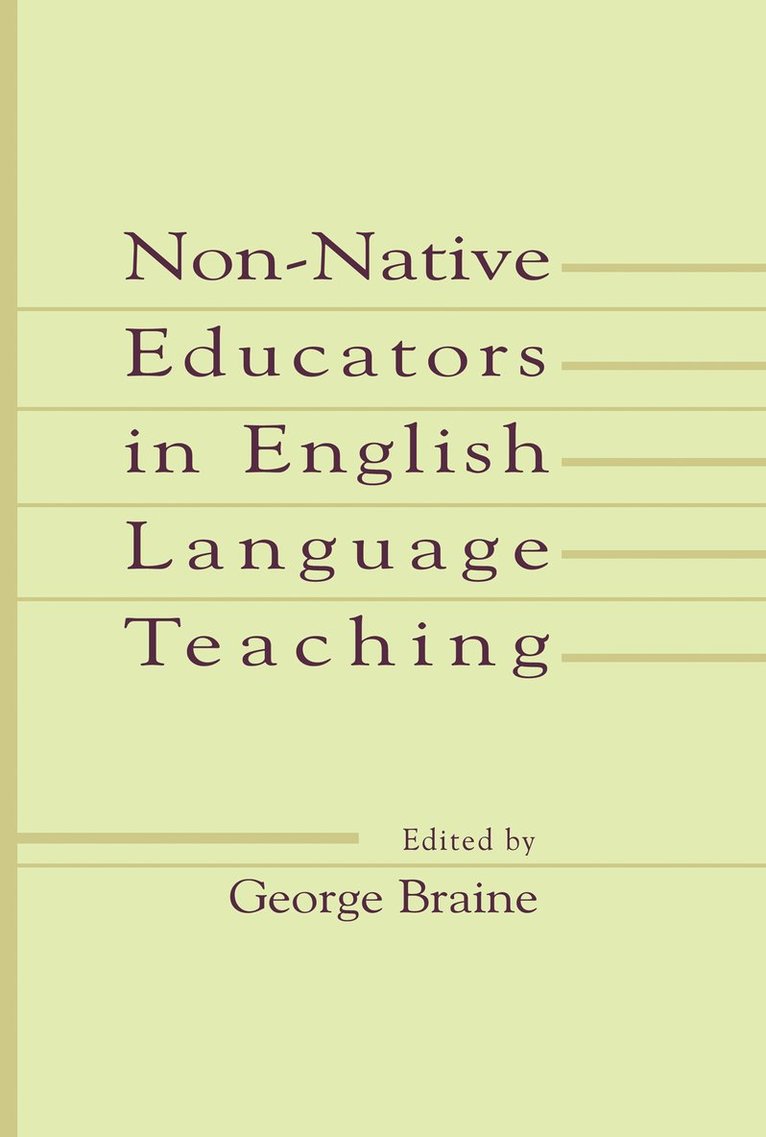
    Non-native Educators in English Language Teaching

    AvGeorge Braine

    Inbunden, Engelska, 1999

    2 352 kr

    Beställningsvara. Skickas inom 10-15 vardagar. Fri frakt över 249 kr.

    Beskrivning

    The place of native and non-native speakers in the role of English teachers has probably been an issue ever since English was taught internationally. Although ESL and EFL literature is awash, in fact dependent upon, the scrutiny of non-native learners, interest in non-native academics and teachers is fairly new. Until recently, the voices of non-native speakers articulating their own concerns have been even rarer.This book is a response to this notable vacuum in the ELT literature, providing a forum for language educators from diverse geographical origins and language backgrounds. In addition to presenting autobiographical narratives, these authors argue sociopolitical issues and discuss implications for teacher education, all relating to the theme of non-native educators in ETL. All of the authors are non-native speakers of English. Some are long established professionals, whereas others are more recent initiates to the field. All but one received part of the higher education in North America, and all except two of the chapters are at least partially contextualized in North America. Particularly relevant for non-native speakers who aspire to enter the profession, graduate students in TESOL programs, and teacher educators, the unique nature of this book's contributors and its contents will interest researchers and professionals in applied linguistics generally and in ELT, and all those who are concerned with the role of non-native speakers in English-language teaching.

    Produktinformation

    • Utgivningsdatum:1999-02-01
    • Mått:152 x 229 x undefined mm
    • Vikt:630 g
    • Format:Inbunden
    • Språk:Engelska
    • Antal sidor:256
    • Förlag:Taylor & Francis Inc
    • ISBN:9780805832044

    Utforska kategorier

    • Pedagogisk teori och filosofi inom Psykologi och pedagogik
    • Språkundervisning och språkinlärning inom Språk och ordböcker

    Recensioner i media

    "This book should be required reading for all ESL/EFL teachers, graduate students, and administrators. It exposes the spurious advantages that NSs have over NNSs for what they are--falsely held beliefs. In fact, all TESOL teawcher education programs should re-examine their content and approach to teacher training in light of the suggestions given in this book."—TESL-EJ"It is an achievement that the editor took the leadership to organize a TESOL caucus for non-native educators and put this book together. Non-Native Educators in English Language Teaching should be read by everyone in the TESOL profession for further productive discussions and movement in improving the TESOL teaching and learning environment."—TESL Reporter"Non-Native Educators in English Language Teaching is highly recommended to everyone, both NSs and NNSs, in the ELT profession."—Studies in Second Language Acquisition"If you see the title Non-Native Educators in English Language Teaching and think that the book is only about non-native educators, and intended solely for them, read it, and you will be amazed by its richness and the insights it offers for not only non-native but also native-speaker professionals....As a NNS myself, I find Non-Native Educators in English Language Teaching inspiring, enlightening and edifying."—English Language Teaching Journal"... Very forward looking....Addresses an issue that is critical to all people interested in the present and future of English language teaching. As the number of non-native speakers wishing to learn English grows, the question of who is best qualified to teach the subject becomes central. Does a teacher who is a native speaker of English possess an advantage that no amount of work and study by a non-native speaker can match? What myths and misperceptions guide the thinking and attitudes of learners, program administrators, policymakers, and peers, and how can they be debunked? And what kind of English are we talking about, anyway? An assemblage of writings by NNS speakers is a terrific concept. The array and choice lend credibility to the text. Prominence is given to voices that often go unheard. The book has undeniable authority in this respect."—Esther IwanagaWellesley College"An extremely valuable attempt to illuminate the existing dichotomy of native speakers versus non-native speakers in the TESOL/ELT profession, with scholarly, educational, linguistic, and sociopolitical implications. This anthology embracing NNS teachers' narratives, research accounts, expository, theoretical, and political essays is a contribution to the field."—Natasha LvovichKingsborough Community College, City University of New York

    Innehållsförteckning

    • Contents: Preface. G. Braine, Introduction. Part I: Who We Are.J. Thomas, Voices From the Periphery: Non-Native Teachers and Issues of Credibility. G. Braine, From the Periphery to the Center: One Teacher's Journey. U.N. Connor, Learning to Write Academic Prose in a Second Language: A Literacy Autobiography. X-M. Li, Writing From the Vantage Point of an Outsider/Insider. C. Kramsch, W.S.E. Lam, Textual Identities: The Importance of Being Non-Native. Part II: Sociopolitical Concerns.A.S. Canagarajah, Interrogating the "Native Speaker Fallacy": Non-Linguistic Roots, Non-Pedagogical Results. N. Amin, Minority Women Teachers of ESL: Negotiating White English. M. Oda, English Only or English Plus? The Language(s) of EFL Organizations. Part III: Implications for Teacher Education.K.K. Samimy, J. Brutt-Griffler, To Be a Native or Non-Native Speaker: Perceptions of "Non-Native" Students in a Graduate TESOL Program. L.D. Kamhi-Stein, Preparing Non-Native Professionals in TESOL: Implications for Teacher Education Programs. J. Liu, From Their Own Perspectives: The Impact of Non-Native ESL Professionals on Their Students. P. Medgyes, Language Training: A Neglected Area in Teacher Education. D. Liu, Training Non-Native TESOL Students: Challenges for TESOL Teacher Education in the West.