• Fri frakt över 249 kr
  • •
  • Snabba leveranser
  • •
  • Billiga böcker
Kundservice

Du är på sajten för privatpersoner.

Företag, bibliotek eller offentlig verksamhet?

Du handlar på classic.bokus.com, där alla dina funktioner finns intakta.
Till classic.bokus.com
Bokus logotyp. Gå till startsidan.
  • Erbjudanden
  • Nyheter
  • Student
  • Topplistor
  • Barn & ungdom
  • Bokus Play
  • E-böcker
  • Pocketböcker
  • Spel & pussel

10% rabatt på allt med kod NYSTART10 →

Sidfot

Mina sidor

    Hjälp

    • Kundservice
    • Vanliga frågor och svar
    • Frakt och leverans
    • Retur vid ångerrätt
    • Reklamera vara
    • Betalning
    • Köpvillkor
    • Allmänna villkor
    • Information om webbplatsens tillgänglighet

    Om Bokus

    • Om oss
    • Pressrum
    • För studenter
    • För företag
    • För bibliotek och offentlig verksamhet
    • För leverantörer
    • Hållbarhet

    Populärt

    • Aktuella erbjudanden
    • Presentkort
    • Studentlitteratur
    • Nya böcker
    • Topplistor
    • Signerade böcker
    • Engelska böcker

    Inspiration

    • Boktips
    • BookTok
    • Populära bokserier
    • Barnbokskaraktärer
    • Populära författare
    Logotyp för Bokus
    Följ oss på Facebook (extern länk)Följ oss på Instagram (extern länk)Följ oss på YouTube (extern länk)Följ oss på TikTok (extern länk)
    bokus @ CookiesAnpassa cookiesIntegritetspolicyKöpvillkor
    Till Citymail hemsida (extern länk)Till Budbee hemsida (extern länk)Till Postnord hemsida (extern länk)Till Schenker hemsida (extern länk)Till Early Bird hemsida (extern länk)Till Walleys hemsida (extern länk)
    1. Psykologi och pedagogik
    2. Pedagogik
    3. Undervisning i specifika ämnen

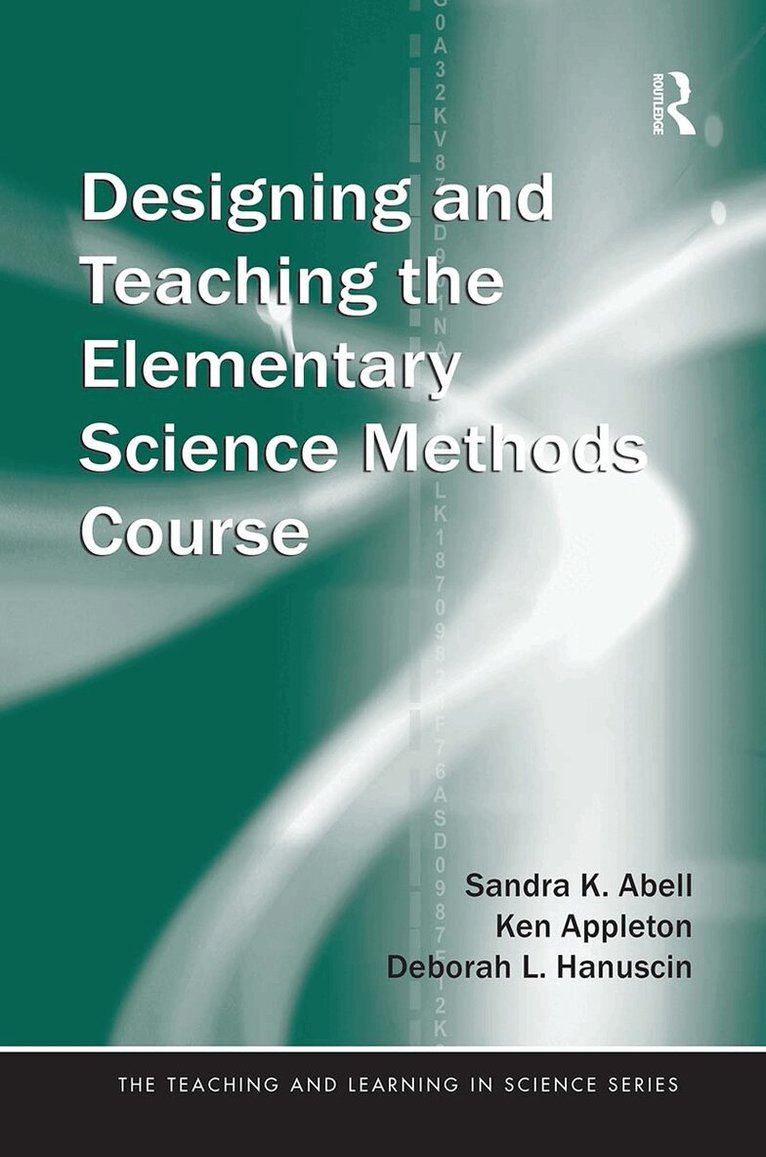
    Designing and Teaching the Elementary Science Methods Course

    AvSandra Abell,Ken Appleton

    Häftad, Engelska, 2010

    Del i serien Teaching and Learning in Science Series

    771 kr

    Beställningsvara. Skickas inom 10-15 vardagar. Fri frakt över 249 kr.

    Fler format och utgåvor

    Inbunden

    2 873 kr

    Beskrivning

    What do aspiring and practicing elementary science teacher education faculty need to know as they plan and carry out instruction for future elementary science teachers? This scholarly and practical guide for science teacher educators outlines the theory, principles, and strategies needed, and provides classroom examples anchored to those principles. The theoretical and empirical foundations are supported by scholarship in the field, and the practical examples are derived from activities, lessons, and units field-tested in the authors’ elementary science methods courses. Designing and Teaching the Elementary Science Methods Course is grounded in the theoretical framework of pedagogical content knowledge (PCK), which describes how teachers transform subject matter knowledge into viable instruction in their discipline. Chapters on science methods students as learners, the science methods course curriculum, instructional strategies, methods course assessment, and the field experience help readers develop their PCK for teaching prospective elementary science teachers. "Activities that Work" and "Tools for Teaching the Methods Course" provide useful examples for putting this knowledge into action in the elementary science methods course.

    Produktinformation

    • Utgivningsdatum:2010-02-12
    • Mått:152 x 229 x 18 mm
    • Vikt:430 g
    • Format:Häftad
    • Språk:Engelska
    • Serie:Teaching and Learning in Science Series
    • Antal sidor:320
    • Förlag:Taylor & Francis Inc
    • ISBN:9780805863406

    Utforska kategorier

    • Undervisning i specifika ämnen inom Psykologi och pedagogik

    Mer om författaren

    Sandra K. Abell is Curators’ Professor of Science Education at the University of Missouri, US, where she directs the university’s Science Education Center. Ken Appleton is semi-retired as an Adjunct Associate Professor at Central Queensland University, Australia. Deborah L. Hanuscin is Assistant Professor of Elementary Education at the University of Missouri, US, where she holds a joint appointment in the Department of Physics & Astronomy and Department of Learning, Teaching, & Curriculum.

    Innehållsförteckning

    • ContentsPrefaceAcknowledgementIntroductionPart I: Theoretical, Contextual, and Pedagogical Foundations for the Elementary Science Methods Course1. Perspectives of Teacher Learning Views about Learning and TeachingIdeas about KnowledgeLearning TheoriesA View of Learning An Example Application to a Science Methods Course ConclusionMore to ExploreReferences2. The Context for Elementary Science Teacher Preparation Who is Responsible for Educating Elementary Science Teachers? The Policy Context: Goals and Standards for Elementary Science Teacher Education The Program Context: Elementary Teacher Education The Program Context: Science Courses The Program Context: Field Experience and Partnerships with Local Schools Conclusion More to ExploreReferences3. Orientations to Teaching Science TeachersIntroductionWhat are Orientations to Teaching Teachers? Some Orientations to Teaching Science Teachers The Reflection Orientation and the Science Methods Course Conclusion Tools for Teaching Elementary Science MethodsReferences4. Understanding the Elementary Science Methods Student Introduction Prospective Teachers as Learners Prospective Teachers’ Knowledge for Science Teaching Understanding Your Methods Students Conclusion More to ExploreReferences5. Curriculum and Resources for Elementary Science Teacher Education Aims and Goals for the Science Methods Course The Methods Course Curriculum—What to Include? Selecting Resources and Materials Facilities and Equipment Communicating Your Expectations to Students: The Course Syllabus Conclusion Tools for Teaching the Elementary Science Methods CourseMore to ExploreReferences6. Instructional Strategies for the Elementary Science Methods Course Aspects of PCK Pertinent to this Chapter Your Orientation to Learning and Teaching Environment General Pedagogy Teaching Models Teaching How to Plan ConclusionMore to ExploreReferences7: Assessment Strategies for the Elementary Methods Course Purposes and Examples of Assessment in the Elementary Science Methods Course Principles of Effective Assessment Scoring and Grading Assignments Putting it All Together: Designing a Methods Course Assignment ConclusionTools for Teaching Elementary Science MethodsMore to ExploreReferences8: Field Experiences in Elementary Science MethodsBenefits of Field Experiences Addressing Challenges to the Science Methods Field Experience Various Models of Science Methods Field Experiences Student Reflection on the Field Experience Conclusion: Design Principles for Science Methods Field Experiences Tools for Teaching Elementary Science MethodsReferencesPart II: Activities that Work for the Elementary Science Methods CourseATW 1: Learning about the 5E Learning Cycle: MagnetismATW 2: The Interactive Approach: Floating & SinkingATW 3: Inquiring into Guided and Open Inquiry: Insect StudyATW 4: Eliciting Student Ideas: The Human BodyATW 5: Using Models and Analogies: Electric CircuitsATW 6: Learning about Discourse: Light and ShadowsATW 7: Integrating Language Arts and Science: The Water CycleATW 8: Seamless Assessment: The Moon InvestigationAbout the AuthorsIndex