• Fri frakt över 249 kr
  • •
  • Snabba leveranser
  • •
  • Billiga böcker
Kundservice

Du är på sajten för privatpersoner.

Företag, bibliotek eller offentlig verksamhet?

Du handlar på classic.bokus.com, där alla dina funktioner finns intakta.
Till classic.bokus.com
Bokus logotyp. Gå till startsidan.
  • Erbjudanden
  • Nyheter
  • Student
  • Topplistor
  • Barn & ungdom
  • Bokus Play
  • E-böcker
  • Pocketböcker
  • Spel & pussel

10% studentrabatt med kod TERM26

Sidfot

Mina sidor

    Hjälp

    • Kundservice
    • Vanliga frågor och svar
    • Frakt och leverans
    • Retur vid ångerrätt
    • Reklamera vara
    • Betalning
    • Köpvillkor
    • Allmänna villkor
    • Information om webbplatsens tillgänglighet

    Om Bokus

    • Om oss
    • Pressrum
    • För studenter
    • För företag
    • För bibliotek och offentlig verksamhet
    • För leverantörer
    • Hållbarhet

    Populärt

    • Aktuella erbjudanden
    • Presentkort
    • Studentlitteratur
    • Nya böcker
    • Topplistor
    • Signerade böcker
    • Engelska böcker

    Inspiration

    • Boktips
    • BookTok
    • Populära bokserier
    • Barnbokskaraktärer
    • Populära författare
    Logotyp för Bokus
    Följ oss på Facebook (extern länk)Följ oss på Instagram (extern länk)Följ oss på YouTube (extern länk)Följ oss på TikTok (extern länk)
    bokus @ CookiesAnpassa cookiesIntegritetspolicyKöpvillkor
    Till Citymail hemsida (extern länk)Till Budbee hemsida (extern länk)Till Postnord hemsida (extern länk)Till Schenker hemsida (extern länk)Till Early Bird hemsida (extern länk)Till Walleys hemsida (extern länk)
    1. Ekonomi och Ledarskap
    2. Industrier och branscher
    3. Lantbruk, fiske och skogsbruk

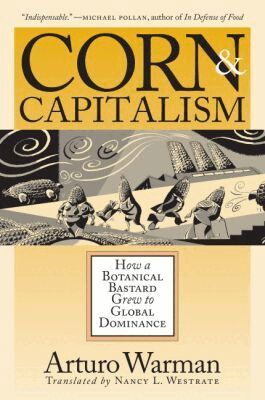
    Corn and Capitalism

    How a Botanical Bastard Grew to Global Dominance

    AvNancy L. Westrate

    Häftad, Engelska, 2003

    Del i serien Latin America in Translation

    622 kr

    Beställningsvara. Skickas inom 10-15 vardagar. Fri frakt över 249 kr.

    Beskrivning

    Exploring the history and importance of corn worldwide, Arturo Warman traces its development from a New World food of poor and despised peoples into a commodity that plays a major role in the modern global economy. The book, first published in Mexico in 1988, combines approaches from anthropology, social history, and political economy to tell the story of corn, a ""botanical bastard"" of unclear origins that cannot reseed itself and is instead dependent on agriculture for propagation. Beginning in the Americas, Warman depicts corn as colonizer. Disparaged by the conquistadors, this Native American staple was embraced by the destitute of the Old World. In time, corn spread across the globe as a prodigious food source for both humans and livestock. Warman also reveals corn's role in nourishing the African slave trade. Through the history of one plant with enormous economic importance, Warman investigates large-scale social and economic processes, looking at the role of foodstuffs in the competition between nations and the perpetuation of inequalities between rich and poor states in the world market. Praising corn's almost unlimited potential for future use as an intensified source of starch, sugar, and alcohol, Warman also comments on some of the problems he foresees for large-scale, technology-dependent monocrop agriculture.

    Produktinformation

    • Utgivningsdatum:2003-03-10
    • Mått:155 x 235 x 17 mm
    • Vikt:409 g
    • Format:Häftad
    • Språk:Engelska
    • Serie:Latin America in Translation
    • Antal sidor:288
    • Förlag:The University of North Carolina Press
    • ISBN:9780807854372
    • Översättare:Nancy L. Westrate

    Utforska kategorier

    • Lantbruk, fiske och skogsbruk inom Ekonomi och Ledarskap
    • Historia: särskilda händelser och ämnen inom Historia och arkeologi
    • Agronomi och lantbruk inom Naturvetenskap och teknik

    Mer om författaren

    The late Arturo Warman was an anthropologist and the former minister of agrarian reform in Mexico.

    Recensioner i media

    "Arturo Warman's study of maize elegantly documents how a domesticated New World plant could deeply affect Old World farming and eating habits and the lives and pleasures of countless human beings. The genius of Native American farmers made the whole world their beneficiaries." - Sidney W. Mintz, author of Tasting Food, Tasting Freedom