• Fri frakt över 249 kr
  • •
  • Snabba leveranser
  • •
  • Billiga böcker
Kundservice

Du är på sajten för privatpersoner.

Företag, bibliotek eller offentlig verksamhet?

Du handlar på classic.bokus.com, där alla dina funktioner finns intakta.
Till classic.bokus.com
Bokus logotyp. Gå till startsidan.
  • Erbjudanden
  • Nyheter
  • Student
  • Topplistor
  • Barn & ungdom
  • Bokus Play
  • E-böcker
  • Pocketböcker
  • Spel & pussel

10% rabatt på allt med kod: NYSTART10 →

Sidfot

Mina sidor

    Hjälp

    • Kundservice
    • Vanliga frågor och svar
    • Frakt och leverans
    • Retur vid ångerrätt
    • Reklamera vara
    • Betalning
    • Köpvillkor
    • Allmänna villkor
    • Information om webbplatsens tillgänglighet

    Om Bokus

    • Om oss
    • Pressrum
    • För studenter
    • För företag
    • För bibliotek och offentlig verksamhet
    • För leverantörer
    • Hållbarhet

    Populärt

    • Aktuella erbjudanden
    • Presentkort
    • Studentlitteratur
    • Nya böcker
    • Topplistor
    • Signerade böcker
    • Engelska böcker

    Inspiration

    • Boktips
    • BookTok
    • Populära bokserier
    • Barnbokskaraktärer
    • Populära författare
    Logotyp för Bokus
    Följ oss på Facebook (extern länk)Följ oss på Instagram (extern länk)Följ oss på YouTube (extern länk)Följ oss på TikTok (extern länk)
    bokus @ CookiesAnpassa cookiesIntegritetspolicyKöpvillkor
    Till Citymail hemsida (extern länk)Till Budbee hemsida (extern länk)Till Postnord hemsida (extern länk)Till Schenker hemsida (extern länk)Till Early Bird hemsida (extern länk)Till Walleys hemsida (extern länk)
    1. Kultur
    2. Scenkonst och film
    3. Film

    Literature/Film Reader

    Issues of Adaptation

    AvJames M. Welsh,Peter Lev

    Häftad, Engelska, 2007

    1 112 kr

    Beställningsvara. Skickas inom 10-15 vardagar. Fri frakt över 249 kr.

    Beskrivning

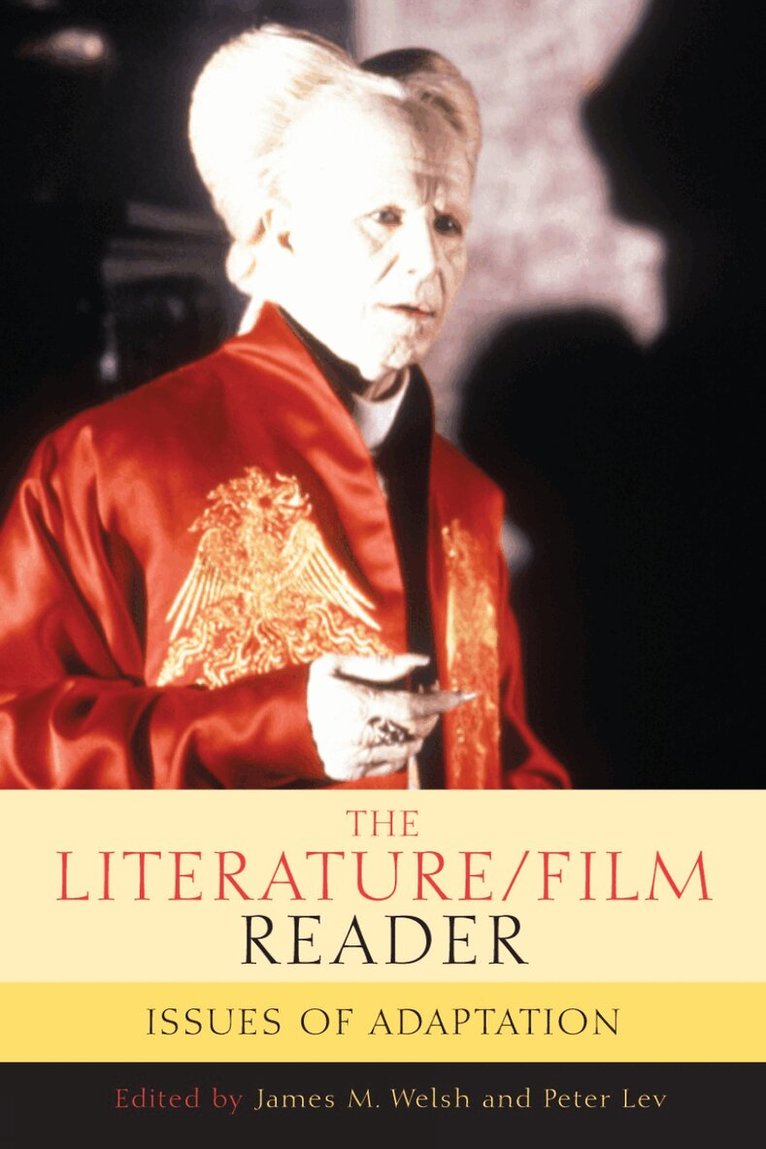
    From examinations of Francis Ford Coppola's Apocalypse Now to Alfred Hitchcock's Vertigo, The Literature Film Reader: Issues of Adaptation covers a wide range of films adapted from other sources. The first section presents essays on the hows and whys of adaptation studies, and subsequent sections highlight films adapted from a variety of sources, including classic and popular literature, drama, biography, and memoir. The last section offers a new departure for adaptation studies, suggesting that films about history—often a separate category of film study—can be seen as adaptations of records of the past. The anthology concludes with speculations about the future of adaptation studies.Several essays provide detailed analyses of films, in some cases discussing more than one adaptation of a literary or dramatic source, such as The Manchurian Candidate, The Quiet American, and Romeo and Juliet. Other works examined include Moby Dick, The House of Mirth, Dracula, and Starship Troopers, demonstrating the breadth of material considered for this anthology.Although many of the essays appeared in Literature/Film Quarterly, more than half are original contributions. Chosen for their readability, these essays avoid theoretical jargon as much as possible. For this reason alone, this collection should be of interest to not only cinema scholars but to anyone interested in films and their source material. Ultimately, The Literature Film Reader: Issues of Adaptation provides an excellent overview of this critical aspect of film studies.

    Produktinformation

    • Utgivningsdatum:2007-08-14
    • Mått:154 x 230 x 56 mm
    • Vikt:621 g
    • Format:Häftad
    • Språk:Engelska
    • Antal sidor:392
    • Förlag:Scarecrow Press
    • ISBN:9780810859494

    Utforska kategorier

    • Film inom Kultur

    Mer om författaren

    James M. Welsh is Professor Emeritus of English at Salisbury University (Salisbury, Maryland). He cofounded the Literature/Film Quarterly in 1973 and served as its editor for more than 30 years. He also founded the Literature/Film Association. He is the author, editor, or series editor of numerous books, including The Encyclopedia of Filmmakers and The Cinema of Tony Richardson (1999).Peter Lev is Professor of Electronic Media and Film at Towson University. His books include The Euro-American Cinema (1993), American Films of the 1970s: Conflicting Visions (2000) and Volume 7 of the History of the American Cinema series, Transforming the Screen: The Fifties (2003).

    Recensioner i media

    Welsh and Lev provide a pleasant mix....This reviewer cannot imagine a more accessible, representative overview of the study of screen adaptations. Highly recommended.

    Innehållsförteckning

    • Part 1 AcknowledgmentsPart 2 Introduction: Issues of Screen Adaptation: What is Truth?Part 3 Part 1: PolemicsChapter 4 Chapter 1 It Wasn't Like That in the Book...Chapter 5 Chapter 2 Literature vs. Literacy: Two Futures for Adaptation StudiesChapter 6 Chapter 3 Adaptation Studies and the History of Ideas: The Case ofApocalypse NowChapter 7 Chapter 4 Adaptation Studies Revisited: Purposes, Perspectives, and InspirationChapter 8 Chapter 5 The Cold War's "Undigested Apple-Dumpling": ImagingMoby-Dick in 1956 and 2001Chapter 9 Chapter 6 Trying Harder: Probability, Objectivity, and Rationality in Adaptation StudiesPart 10 Part II: Classic and Popular LiteratureChapter 11 Chapter 7 WhatIs a "Shakespeare Film," Anyway?Chapter 12 Chapter 8 Returning to Naples: Seeing the End in Shakespeare Film AdaptationChapter 13 Chapter 9 Pop Goes the Shakespeare: Baz Luhrmann'sWilliam Shakespeare's Romeo + JulietChapter 14 Chapter 10 Reframing Adaptation: Representing the Invisible (OnThe House of Mirth, Directed by Terence Davies, 2000)Chapter 15 Chapter 11 Sucking Dracula: Mythic Biography into Fiction in Film, or Why Francis Ford Coppola'sDracula Is Not ReallyBram Stoker's Dracula or Wallachia's DraculaChapter 16 Chapter 12Vertigo, Novel and FilmChapter 17 Chapter 13 Heinlein, Verhoeven, and the Problem of the RealStarship TroopersPart 18 Part III: Politics and AdaptationChapter 19 Chapter 14 Literary Hardball: The Novel-to-Screen Complexities ofThe Manchurian CandidateChapter 20 Chapter 15The Oak: A Balancing Act from Page to ScreenChapter 21 Chapter 16 Adaptation and the Cold War: Mankiewicz'sThe Quiet AmericanChapter 22 Chapter 17 All the Quiet AmericansPart 23 Part IV: History, Biography, and MemoirChapter 24 Chapter 18Camille Claudel: Biography Constructed as MelodramaChapter 25 Chapter 19 W. C. Handy Goes Uptown: Hollywood Constructs the American Blues MusicianChapter 26 Chapter 20 Memoir and the Limits of AdaptationChapter 27 Chapter 21 Getting It Right: The Alamo on FilmChapter 28 Chapter 22 "Plains" Speaking: Sound, Sense, and Sensibility in Ang Lee'sRIde with the DevilPart 29 Part V: Epilogue: The Future of Adaptation StudiesChapter 30 Chapter 23 Whare Are We Going, Where Have We Been?Chapter 31 Chapter 24 The Future of Adaptation StudiesPart 32 IndexPart 33 About the EditorsPart 34 About the Contributors