• Fri frakt över 249 kr
  • •
  • Snabba leveranser
  • •
  • Billiga böcker
Kundservice

Du är på sajten för privatpersoner.

Företag, bibliotek eller offentlig verksamhet?

Du handlar på classic.bokus.com, där alla dina funktioner finns intakta.
Till classic.bokus.com
Bokus logotyp. Gå till startsidan.
  • Erbjudanden
  • Nyheter
  • Student
  • Topplistor
  • Barn & ungdom
  • Bokus Play
  • E-böcker
  • Pocketböcker
  • Spel & pussel

10% rabatt på allt med kod: NYSTART10 →

Sidfot

Mina sidor

    Hjälp

    • Kundservice
    • Vanliga frågor och svar
    • Frakt och leverans
    • Retur vid ångerrätt
    • Reklamera vara
    • Betalning
    • Köpvillkor
    • Allmänna villkor
    • Information om webbplatsens tillgänglighet

    Om Bokus

    • Om oss
    • Pressrum
    • För studenter
    • För företag
    • För bibliotek och offentlig verksamhet
    • För leverantörer
    • Hållbarhet

    Populärt

    • Aktuella erbjudanden
    • Presentkort
    • Studentlitteratur
    • Nya böcker
    • Topplistor
    • Signerade böcker
    • Engelska böcker

    Inspiration

    • Boktips
    • BookTok
    • Populära bokserier
    • Barnbokskaraktärer
    • Populära författare
    Logotyp för Bokus
    Följ oss på Facebook (extern länk)Följ oss på Instagram (extern länk)Följ oss på YouTube (extern länk)Följ oss på TikTok (extern länk)
    bokus @ CookiesAnpassa cookiesIntegritetspolicyKöpvillkor
    Till Citymail hemsida (extern länk)Till Budbee hemsida (extern länk)Till Postnord hemsida (extern länk)Till Schenker hemsida (extern länk)Till Early Bird hemsida (extern länk)Till Walleys hemsida (extern länk)
    1. Filosofi och religion
    2. Religion och tro
    3. Religion: allmänt

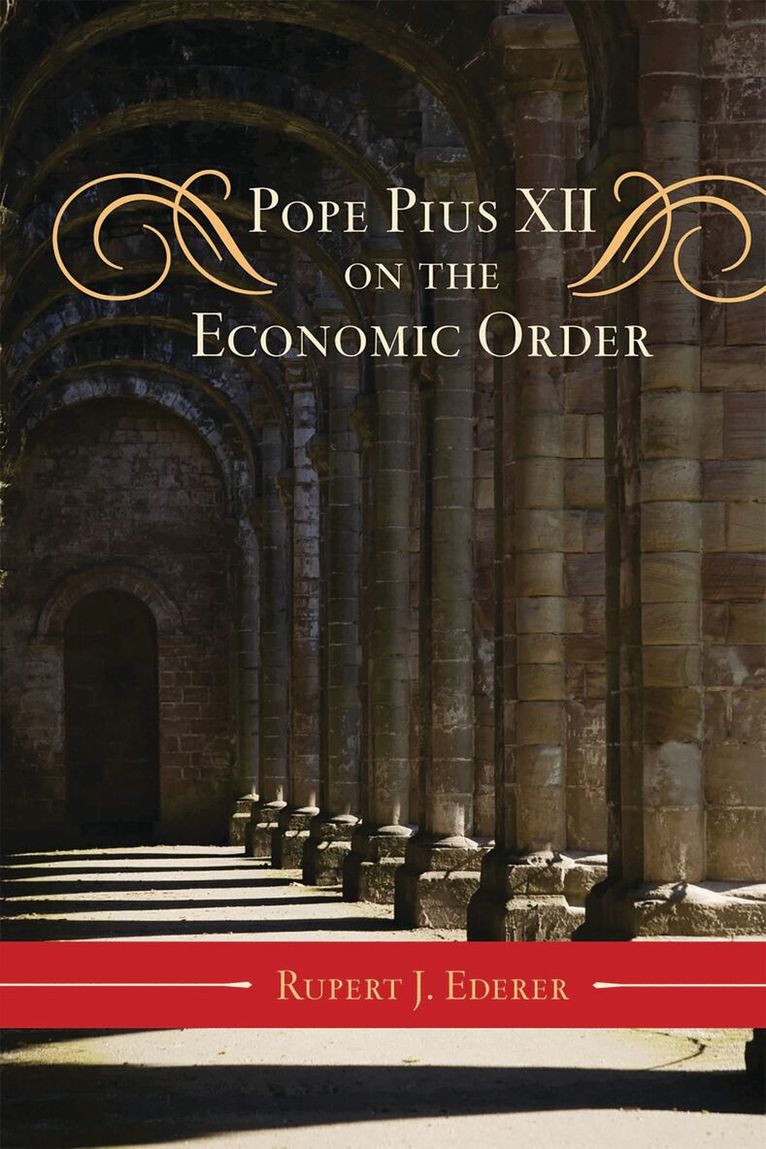
    Pope Pius XII on the Economic Order

    AvRupert J. Ederer

    Inbunden, Engelska, 2011

    Del 3 i serien Catholic Social Thought

    978 kr

    Beställningsvara. Skickas inom 10-15 vardagar. Fri frakt över 249 kr.

    Fler format och utgåvor

    E-bok

    1 057 kr

    Beskrivning

    In Pope Pius XII on the Economic Order, economist Rupert J. Ederer explores the views of Eugenio Pacelli, who served as pope during the tumultuous period of 1939 to 1958. Prodigious in his output, Pius XII produced 40 encyclicals, 19 highly regarded Christmas messages, and series of addresses to groups and organizations, laying the groundwork for the economic views of his successors. According to Ederer, it "is safe to say that no Roman pontiff has addressed the problems confronting the social order as frequently and as widely outside the formal structure of encyclicals as Pius XII. This applies in a special way to his masterful and prophetic Christmas Messages." Through the study of Pius XII's encyclicals and Christmas messages, Ederer examines this important pontiff's views on economics and the social order, the world of work, agriculture and farmers, food and population, the middle class, and the world of money and finance.Students and scholars interested in the history of Pius XII's papacy will find in Ederer's analysis an insightful study of Catholic economic thought during an era when nations representing the forces of capitalism, fascism, and Communism were joined in a fierce battle for dominance.

    Produktinformation

    • Utgivningsdatum:2011-06-06
    • Mått:155 x 231 x 25 mm
    • Vikt:613 g
    • Format:Inbunden
    • Språk:Engelska
    • Serie:Catholic Social Thought
    • Antal sidor:292
    • Förlag:Scarecrow Press
    • ISBN:9780810877979

    Utforska kategorier

    • Religion: allmänt inom Filosofi och religion
    • Kristendom inom Filosofi och religion

    Mer om författaren

    Rupert J. Ederer is professor emeritus of the State University of New York in Buffalo. He is the author of Economics as if God Matters (Scarecrow, 2011).

    Recensioner i media

    Pope Pius XII on the Economic Order was a genuine education. Pius XII promulgated forty-one encyclicals during his pontificate (1939–1958)…. Ederer divides his study into eleven chapters. He treats the encyclicals of Pius XII, the Christmas messages, and a range of issues including the economic order, the world of work, agriculture, population, the middle class, and finance. Ederer provides helpful summaries of the social teaching of Pius XII on many specific topics. In many cases, the issues seem entirely relevant more than sixty years later: the responsible entrepreneur, accident prevention in industry, ideals for business, women and work, and many other topics. One of the most delightful aspects of reading this book is the sense that modern Catholic social teaching is a deeply rooted tradition, and that issues discussed at the Second Vatican Council and afterward were very much being discussed prior to the Council.