• Fri frakt över 249 kr
  • •
  • Snabba leveranser
  • •
  • Billiga böcker
Kundservice

Du är på sajten för privatpersoner.

Företag, bibliotek eller offentlig verksamhet?

Du handlar på classic.bokus.com, där alla dina funktioner finns intakta.
Till classic.bokus.com
Bokus logotyp. Gå till startsidan.
  • Erbjudanden
  • Nyheter
  • Student
  • Topplistor
  • Barn & ungdom
  • Bokus Play
  • E-böcker
  • Pocketböcker
  • Spel & pussel

10% rabatt på allt med kod: NYSTART10 →

Sidfot

Mina sidor

    Hjälp

    • Kundservice
    • Vanliga frågor och svar
    • Frakt och leverans
    • Retur vid ångerrätt
    • Reklamera vara
    • Betalning
    • Köpvillkor
    • Allmänna villkor
    • Information om webbplatsens tillgänglighet

    Om Bokus

    • Om oss
    • Pressrum
    • För studenter
    • För företag
    • För bibliotek och offentlig verksamhet
    • För leverantörer
    • Hållbarhet

    Populärt

    • Aktuella erbjudanden
    • Presentkort
    • Studentlitteratur
    • Nya böcker
    • Topplistor
    • Signerade böcker
    • Engelska böcker

    Inspiration

    • Boktips
    • BookTok
    • Populära bokserier
    • Barnbokskaraktärer
    • Populära författare
    Logotyp för Bokus
    Följ oss på Facebook (extern länk)Följ oss på Instagram (extern länk)Följ oss på YouTube (extern länk)Följ oss på TikTok (extern länk)
    bokus @ CookiesAnpassa cookiesIntegritetspolicyKöpvillkor
    Till Citymail hemsida (extern länk)Till Budbee hemsida (extern länk)Till Postnord hemsida (extern länk)Till Schenker hemsida (extern länk)Till Early Bird hemsida (extern länk)Till Walleys hemsida (extern länk)
    1. Samhälle och politik
    2. Politik och statsskick
    3. Politiskt förtryck

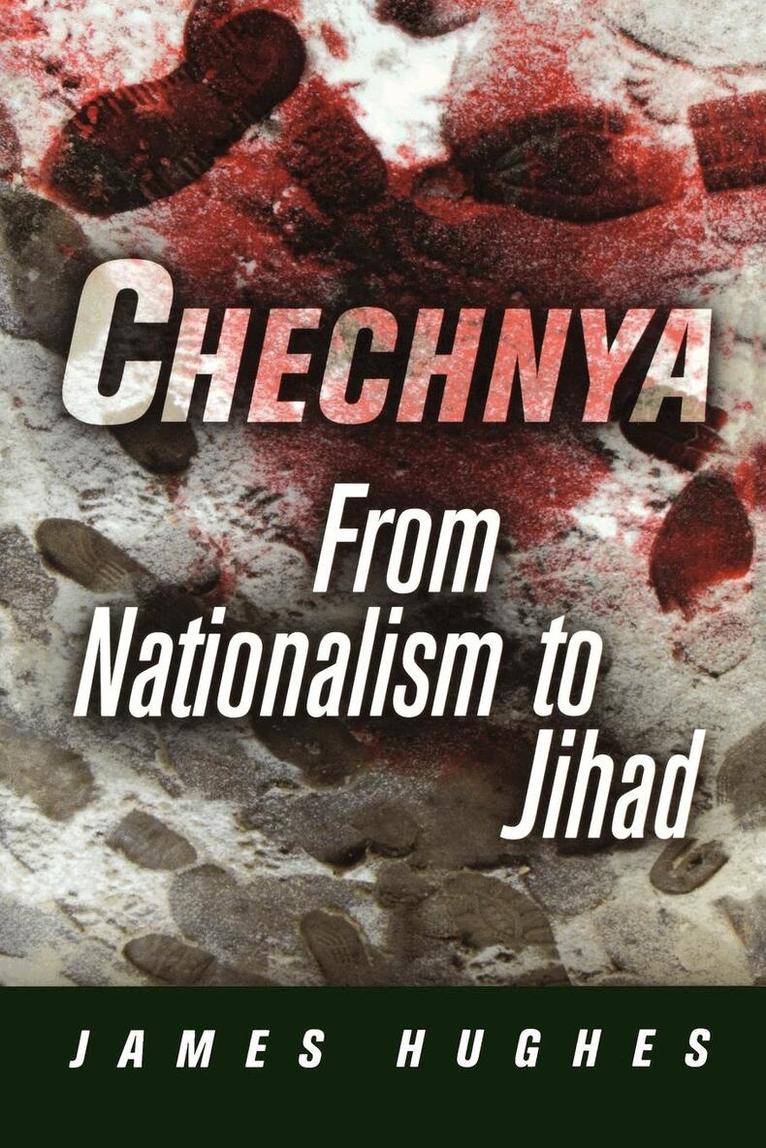
    Chechnya

    From Nationalism to Jihad

    AvJames Hughes

    Häftad, Engelska, 2008

    Del i serien National and Ethnic Conflict in the 21st Century

    326 kr

    Beställningsvara. Skickas inom 10-15 vardagar. Fri frakt över 249 kr.

    Fler format och utgåvor

    E-bok

    473 kr

    Beskrivning

    The sheer scale and brutality of the hostilities between Russia and Chechnya stand out as an exception in the mostly peaceful breakup of the Soviet Union. Chechnya: From Nationalism to Jihad provides a fascinating analysis of the transformation of secular nationalist resistance in a nominally Islamic society into a struggle that is its antithesis, jihad. Hughes locates Chechen nationalism within the wider movement for national self-determination that followed the collapse of the Soviet empire. When negotiations failed in the early 1990s, political violence was instrumentalized to consolidate opposing nationalist visions of state-building in Russia and Chechnya. The resistance in Chechnya also occurred in a regional context where Russian hegemony over the Caucasus, especially the resources of the Caspian basin, was in retreat, and in an international context of rising Islamic radicalism. Alongside Bosnia, Kashmir, and other conflicts, Chechnya became embedded in Osama Bin Laden's repertoire of jihadist rhetoric against the "West." It was not simply Russia's destruction of a nationalist option for Chechnya, or "Wahabbist" infiltration from without, that created the political space for Islamism. Rather, we must look also at how the conflict was fought. The lack of proportionality and discrimination in the use of violence, particularly by Russia, accelerated and intensified the Islamic radicalization and thereby transformed the nature of the conflict.This nuanced and balanced study provides a much-needed antidote to the mythologizing of Chechen resistance before, and its demonization after, 9/11. The conflict in Chechnya involves one of the most contentious issues in contemporary international politics-how do we differentiate between the legitimate use of violence to resist imperialism, occupation, and misgovernment, and the use of terrorism against legitimate rule? This book sets out indispensable lessons for understanding conflicts involving the volatile combination of nationalist insurgency, jihad, and terrorism, most notably for the wars in Iraq and Afghanistan.

    Produktinformation

    • Utgivningsdatum:2008-06-11
    • Mått:152 x 229 x 24 mm
    • Vikt:462 g
    • Format:Häftad
    • Språk:Engelska
    • Serie:National and Ethnic Conflict in the 21st Century
    • Antal sidor:296
    • Förlag:University of Pennsylvania Press
    • ISBN:9780812220308

    Utforska kategorier

    • Politiskt förtryck inom Samhälle och politik

    Mer om författaren

    James Hughes is Professor of Comparative Politics at the London School of Economics and Political Science.

    Recensioner i media

    "James Hughes has produced the most comprehensive, thoroughly documented, and up-to-date study of the Chechen conflict available. This sophisticated and subtle analysis places Chechnya in the context of broader debates about nationalism and ethnic politics, theories of empire and secession, and the propensity of new democracies to go to war."-Matthew Evangelista, Cornell University"Hughes offers a new way of thinking about ethnopolitical conflict by examining conflict dynamics as part of the causation chain in a conflict."-History: Reviews of New Books"Does the book have value for the military historian? Absolutely."-Journal of Military History"An excellent starting point for anyone looking for insight into how the radical Sunni Salafi movement both evolved and commandeered the struggle in Chechnya, which could also serve as an example as to how Al-Qaeda could hijack other nationalist struggles in the future."-International Affairs"An exemplary case study. . . . Throughout, insights into the consequences of the collapse of the Soviet Union, the reconstitution of a federated Russia, and the leadership of Vladimir Putin abound. . . . Highly recommended."-Choice

    Innehållsförteckning

    • PrefaceMaps1. The Causes of Conflict2. Russia's Refederalization and Chechnya's Secession3. A Secular Nationalist Conflict4. Dual Radicalization: The Making of Jihad5. Chechnya and the Meaning of Terrorism6. Chechnya and the Study of Conflict7. ConclusionAppendixesNotesBibliographyIndexAcknowledgments