• Fri frakt över 249 kr
  • •
  • Snabba leveranser
  • •
  • Billiga böcker
Kundservice

Du är på sajten för privatpersoner.

Företag, bibliotek eller offentlig verksamhet?

Du handlar på classic.bokus.com, där alla dina funktioner finns intakta.
Till classic.bokus.com
Bokus logotyp. Gå till startsidan.
  • Erbjudanden
  • Nyheter
  • Student
  • Topplistor
  • Barn & ungdom
  • Bokus Play
  • E-böcker
  • Pocketböcker
  • Spel & pussel

Må bättre, för mindre! Upp till 50% rabatt på hälsoböcker

Sidfot

Mina sidor

    Hjälp

    • Kundservice
    • Vanliga frågor och svar
    • Frakt och leverans
    • Retur vid ångerrätt
    • Reklamera vara
    • Betalning
    • Köpvillkor
    • Allmänna villkor
    • Information om webbplatsens tillgänglighet

    Om Bokus

    • Om oss
    • Pressrum
    • För studenter
    • För företag
    • För bibliotek och offentlig verksamhet
    • För leverantörer
    • Hållbarhet

    Populärt

    • Aktuella erbjudanden
    • Presentkort
    • Studentlitteratur
    • Nya böcker
    • Topplistor
    • Signerade böcker
    • Engelska böcker

    Inspiration

    • Boktips
    • BookTok
    • Populära bokserier
    • Barnbokskaraktärer
    • Populära författare
    Logotyp för Bokus
    Följ oss på Facebook (extern länk)Följ oss på Instagram (extern länk)Följ oss på YouTube (extern länk)Följ oss på TikTok (extern länk)
    bokus @ CookiesAnpassa cookiesIntegritetspolicyKöpvillkor
    Till Citymail hemsida (extern länk)Till Budbee hemsida (extern länk)Till Postnord hemsida (extern länk)Till Schenker hemsida (extern länk)Till Early Bird hemsida (extern länk)Till Walleys hemsida (extern länk)
    1. Samhälle och politik
    2. Sociologi och antropologi
    3. Antropologi

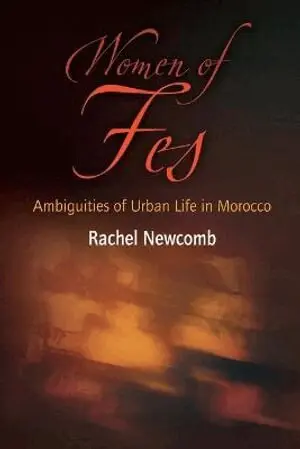
    Women of Fes

    Ambiguities of Urban Life in Morocco

    AvRachel Newcomb

    Häftad, Engelska, 2010

    Del i serien Contemporary Ethnography

    326 kr

    Beställningsvara. Skickas inom 10-15 vardagar. Fri frakt över 249 kr.

    Beskrivning

    Throughout its history, Morocco has maintained a distinctive sense of identity. Its name conjures up visions of carpets and Casablanca, mint tea and the Marrakech Express, associations that are not entirely dispelled by visits to the country. However, in recent years Morocco has faced challenges to its stability. The advent of new technologies, such as satellite communications and the Internet, has enhanced the public's access to information and led to greater demands for human rights and government accountability. At the same time, Islamist influences are on the rise, with criticism from some that current structures of governance are not Islamic enough.As different factions assert competing visions for the identity of the Moroccan state, the status of women is frequently invoked as a barometer of the country's progress. The nation-state has characterized the Moroccan female citizen as simultaneously modern, secular, and Islamic, while religious discourse has framed the nationalist vision as hopelessly enslaved to Western secularism, suggesting that the Moroccan woman needs to "return" to an authentic Muslim identity.Based on two years of fieldwork conducted in the city of Fes, Rachel Newcomb's Women of Fes offers valuable insights into the everyday lives of Moroccan women. Newcomb evokes the struggles middle-class women face as they challenge and modify competing ideologies to create new forms of identity in work, family, and urban space. Simultaneously, the book situates women's lives within larger processes, such as globalization, human rights, and the construction of national identity.

    Produktinformation

    • Utgivningsdatum:2010-08-24
    • Mått:152 x 229 x 20 mm
    • Vikt:401 g
    • Format:Häftad
    • Språk:Engelska
    • Serie:Contemporary Ethnography
    • Antal sidor:248
    • Förlag:University of Pennsylvania Press
    • ISBN:9780812221312

    Utforska kategorier

    • Antropologi inom Samhälle och politik

    Mer om författaren

    Rachel Newcomb teaches anthropology at Rollins College.

    Recensioner i media

    "An outstanding contribution of Muslim world anthropology and gender studies; a careful ethnographic work attuned to large-scale forces and their capillary saturation of daily social arrangements and innovations. It very skillfully draws on canonical studies of Morocco (e.g., Abdellah Hammoudi on patriarchy, AndrÉ Adam on class, Hildred Geertz on kinship, and Fatima Mernissi on gender) to fully contextualize her own luminous ethnography."-American Journal of Islamic Social Sciences"No one reading this book will doubt that the author has lived up to her aim of making available nuanced portraits of a variety of Muslim women, sensitively and multivocally conveyed, in a domain of literature still dominated by stereotypes of "the oppressed Muslim woman."-American Ethnologist"Newcomb's insightful and engaging book contributes to an important, but neglected area of scholarship, ethnography of the urban middle class. It demonstrates that Fassi middle-class women, like members of the middle class elsewhere, are actively reconstituting space, identity and community, as they embrace the tension between the order an chaos of modernity, while maintaining strands of continuity between a dissipating past and an imagined future. It constitutes an important resource for students and scholars of anthropology, gender studies and Middle East studies."-Journal of Islamic Studies"An engaging and very well written study of women and gender change in contemporary Morocco. Employing the narratives of Fassi women, the reader is led into a nuanced world where women consciously try to embrace, and thereby create, their own forms of modernity."-Deborah Kapchan, New York University

    Innehållsförteckning

    • Notes on TransliterationChapter One: Introduction: Women of Fes and the Territories of IdeologyChapter Two: Rumors: Constructing FesChapter Three: Mudawana Reform and the Persistence of PatriarchyChapter Four: Solidarity with Distinctions: The Limits of Intervention at a Fassi Nongovernmental OrganizationChapter Five: Kinship: Seeking Sanctuary in the CityChapter Six: Occupying the Public: New Forms of Gendered Urban SpaceChapter Seven: Singing to So Many AudiencesChapter Eight: Conclusion: Community, Chaos, and ContinuityGlossaryNotesBibliographyIndexAcknowledgments