• Fri frakt över 249 kr
  • •
  • Snabba leveranser
  • •
  • Billiga böcker
Kundservice

Du är på sajten för privatpersoner.

Företag, bibliotek eller offentlig verksamhet?

Du handlar på classic.bokus.com, där alla dina funktioner finns intakta.
Till classic.bokus.com
Bokus logotyp. Gå till startsidan.
  • Erbjudanden
  • Nyheter
  • Student
  • Topplistor
  • Barn & ungdom
  • Bokus Play
  • E-böcker
  • Pocketböcker
  • Spel & pussel

10% rabatt på allt med kod: NYSTART10 →

Sidfot

Mina sidor

    Hjälp

    • Kundservice
    • Vanliga frågor och svar
    • Frakt och leverans
    • Retur vid ångerrätt
    • Reklamera vara
    • Betalning
    • Köpvillkor
    • Allmänna villkor
    • Information om webbplatsens tillgänglighet

    Om Bokus

    • Om oss
    • Pressrum
    • För studenter
    • För företag
    • För bibliotek och offentlig verksamhet
    • För leverantörer
    • Hållbarhet

    Populärt

    • Aktuella erbjudanden
    • Presentkort
    • Studentlitteratur
    • Nya böcker
    • Topplistor
    • Signerade böcker
    • Engelska böcker

    Inspiration

    • Boktips
    • BookTok
    • Populära bokserier
    • Barnbokskaraktärer
    • Populära författare
    Logotyp för Bokus
    Följ oss på Facebook (extern länk)Följ oss på Instagram (extern länk)Följ oss på YouTube (extern länk)Följ oss på TikTok (extern länk)
    bokus @ CookiesAnpassa cookiesIntegritetspolicyKöpvillkor
    Till Citymail hemsida (extern länk)Till Budbee hemsida (extern länk)Till Postnord hemsida (extern länk)Till Schenker hemsida (extern länk)Till Early Bird hemsida (extern länk)Till Walleys hemsida (extern länk)
    1. Historia och arkeologi
    2. Historia
    3. Amerikas historia

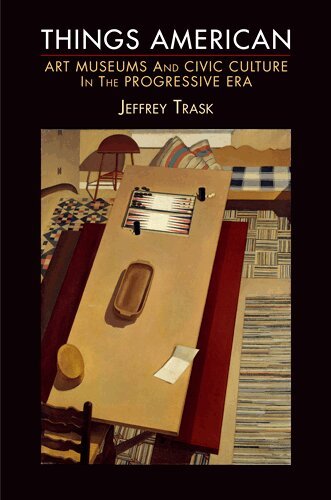
    Things American

    Art Museums and Civic Culture in the Progressive Era

    AvJeffrey Trask

    Häftad, Engelska, 2013

    Del i serien Arts and Intellectual Life in Modern America

    393 kr

    Beställningsvara. Skickas inom 10-15 vardagar. Fri frakt över 249 kr.

    Fler format och utgåvor

    E-bok

    568 kr

    Beskrivning

    American art museums of the Gilded Age were established as civic institutions intended to provide civilizing influences to an urban public, but the parochial worldview of their founders limited their democratic potential. Instead, critics have derided nineteenth-century museums as temples of spiritual uplift far removed from the daily experiences and concerns of common people. But in the early twentieth century, a new generation of cultural leaders revolutionized ideas about art institutions by insisting that their collections and galleries serve the general public.Things American: Art Museums and Civic Culture in the Progressive Era tells the story of the civic reformers and arts professionals who brought museums from the realm of exclusivity into the progressive fold of libraries, schools, and settlement houses. Jeffrey Trask's history focuses on New York's Metropolitan Museum of Art, which stood at the center of this movement to preserve artifacts from the American past for social change and Americanization. Metropolitan trustee Robert de Forest and pioneering museum professional Henry Watson Kent influenced a wide network of fellow reformers and cultural institutions. Drawing on the teachings of John Dewey and close study of museum developments in Germany and Great Britain, they expanded audiences, changed access policies, and broadened the scope of what museums collect and display. They believed that tasteful urban and domestic environments contributed to good citizenship and recognized the economic advantages of improving American industrial production through design education. Trask follows the influence of these people and ideas through the 1920s and 1930s as the Met opened its innovative American Wing while simultaneously promoting modern industrial art.Things American is not only the first critical history of the Metropolitan Museum. The book also places museums in the context of the cultural politics of the progressive movement-illustrating the limits of progressive ideas of democratic reform as well as the boldness of vision about cultural capital promoted by museums and other cultural institutions.

    Produktinformation

    • Utgivningsdatum:2013-10-24
    • Mått:152 x 229 x 20 mm
    • Vikt:499 g
    • Format:Häftad
    • Språk:Engelska
    • Serie:Arts and Intellectual Life in Modern America
    • Antal sidor:312
    • Förlag:University of Pennsylvania Press
    • ISBN:9780812222852

    Utforska kategorier

    • Amerikas historia inom Historia och arkeologi

    Mer om författaren

    Jeffrey Trask teaches history at Georgia State University.

    Recensioner i media

    "Jeffrey Trask's well-researched and engagingly written history of New York City's Metropolitan Museum of Art explores the expanding educational role of museums during the Progressive Era. . . . Trask successfully establishes the Met's efforts at cultural democracy and their unintended consequences." (Journal of American History) "In its revealing and canny glimpse of the convergence of money, stuff, intelligence, and social zeal in one institution at one critical time, Trask's work would constitute a worthy success." (American Historical Review) "Things American gives us, at last, a history of the Metropolitan Museum of Art based on genuine archival materials. Moreover, it reorients our thinking about art museums in the United States, demonstrating that there were important democratic, utilitarian, and civic impulses at work behind them. The book also broadens our thinking about progressivism, reminding us how it shaped art museums and how those museum-related programs it spawned continued beyond World War I." (Steven Conn, author of Do Museums Still Need Objects?)

    Innehållsförteckning

    • List of IllustrationsIntroduction. Museums and SocietyChapter 1. Progressive Connoisseurs: The Intellectual Origins of Education Reform in MuseumsChapter 2. The De Forest Faction's Progressive Museum AgendaChapter 3. The Educational Value of American Things: Balancing Usefulness and ConnoisseurshipChapter 4. The Arts of Peace: World War I and Cultural NationalismChapter 5. The Art of Living: The American Wing and Public HistoryChapter 6. Americanism in Design: Industrial Arts and MuseumsEpilogue. Depression Modern: Institutional Sponsors and Progressive LegaciesNotesBibliographyIndexAcknowledgments