• Fri frakt över 249 kr
  • •
  • Snabba leveranser
  • •
  • Billiga böcker
Kundservice

Du är på sajten för privatpersoner.

Företag, bibliotek eller offentlig verksamhet?

Du handlar på classic.bokus.com, där alla dina funktioner finns intakta.
Till classic.bokus.com
Bokus logotyp. Gå till startsidan.
  • Erbjudanden
  • Nyheter
  • Student
  • Topplistor
  • Barn & ungdom
  • Bokus Play
  • E-böcker
  • Pocketböcker
  • Spel & pussel

10% rabatt på allt med kod: NYSTART10 →

Sidfot

Mina sidor

    Hjälp

    • Kundservice
    • Vanliga frågor och svar
    • Frakt och leverans
    • Retur vid ångerrätt
    • Reklamera vara
    • Betalning
    • Köpvillkor
    • Allmänna villkor
    • Information om webbplatsens tillgänglighet

    Om Bokus

    • Om oss
    • Pressrum
    • För studenter
    • För företag
    • För bibliotek och offentlig verksamhet
    • För leverantörer
    • Hållbarhet

    Populärt

    • Aktuella erbjudanden
    • Presentkort
    • Studentlitteratur
    • Nya böcker
    • Topplistor
    • Signerade böcker
    • Engelska böcker

    Inspiration

    • Boktips
    • BookTok
    • Populära bokserier
    • Barnbokskaraktärer
    • Populära författare
    Logotyp för Bokus
    Följ oss på Facebook (extern länk)Följ oss på Instagram (extern länk)Följ oss på YouTube (extern länk)Följ oss på TikTok (extern länk)
    bokus @ CookiesAnpassa cookiesIntegritetspolicyKöpvillkor
    Till Citymail hemsida (extern länk)Till Budbee hemsida (extern länk)Till Postnord hemsida (extern länk)Till Schenker hemsida (extern länk)Till Early Bird hemsida (extern länk)Till Walleys hemsida (extern länk)
    1. Juridik
    2. Internationell rätt

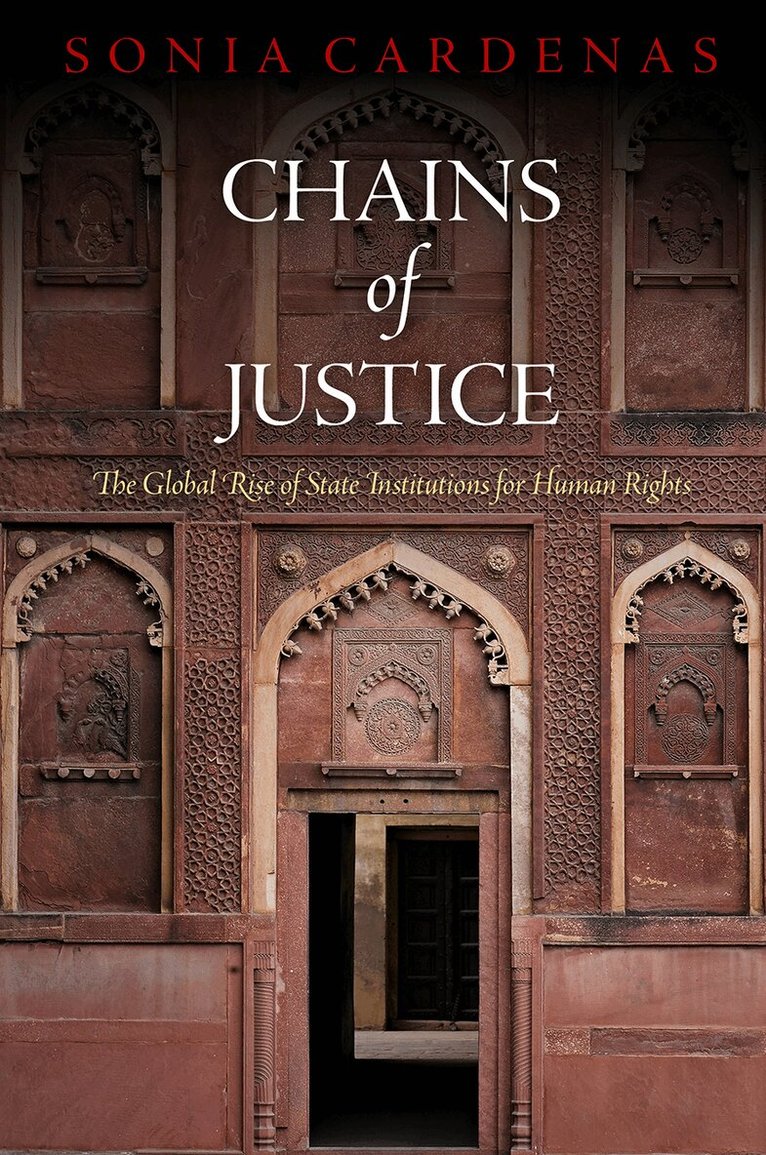
    Chains of Justice

    The Global Rise of State Institutions for Human Rights

    AvSonia Cardenas

    Inbunden, Engelska, 2014

    Del i serien Pennsylvania Studies in Human Rights

    926 kr

    Beställningsvara. Skickas inom 10-15 vardagar. Fri frakt över 249 kr.

    Fler format och utgåvor

    E-bok

    1 306 kr

    Beskrivning

    National human rights institutions-state agencies charged with protecting and promoting human rights domestically-have proliferated dramatically since the 1990s; today more than a hundred countries have NHRIs, with dozens more seeking to join the global trend. These institutions are found in states of all sizes-from the Maldives and Barbados to South Africa, Mexico, and India; they exist in conflict zones and comparatively stable democracies alike. In Chains of Justice, Sonia Cardenas offers a sweeping historical and global account of the emergence of NHRIs, linking their growing prominence to the contradictions and possibilities of the modern state.As human rights norms gained visibility at the end of the twentieth century, states began creating NHRIs based on the idea that if international human rights standards were ever to take root, they had to be firmly implanted within countries-impacting domestic laws and administrative practices and even systems of education. However, this very position within a complex state makes it particularly challenging to assess the design and influence of NHRIs: some observers are inclined to associate NHRIs with ideals of restraint and accountability, whereas others are suspicious of these institutions as "pretenders" in democratic disguise. In her theoretically and politically grounded examination, Cardenas tackles the role of NHRIs, asking how we can understand the global diffusion of these institutions, including why individual states decide to create an NHRI at a particular time while others resist the trend. She explores the influence of these institutions in states seeking mostly to appease international audiences as well as their value in places where respect for human rights is already strong.The most comprehensive account of the NHRI phenomenon to date, Chains of Justice analyzes many institutions never studied before and draws from new data released from the Universal Periodic Review Mechanism of the United Nations Human Rights Council. With its global scope and fresh insights into the origins and influence of NHRIs, Chains of Justice promises to become a standard reference that will appeal to scholars immersed in the workings of these understudied institutions as well as nonspecialists curious about the role of the state in human rights.

    Produktinformation

    • Utgivningsdatum:2014-04-02
    • Mått:152 x 229 x 40 mm
    • Vikt:936 g
    • Format:Inbunden
    • Språk:Engelska
    • Serie:Pennsylvania Studies in Human Rights
    • Antal sidor:496
    • Förlag:University of Pennsylvania Press
    • ISBN:9780812245394

    Utforska kategorier

    • Internationell rätt inom Juridik
    • Politiskt förtryck inom Samhälle och politik

    Mer om författaren

    Sonia Cardenas is Associate Academic Dean and Professor of Political Science at Trinity College and author of Human Rights in Latin America: A Politics of Terror and Hope and Conflict and Compliance: State Responses to International Human Rights Pressure, both available from the University of Pennsylvania Press.

    Recensioner i media

    "Chains of Justice is an excellent account of the emergence and diffusion of national human rights institutions. Broad in its historical and geographical sweep, Cardenas's book plumbs fundamental processes of comparative and international politics to explain the global diffusion of 'horizontal self-regulation' of human rights. Her case studies vividly illustrate the fundamental trade-off many states are willing to make: good-faith self-restraint in exchange for muted external criticism. This is a gem of a book: deep, moving, and utterly persuasive." (Beth Simmons, Clarence Dillon Professor of International Affairs, Harvard University) "Chains of Justice accomplishes multiple astonishing feats. It is a must read for scholars and practitioners alike. It is accessible to newcomers to the study of national human rights institutions and, at the same time, significantly advances the knowledge of experts who have been closely examining these institutions for years. The book is packed with insights into the political conditions for creating and strengthening national institutions and the potential of these organizations to shape interactions between states and civil society. Sonia Cardenas proves, once again, that she is at the forefront of research on the origins and influence of these important institutions of accountability." (Ryan Goodman, Anne and Joel Ehrenkranz Professor of Law, Professor of Politics, and Professor of Sociology, New York University)

    Innehållsförteckning

    • Chapter 1. The Self-Restraining State?Chapter 2. Historical LinkagesChapter 3. Tracking Global DiffusionChapter 4. The Logic of Strategic EmulationChapter 5. Trendsetters and Early Adopters, pre-1990Chapter 6. Democratization Scripts and Bandwagoning in AfricaChapter 7. Transitional Myths and Everyday Politics in the AmericasChapter 8. Appeasement via Localization in the Asia PacificChapter 9. Membership Rites and Statehood in the New EuropeChapter 10. How Accountability Institutions MatterChapter 11. Adaptive States: Making and Breaking International LawNotesIndexAcknowledgments