• Fri frakt över 249 kr
  • •
  • Snabba leveranser
  • •
  • Billiga böcker
Kundservice

Du är på sajten för privatpersoner.

Företag, bibliotek eller offentlig verksamhet?

Du handlar på classic.bokus.com, där alla dina funktioner finns intakta.
Till classic.bokus.com
Bokus logotyp. Gå till startsidan.
  • Erbjudanden
  • Nyheter
  • Student
  • Topplistor
  • Barn & ungdom
  • Bokus Play
  • E-böcker
  • Pocketböcker
  • Spel & pussel

10% rabatt på allt med kod: NYSTART10 →

Sidfot

Mina sidor

    Hjälp

    • Kundservice
    • Vanliga frågor och svar
    • Frakt och leverans
    • Retur vid ångerrätt
    • Reklamera vara
    • Betalning
    • Köpvillkor
    • Allmänna villkor
    • Information om webbplatsens tillgänglighet

    Om Bokus

    • Om oss
    • Pressrum
    • För studenter
    • För företag
    • För bibliotek och offentlig verksamhet
    • För leverantörer
    • Hållbarhet

    Populärt

    • Aktuella erbjudanden
    • Presentkort
    • Studentlitteratur
    • Nya böcker
    • Topplistor
    • Signerade böcker
    • Engelska böcker

    Inspiration

    • Boktips
    • BookTok
    • Populära bokserier
    • Barnbokskaraktärer
    • Populära författare
    Logotyp för Bokus
    Följ oss på Facebook (extern länk)Följ oss på Instagram (extern länk)Följ oss på YouTube (extern länk)Följ oss på TikTok (extern länk)
    bokus @ CookiesAnpassa cookiesIntegritetspolicyKöpvillkor
    Till Citymail hemsida (extern länk)Till Budbee hemsida (extern länk)Till Postnord hemsida (extern länk)Till Schenker hemsida (extern länk)Till Early Bird hemsida (extern länk)Till Walleys hemsida (extern länk)
    1. Psykologi och pedagogik
    2. Psykologi
    3. Psykologiska teorier och skolor
    4. Freudiansk psykologi

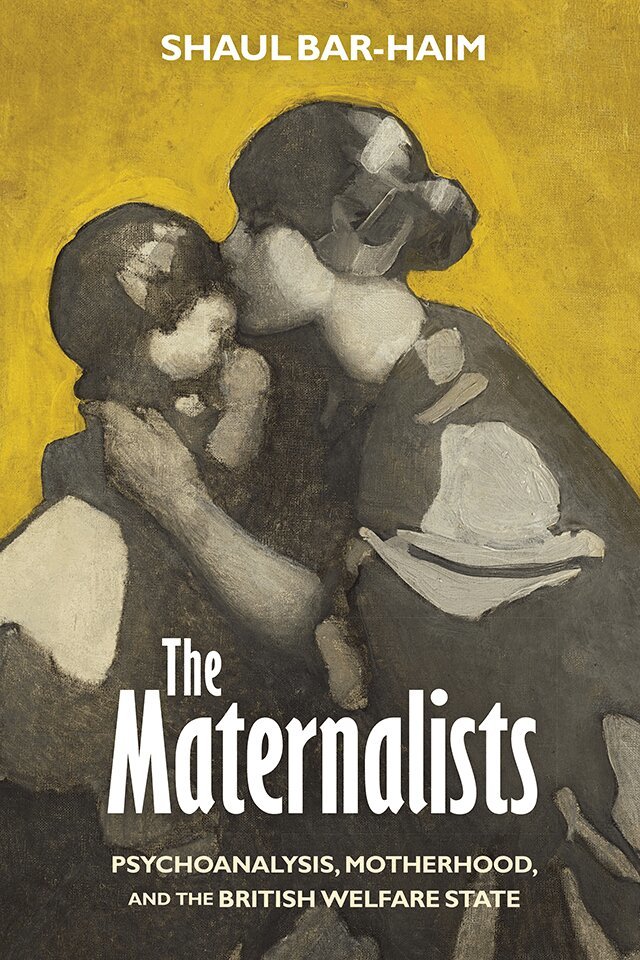
    Maternalists

    Psychoanalysis, Motherhood, and the British Welfare State

    AvShaul Bar-Haim

    Inbunden, Engelska, 2021

    Del i serien Intellectual History of the Modern Age

    507 kr

    Skickas . Fri frakt över 249 kr.

    Fler format och utgåvor

    E-bok

    460 kr

    Häftad

    313 kr

    Beskrivning

    The Maternalists is a study of the hitherto unexplored significance of utopian visions of the state as a maternal entity in mid-twentieth century Britain. Demonstrating the affinities between welfarism, maternalism, and psychoanalysis, Shaul Bar-Haim suggests a new reading of the British welfare state as a political project.After the First World War, British doctors, social thinkers, educators, and policy makers became increasingly interested in the contemporary turn being made in psychoanalytic theory toward the role of motherhood in child development. These public figures used new notions of the "maternal" to criticize modern European culture, and especially its patriarchal domestic structure. This strand of thought was pioneered by figures who were well placed to disseminate their ideas into the higher echelons of British culture, education, and medical care. Figures such as the anthropologists Bronislaw Malinowski and Geza Róheim, and the psychiatrist Ian Suttie—to mention only a few of the "maternalists" discussed in the book—used psychoanalytic vocabulary to promote both imagined perceptions of motherhood and their idea of the "real" essence of the "maternal." In the 1930s, as European fascism took hold, the "maternal" became a cultural discourse of both collective social anxieties and fantasies, as well as a central concept in many strands of radical, and even utopian, political thinking. During the Second World War, and even more so in the postwar era, psychoanalysts such as D. W. Winnicott and Michael Balint responded to the horrors of the war by drawing on interwar maternalistic thought, making a demand to "maternalize" British society, and providing postwar Britain with a new political idiom for defining the welfare state as a project of collective care.

    Produktinformation

    • Utgivningsdatum:2021-08-06
    • Mått:152 x 229 x 26 mm
    • Vikt:608 g
    • Format:Inbunden
    • Språk:Engelska
    • Serie:Intellectual History of the Modern Age
    • Antal sidor:304
    • Förlag:University of Pennsylvania Press
    • ISBN:9780812253153
    • Utmärkelser:Winner of Selected by Choice magazine as an Outstanding Academic Title 2023 (United States)

    Utforska kategorier

    • Freudiansk psykologi inom Psykologi och pedagogik

    Mer om författaren

    Shaul Bar-Haim is Senior Lecturer in the Department of Sociology at the University of Essex.

    Recensioner i media

    "[The] 'maternal turn' in interwar psychoanalytic discourse in Britain, which was at the same time a turn from Freud to Klein, and its impact on postwar welfare policy, is the subject of Shaul Bar-Haim's book. He argues that progressive 'maternalistic' thinkers from the interwar period involved in education, anthropology and the 'psy' professions connected new psychoanalytic ideas of motherhood to an ideal of the state as a maternal entity. The 'maternal ethics' of the period were a response to the horrors of the First World War and the emergence of fascism on the continent. In this figuration, motherhood is less a lived experience than a site of collective imaginings, a meeting point between private and public spaces. As Bar-Haim argues, women and mothers were the main intermediaries between the family and the state in its newly interventionist mode, through their encounters with GPs, social workers, psychotherapists and teachers." (London Review of Books) "Bar‐Haim sets out to demonstrate how much of what we think of as democracy was forged in conjunction with a cultural shift to valuing mothers. The book brings together several strands of existing historiography, such as the development of a relations‐based psychoanalysis from Freud's drive‐based model, the emergence of the mother figure within this new psychoanalysis, and the synergy between the new psychoanalysis and the welfare state…[T]he book's contribution is impressive. Deploying a multiplicity of primary and secondary sources, some of them archival and unpublished, Bar‐Haim presents a compelling account of a historical transformation in the consequences of which we all live. While surveying sources from various disciplines, he avoids both jargon and oversimplification: the essay remains nuanced and accessible throughout. And in a scholarly world that rewards a specialization‐to‐naught strategy, Bar‐Haim's opting for a broad lens is courageous." (The History of the Behavioral Sciences) "The Maternalists, in which Shaul Bar-Haim explores mid-century psychoanalysts' maternalistic thinking and the role of the welfare state, joins bookshelves at a moment in which Britain might be seen to be reassessing its enactment of maternalistic, caring values...[A]n intriguing, elegant, and deeply researched contribution to our understanding of the imaginaries of the welfare state and the influence of psychanalytic models in the mid-twentieth century." (Twentieth-Century British History) "The Maternalists provides at once a highly original interpretation of key figures in post-Freudian psychoanalysis and a novel take on the ideas that animated the expansion and reformation of the British welfare state. In focusing on the efforts to 'maternalize' the state—indeed to 'maternalize' society as a whole—Shaul Bar-Haim fundamentally rewrites the story we thought we knew. But the book achieves yet more, as it returns to the once tightly intertwined evolutions of psychoanalysis and anthropology, and recovers indispensable, heretofore underappreciated anticolonial strands within the psychoanalytic tradition." (Dagmar Herzog, author of Unlearning Eugenics) "This is a fascinating and important book. Shaul Bar-Haim plumbs a variety of continental and British psychoanalytic thinkers, from Freud and Ferenczi to Winnicott and Balint, to illuminate the ways in which they helped shape the postwar welfare state with its decidedly maternal cast. The Maternalists is a riveting contribution both to our understanding of the social influence of psychoanalytic thought and the meanings of the welfare state." (Lisa Appignanesi, author of Mad, Bad, and Sad)

    Innehållsförteckning

    • IntroductionChapter 1. The "Sphincter-Morality" and Beyond: The Concept of Childhood in Interwar PsychoanalysisChapter 2. How Children Think: Susan Isaacs on "Primitive" ThinkingChapter 3. Malinowski, Róheim, and the Maternal Shift in British Psychoanalysis and AnthropologyChapter 4. Imagining the "Maternal" Past: Ian Suttie's Critique of Oedipal CultureChapter 5. What About Father? Civic-Republican Maternalism and the Welfare StateChapter 6. "The Drug 'Doctor'": The Balint Movement and Psychosocial Medicine in Postwar BritainConclusionNoteBibliographyIndexAcknowledgments