• Fri frakt över 249 kr
  • •
  • Snabba leveranser
  • •
  • Billiga böcker
Kundservice

Du är på sajten för privatpersoner.

Företag, bibliotek eller offentlig verksamhet?

Du handlar på classic.bokus.com, där alla dina funktioner finns intakta.
Till classic.bokus.com
Bokus logotyp. Gå till startsidan.
  • Erbjudanden
  • Student
  • Topplistor
  • Barn & ungdom
  • Bokus Play
  • E-böcker
  • Ljudböcker
  • Pocketböcker
  • Spel & pussel

10% rabatt på allt med kod NYSTART10 →

Sidfot

Mina sidor

    Hjälp

    • Kundservice
    • Vanliga frågor och svar
    • Frakt och leverans
    • Retur vid ångerrätt
    • Reklamera vara
    • Betalning
    • Köpvillkor
    • Allmänna villkor
    • Information om webbplatsens tillgänglighet

    Om Bokus

    • Om oss
    • Pressrum
    • För studenter
    • För företag
    • För bibliotek och offentlig verksamhet
    • För leverantörer
    • Hållbarhet

    Populärt

    • Aktuella erbjudanden
    • Presentkort
    • Studentlitteratur
    • Nya böcker
    • Topplistor
    • Signerade böcker
    • Engelska böcker

    Inspiration

    • Boktips
    • BookTok
    • Populära bokserier
    • Barnbokskaraktärer
    • Populära författare
    Logotyp för Bokus
    Följ oss på Facebook (extern länk)Följ oss på Instagram (extern länk)Följ oss på YouTube (extern länk)Följ oss på TikTok (extern länk)
    bokus @ CookiesAnpassa cookiesIntegritetspolicyKöpvillkor
    Till Citymail hemsida (extern länk)Till Budbee hemsida (extern länk)Till Postnord hemsida (extern länk)Till Schenker hemsida (extern länk)Till Early Bird hemsida (extern länk)Till Walleys hemsida (extern länk)
    1. Samhälle och politik
    2. Samhälle och kultur
    3. Sociala och etiska frågor
    4. Migration

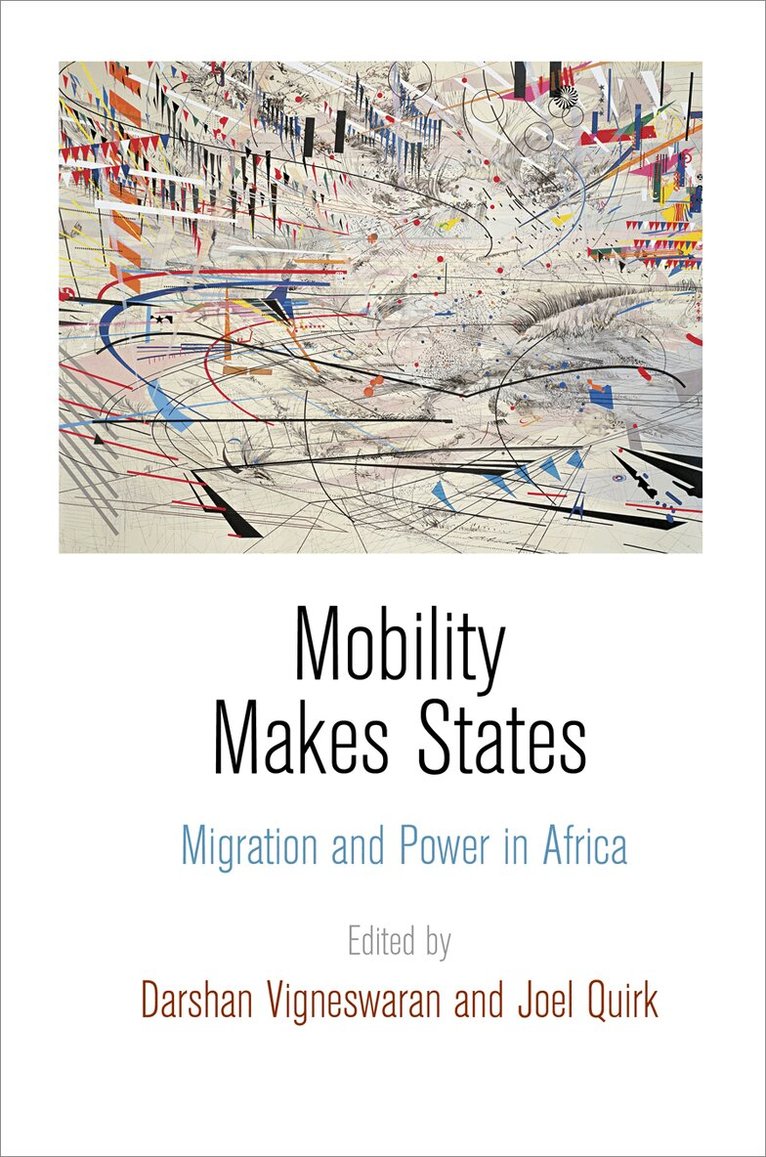
    Mobility Makes States

    Migration and Power in Africa

    AvDarshan Vigneswaran,Joel Quirk

    E-bok
    Engelska, 2015

    1 263 kr

    Läs direkt i Bokus Reader – eller ladda ned till din enhet

    Beskrivning

    Human mobility has long played a foundational role in producing state territories, resources, and hierarchies. When people move within and across national boundaries, they create both challenges and opportunities. In Mobility Makes States, chapters written by historians, political scientists, sociologists, and anthropologists explore different patterns of mobility in sub-Saharan Africa and how African states have sought to harness these movements toward their own ends.While border control and intercontinental migration policies remain important topics of study, Mobility Makes States demonstrates that immigration control is best understood alongside parallel efforts by states in Africa to promote both long-distance and everyday movements. The contributors challenge the image of a fixed and static state that is concerned only with stopping foreign migrants at its border, and show that the politics of mobility takes place across a wide range of locations, including colonial hinterlands, workplaces, camps, foreign countries, and city streets. They examine short-term and circular migrations, everyday commuting and urban expansion, forced migrations, emigrations, diasporic communities, and the mobility of gatekeepers and officers of the state who push and pull migrant populations in different directions. Through the experiences and trajectories of migration in sub-Saharan Africa, this empirically rich volume sheds new light on larger global patterns and state making processes.Contributors: Eric Allina, Oliver Bakewell, Pamila Gupta, Nauja Kleist, Loren B. Landau, Joel Quirk, Benedetta Rossi, Filipa Ribeiro da Silva, Simon Turner, Darshan Vigneswaran.

    Produktinformation

    • Utgivningsdatum:2015-04-22
    • Språk:Engelska
    • Antal sidor:312
    • Filformat:EPUB
    • Kopieringsskydd:LCP
    • ISBN:9780812291292
    • Förlag:University of Pennsylvania Press

    Utforska kategorier

    • Migration inom Samhälle och politik

    Mer om författaren

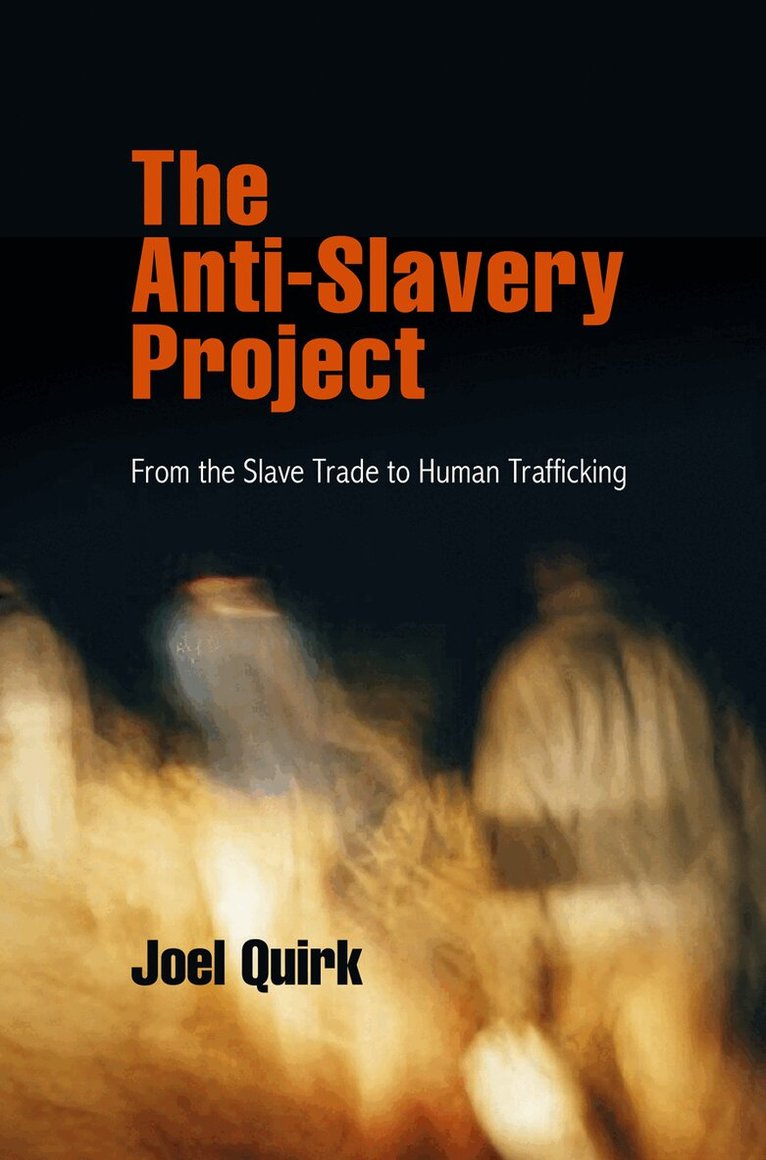
    Darshan Vigneswaran is Codirector of the Institute for Migration and Ethnic Studies and Assistant Professor in the Department of Political Science at University of Amsterdam, as well as a Senior Researcher at the African Centre for Migration and Society at the University of the Witwatersrand. Joel Quirk is Associate Professor of Political Studies at the University of the Witwatersrand. He is author of The Anti-Slavery Project: From the Slave Trade to Human Trafficking, also available from the University of Pennsylvania Press.

    Recensioner i media

    "With its theoretically compelling frame, this well-integrated, empirically rich set of essays helps us understand that human mobility is (and has been) not just something states must manage and contain but a key force that shapes (and has shaped) states' most central features. Countering the persistent but misleading image of the state as exercising power over a static and stationary population, this book shows how human mobility shapes, among other things, a state's spatial features, its strategies for accumulating power and managing resources, and the kinds of national and international political, social and economic actors with which it allies. In our era of mind-boggling population displacements, this innovative book offers crucial new tools for thinking about the complex phenomenon of human mobility." (Lidwien Kapteijns, Wellesley College) "'Mobility makes states, and states make mobility': that is the bold claim made by the editors of this fine volume. Eschewing the tendency to view states solely as agents that prevent mobility, the book focuses on the ways in which states promote and channel human movement for their own purposes. The book reminds us that states may do very different things in different contexts, and that they should not necessarily be judged by a putatively normative European experience. This volume is a major contribution to thinking both about human mobility and about African society and politics that should be read by anyone interested in either." (John Torpey, Graduate Center, City University of New York)

    Innehållsförteckning

    • Chapter 1. Mobility Makes States-Joel Quirk and Darshan VigneswaranPART I: CHANNELING HUMAN MOBILITYChapter 2. Portuguese Empire Building and Human Mobility in SÃo TomÉ and Angola, 1400s-1700s-Filipa Ribeiro da SilvaChapter 3. "Captive to Civilization": Law, Labor, and Violence in Colonial Mozambique-Eric AllinaChapter 4. Victims, Saviors, and Suspects: Channeling Mobility in Postgenocide Rwanda-Simon TurnerChapter 5. Channeling Mobility Across a Segregated Johannesburg-Darshan VigneswaranChapter 6. Policy Spectacles: Promoting Migration-Development Scenarios in Ghana-Nauja KleistPART II. MOVING CONCENTRATIONS OF POWER PowerChapter 7. Kinetocracy: The Government of Mobility at the Desert's Edge-Benedetta RossiChapter 8. Decolonization and (Dis)Possession in Lusophone Africa-Pamila GuptaChapter 9. Moving from War to Peace in the Zambia-Angola Borderlands-Oliver BakewellChapter 10. Recognition, Solidarity, and the Power of Mobility in Africa's Urban Estuaries-Loren B. LandauNotesList of ContributorsIndexAcknowledgments