• Fri frakt över 249 kr
  • •
  • Snabba leveranser
  • •
  • Billiga böcker
Kundservice

Du är på sajten för privatpersoner.

Företag, bibliotek eller offentlig verksamhet?

Du handlar på classic.bokus.com, där alla dina funktioner finns intakta.
Till classic.bokus.com
Bokus logotyp. Gå till startsidan.
  • Erbjudanden
  • Nyheter
  • Student
  • Topplistor
  • Barn & ungdom
  • Bokus Play
  • E-böcker
  • Pocketböcker
  • Spel & pussel

10% rabatt på allt med kod: NYSTART10 →

Sidfot

Mina sidor

    Hjälp

    • Kundservice
    • Vanliga frågor och svar
    • Frakt och leverans
    • Retur vid ångerrätt
    • Reklamera vara
    • Betalning
    • Köpvillkor
    • Allmänna villkor
    • Information om webbplatsens tillgänglighet

    Om Bokus

    • Om oss
    • Pressrum
    • För studenter
    • För företag
    • För bibliotek och offentlig verksamhet
    • För leverantörer
    • Hållbarhet

    Populärt

    • Aktuella erbjudanden
    • Presentkort
    • Studentlitteratur
    • Nya böcker
    • Topplistor
    • Signerade böcker
    • Engelska böcker

    Inspiration

    • Boktips
    • BookTok
    • Populära bokserier
    • Barnbokskaraktärer
    • Populära författare
    Logotyp för Bokus
    Följ oss på Facebook (extern länk)Följ oss på Instagram (extern länk)Följ oss på YouTube (extern länk)Följ oss på TikTok (extern länk)
    bokus @ CookiesAnpassa cookiesIntegritetspolicyKöpvillkor
    Till Citymail hemsida (extern länk)Till Budbee hemsida (extern länk)Till Postnord hemsida (extern länk)Till Schenker hemsida (extern länk)Till Early Bird hemsida (extern länk)Till Walleys hemsida (extern länk)
    1. Historia och arkeologi
    2. Historia
    3. Allmän historia och världshistoria

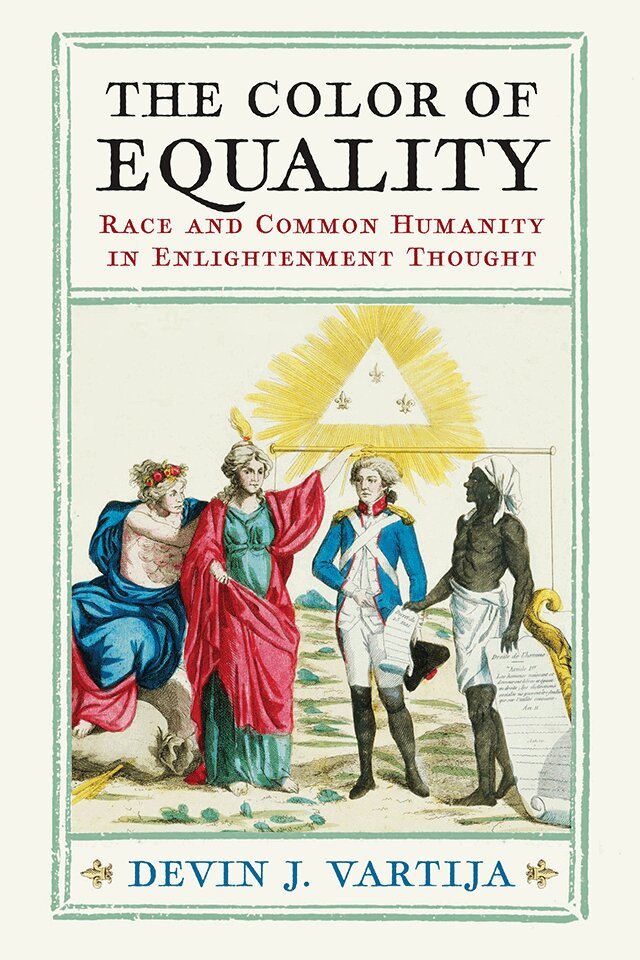
    Color of Equality

    Race and Common Humanity in Enlightenment Thought

    AvDevin J. Vartija

    E-bok
    Engelska, 2021

    Del i serien Intellectual History of the Modern Age

    1 060 kr

    Läs direkt i Bokus Reader – eller ladda ned till din enhet

    Fler format och utgåvor

    Inbunden

    750 kr

    Beskrivning

    The Enlightenment is often either praised as the wellspring of modern egalitarianism or condemned as the cradle of scientific racism. How should we make sense of this paradox? The Color of Equality is the first book to investigate both the inclusive language of common humanity and the hierarchical language of race in Enlightenment thought, seeking to understand how eighteenth-century thinkers themselves made sense of these tensions. Using three major Enlightenment encyclopedias from England, France, and Switzerland, the book provides a rich contextualization of the conflicting ideas of equality and race in eighteenth-century thought.Enlightenment thinkers used physical features to categorize humanity into novel "racial" groups in a discourse that was imbued with Eurocentric aesthetic and moral judgments. Simultaneously, however, these very same thinkers politicized equality by putting it to new uses, such as a vitriolic denunciation of slavery and inhumane treatment that was grounded in the nascent philosophy of human rights. Vartija contends that the tension between Enlightenment ideas of race and equality can best be explained by these thinkers' attempt to provide a naturalistic account of humanity, including both our physical and moral attributes. Enlightenment racial classification fits into the novel inclusion of humanity in histories of nature, while the search for the origins of morality in social experience alone lent equality a normative authority it had not previously possessed.Eschewing straightforward approbation or blame of the Enlightenment, The Color of Equality demonstrates that our present-day thinking about human physical and cultural diversity continues to be deeply informed by an eighteenth-century European intellectual revolution with global ramifications.

    Produktinformation

    • Utgivningsdatum:2021-08-06
    • Språk:Engelska
    • Antal sidor:312
    • Filformat:EPUB
    • Kopieringsskydd:LCP
    • ISBN:9780812299670
    • Förlag:University of Pennsylvania Press
    • Serie:Intellectual History of the Modern Age

    Utforska kategorier

    • Allmän historia och världshistoria inom Historia och arkeologi
    • Europas historia inom Historia och arkeologi

    Mer om författaren

    Devin J. Vartija is Assistant Professor of History at Utrecht University.

    Recensioner i media

    "In this timely, thoroughly documented, and well-argued book, Devin J. Vartija takes on one of the enduring paradoxes of intellectual history: why is the Enlightenment seen as the origin of modern egalitarianism even as it is understood as a source of scientific racism?...Vartija's book presents the Enlightenment in its complexity, multiplicity and heterogeneity. The Color of Equality provides an exceptional model for locating the inherent intellectual tensions that the Enlightenment embodies and addressing the problematic interpretive legacies that it leavesin its wake." (Cromohs) "This book is a valuable contribution to the study of Enlightenment thought, valuable partly because it refuses to take a side 'for' or 'against' the Enlightenment's approach to racializing of humans. Vartija has parsed out why the Enlightenment remains a significantly important era for examination. By examining facets of intellectuals' concerns, Vartija has shown us that any easy tendency to embrace or to dismiss Enlightenment philosophy misses a key point about legacies of Enlightenment...Vartija is to be commended for taking on such a project as this." (The Eighteenth Century Intelligencer) "It is hard to imagine a more timely and significant book. In this compelling study, Devin J. Vartija not only unpacks the complex history of race as a category but also shows its sometimes surprising connection to equality in a century that was crucial to the articulation of both. As a consequence, our modern challenges become more comprehensible and, we can hope, all the more surmountable." (Lynn Hunt, author of Inventing Human Rights: A History)

    Innehållsförteckning

    • IntroductionChapter 1. Early Modern Debates on Human Sameness and DifferenceChapter 2. Chambers's Cyclopaedia and Supplement: The Growth of theNatural History of HumanityChapter 3. Diderot and d'Alembert's EncyclopÉdie: A New Human ScienceChapter 4. De Felice's EncyclopÉdie d'Yverdon: Expanding and ContestingHuman ScienceConclusionNotesIndexAcknowledgments