• Fri frakt över 249 kr
  • •
  • Snabba leveranser
  • •
  • Billiga böcker
Kundservice

Du är på sajten för privatpersoner.

Företag, bibliotek eller offentlig verksamhet?

Du handlar på classic.bokus.com, där alla dina funktioner finns intakta.
Till classic.bokus.com
Bokus logotyp. Gå till startsidan.
  • Erbjudanden
  • Nyheter
  • Student
  • Topplistor
  • Barn & ungdom
  • Bokus Play
  • E-böcker
  • Pocketböcker
  • Spel & pussel

10% rabatt på allt med kod NYSTART10 →

Sidfot

Mina sidor

    Hjälp

    • Kundservice
    • Vanliga frågor och svar
    • Frakt och leverans
    • Retur vid ångerrätt
    • Reklamera vara
    • Betalning
    • Köpvillkor
    • Allmänna villkor
    • Information om webbplatsens tillgänglighet

    Om Bokus

    • Om oss
    • Pressrum
    • För studenter
    • För företag
    • För bibliotek och offentlig verksamhet
    • För leverantörer
    • Hållbarhet

    Populärt

    • Aktuella erbjudanden
    • Presentkort
    • Studentlitteratur
    • Nya böcker
    • Topplistor
    • Signerade böcker
    • Engelska böcker

    Inspiration

    • Boktips
    • BookTok
    • Populära bokserier
    • Barnbokskaraktärer
    • Populära författare
    Logotyp för Bokus
    Följ oss på Facebook (extern länk)Följ oss på Instagram (extern länk)Följ oss på YouTube (extern länk)Följ oss på TikTok (extern länk)
    bokus @ CookiesAnpassa cookiesIntegritetspolicyKöpvillkor
    Till Citymail hemsida (extern länk)Till Budbee hemsida (extern länk)Till Postnord hemsida (extern länk)Till Schenker hemsida (extern länk)Till Early Bird hemsida (extern länk)Till Walleys hemsida (extern länk)
    1. Filosofi och religion
    2. Filosofi
    3. Filosofiska discipliner

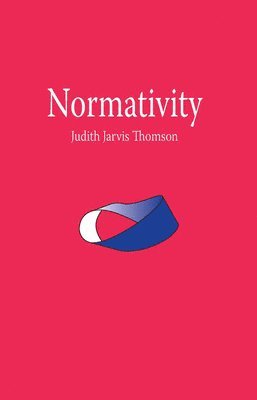
    Normativity

    AvJudith Jarvis Thomson

    Häftad, Engelska, 2009

    341 kr

    . Fri frakt över 249 kr.

    Fler format och utgåvor

    E-bok

    449 kr

    Beskrivning

    Judith Jarvis Thomson's Normativity is a study of normative thought. She brings out that normative thought is not restricted to moral thought. Normative judgments divide into two sub-kinds, the evaluative and the directive; but the sub-kinds are larger than is commonly appreciated. Evaluative judgments include the judgments that such and such is a good umbrella, that Alfred is a witty comedian, and that Bert answered Carol's question correctly, as well as the judgment that David is a good human being. Directive judgments include the judgment that a toaster should toast evenly, that Edward ought to get a haircut, and that Frances must move her rook, as well as the judgment that George ought to be kind to his little brother. Thomson describes how judgments of these two sub-kinds interconnect and what makes them true when they are true. Given the extensiveness of the two sub-kinds of normative judgment, our everyday thinking is rich in normativity, and moreover, there is no gap between normative and factual thought. The widespread suspicion of the normative is therefore in large measure due to nothing deeper than an excessively narrow conception of what counts as a normative judgment.

    Produktinformation

    • Utgivningsdatum:2009-01-15
    • Mått:152 x 228 x 21 mm
    • Vikt:396 g
    • Format:Häftad
    • Språk:Engelska
    • Antal sidor:240
    • Förlag:Open Court Publishing Co ,U.S.
    • ISBN:9780812696585

    Utforska kategorier

    • Filosofiska discipliner inom Filosofi och religion

    Mer om författaren

    Judith Jarvis Thomson is Professor of Philosophy at the Massachusetts Institute of Technology and the author of many works in ethics, theory of action, and metaphysics. Her earlier books include Goodness and Advice (2003), The Realm of Rights (1990), and Rights, Restitution, and Risk (1986).

    Recensioner i media

    "With her well-known toughness of mind, Judith Jarvis Thomson develops a systematic account of the entire domain of the normative--moral and non-moral--based upon the idea of being good of a kind. She makes clear just how thoroughly normativity is woven into our daily lives and thoughts, and how wrong it is to think of the normative as mysterious or elusive. Each page brings fresh ideas and arguments. This is a book anyone interested in normativity can read with profit." &#8212Peter Railton, University of Michigan "Normativity is a careful, rigorous account of the meanings of the basic normative terms: good, virtue, correct, ought, should, and must. Along the way, Thomson refutes almost everything other philosophers have said about these topics. It is a very important book." &#8212Gilbert Harman, Princeton University "This much anticipated book intriguingly and surprisingly broadens the scope of the philosophy of normativity. Impressively broad and deeply insightful, it deserves to be widely read and discussed." &#8212Ernest Sosa, Rutgers University