• Fri frakt över 249 kr
  • •
  • Snabba leveranser
  • •
  • Billiga böcker
Kundservice

Du är på sajten för privatpersoner.

Företag, bibliotek eller offentlig verksamhet?

Du handlar på classic.bokus.com, där alla dina funktioner finns intakta.
Till classic.bokus.com
Bokus logotyp. Gå till startsidan.
  • Erbjudanden
  • Nyheter
  • Student
  • Topplistor
  • Barn & ungdom
  • Bokus Play
  • E-böcker
  • Pocketböcker
  • Spel & pussel

10% rabatt på allt med kod: NYSTART10 →

Sidfot

Mina sidor

    Hjälp

    • Kundservice
    • Vanliga frågor och svar
    • Frakt och leverans
    • Retur vid ångerrätt
    • Reklamera vara
    • Betalning
    • Köpvillkor
    • Allmänna villkor
    • Information om webbplatsens tillgänglighet

    Om Bokus

    • Om oss
    • Pressrum
    • För studenter
    • För företag
    • För bibliotek och offentlig verksamhet
    • För leverantörer
    • Hållbarhet

    Populärt

    • Aktuella erbjudanden
    • Presentkort
    • Studentlitteratur
    • Nya böcker
    • Topplistor
    • Signerade böcker
    • Engelska böcker

    Inspiration

    • Boktips
    • BookTok
    • Populära bokserier
    • Barnbokskaraktärer
    • Populära författare
    Logotyp för Bokus
    Följ oss på Facebook (extern länk)Följ oss på Instagram (extern länk)Följ oss på YouTube (extern länk)Följ oss på TikTok (extern länk)
    bokus @ CookiesAnpassa cookiesIntegritetspolicyKöpvillkor
    Till Citymail hemsida (extern länk)Till Budbee hemsida (extern länk)Till Postnord hemsida (extern länk)Till Schenker hemsida (extern länk)Till Early Bird hemsida (extern länk)Till Walleys hemsida (extern länk)
    1. Samhälle och politik
    2. Sociologi och antropologi
    3. Antropologi

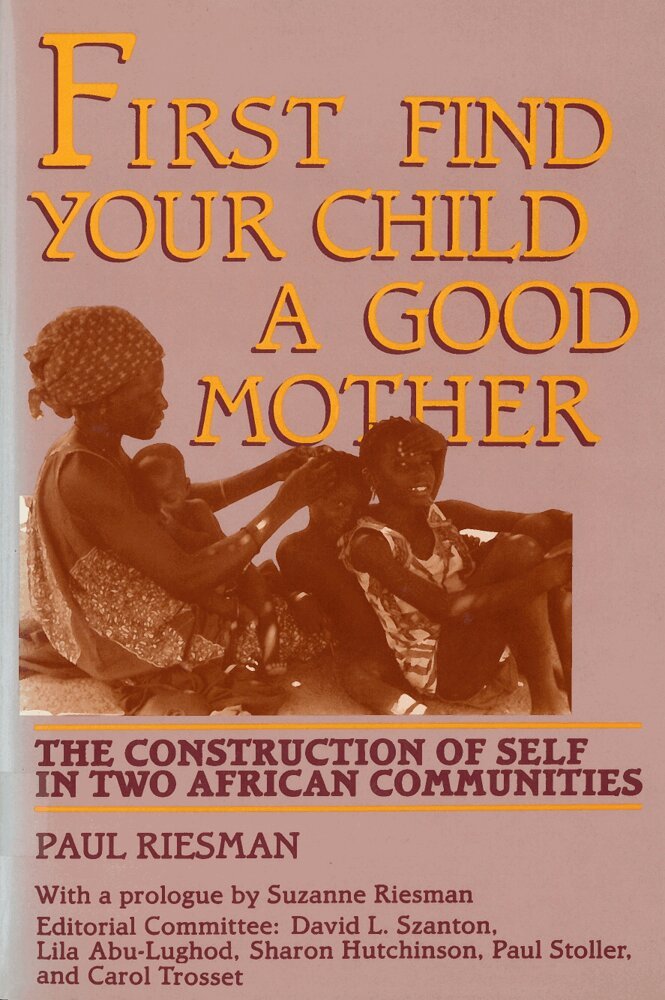
    First Find Your Child a Good Mother

    The Construction of Self in Two African Communities

    AvPaul Riesman

    Häftad, Engelska, 1992

    370 kr

    Beställningsvara. Skickas inom 5-8 vardagar. Fri frakt över 249 kr.

    Beskrivning

    Through a systematic comparison of the life circumstances, child-rearing practices, and personalities of the FulBe and their former slaves, the RiimaayBe, this book develops an alternative theory of the way personality is formed in the Fulani society of West Africa. Riesman discusses the different characters, economies, and life plans of adult men and women of both groups, focusing on their ideas about the value of relatives. He further presents detailed observations of child-rearing practices, and concludes that the FulBe and RiimaayBe do not differ in these practices. Contrasting Fulani and Western notions of parenting, he suggests that child-rearing practices are themselves irrelevant to the formation of adult personality, but that a people's ideas about the meaning of life, social relations, and the development of character are very important. Finally, Riesman outlines a sociocultural theory of personality and its formation, and uses this theory to make sense of the differences between FulBe and RiimaayBe.

    Produktinformation

    • Utgivningsdatum:1992-04-01
    • Mått:152 x 229 x 20 mm
    • Vikt:399 g
    • Format:Häftad
    • Språk:Engelska
    • Antal sidor:264
    • Förlag:Rutgers University Press
    • ISBN:9780813517681

    Utforska kategorier

    • Antropologi inom Samhälle och politik

    Mer om författaren

    Paul Riesman was a professor of anthropology at Carleton College and author of Freedom in Fulani Social Life. After Paul Riesman's death in 1988, this book was completed with the assistance of David L. Szanton (University of California, Berkeley), Lila Abu-Lughod (Princeton University), Sharon Hutchinson (University of Wisconsin, Madison), Paul Stoller (West Chester University), and Carol Trosset (University of Virginia).

    Innehållsförteckning

    • List of IllustrationsPrefaceAcknowledgmentsPrologueReflexivity in Humanistic Anthropology: by Lila Abu-Lughod1 Introduction2 Global Fulani Society3 Economy4 What is Life All About5 Infancy and Early Childhood6 Later Childhood7 Child Development in Fulani Ethnopsychology8 Self, Identity, and Personality9 ConclusionTheoretical Implications, by Carol TrossetNotesBibliographyIndex