• Fri frakt över 249 kr
  • •
  • Snabba leveranser
  • •
  • Billiga böcker
Kundservice

Du är på sajten för privatpersoner.

Företag, bibliotek eller offentlig verksamhet?

Du handlar på classic.bokus.com, där alla dina funktioner finns intakta.
Till classic.bokus.com
Bokus logotyp. Gå till startsidan.
  • Erbjudanden
  • Student
  • Topplistor
  • Barn & ungdom
  • Bokus Play
  • E-böcker
  • Ljudböcker
  • Pocketböcker
  • Spel & pussel

10% rabatt på allt med kod NYSTART10 →

Sidfot

Mina sidor

    Hjälp

    • Kundservice
    • Vanliga frågor och svar
    • Frakt och leverans
    • Retur vid ångerrätt
    • Reklamera vara
    • Betalning
    • Köpvillkor
    • Allmänna villkor
    • Information om webbplatsens tillgänglighet

    Om Bokus

    • Om oss
    • Pressrum
    • För studenter
    • För företag
    • För bibliotek och offentlig verksamhet
    • För leverantörer
    • Hållbarhet

    Populärt

    • Aktuella erbjudanden
    • Presentkort
    • Studentlitteratur
    • Nya böcker
    • Topplistor
    • Signerade böcker
    • Engelska böcker

    Inspiration

    • Boktips
    • BookTok
    • Populära bokserier
    • Barnbokskaraktärer
    • Populära författare
    Logotyp för Bokus
    Följ oss på Facebook (extern länk)Följ oss på Instagram (extern länk)Följ oss på YouTube (extern länk)Följ oss på TikTok (extern länk)
    bokus @ CookiesAnpassa cookiesIntegritetspolicyKöpvillkor
    Till Citymail hemsida (extern länk)Till Budbee hemsida (extern länk)Till Postnord hemsida (extern länk)Till Schenker hemsida (extern länk)Till Early Bird hemsida (extern länk)Till Walleys hemsida (extern länk)
    1. Medicin
    2. Medicin: allmänt
    3. Medicinhistoria

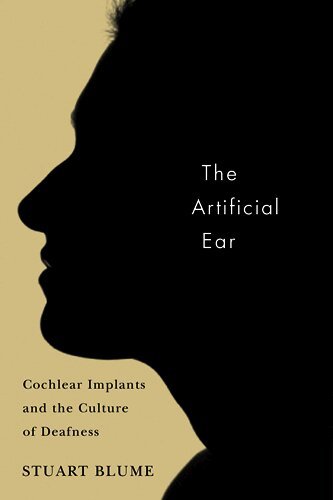
    Artificial Ear

    Cochlear Implants and the Culture of Deafness

    AvStuart Blume

    Häftad, Engelska, 2009

    472 kr

    Beställningsvara. Skickas inom 5-8 vardagar. Fri frakt över 249 kr.

    Beskrivning

    When it was first developed, the cochlear implant was hailed as a "miracle cure" for deafness. That relatively few deaf adults seemed to want it was puzzling. The technology was then modified for use with deaf children, 90 percent of whom have hearing parents. Then, controversy struck as the Deaf community overwhelmingly protested the use of the device and procedure. For them, the cochlear implant was not viewed in the context of medical progress and advances in the physiology of hearing, but instead represented the historic oppression of deaf people and of sign languages.Part ethnography and part historical study, The Artificial Ear is based on interviews with researchers who were pivotal in the early development and implementation of the new technology. Through an analysis of the scientific and clinical literature, Stuart Blume reconstructs the history of artificial hearing from its conceptual origins in the 1930s, to the first attempt at cochlear implantation in Paris in the 1950s, and to the widespread clinical application of the "bionic ear" since the 1980s.

    Produktinformation

    • Utgivningsdatum:2009-10-22
    • Mått:152 x 229 x 20 mm
    • Vikt:340 g
    • Format:Häftad
    • Språk:Engelska
    • Antal sidor:240
    • Förlag:Rutgers University Press
    • ISBN:9780813546605

    Utforska kategorier

    • Medicinhistoria inom Medicin
    • Audiologi och otologi inom Medicin

    Mer om författaren

    Stuart Blume is professor emeritus of science dynamics at the University of Amsterdam, The Netherlands. He is the author of several books, including Insight and Industry: The Dynamics of Technological Change in Medicine.

    Recensioner i media

    "A rich study of 'the artificial (or bionic) ear'. In this outstanding book, Blume shows how complicated and multi-dimensional can be the reality of patients' and carers' intervention in medical technology research and development. Like most of his work, this book is both sociological and strongly historical."(Sociology of Health and Illness) "Well written and provides a comprehensive look at the issues surrounding cochlear implantation now and throughout history. Highly recommended." (Choice) "In this compelling account, Stuart Blume bridges the scholarly and the personal to track the development and the contested uses of a medical device. Blume skillfully explains how the cochlear implant has figured in medical practice and political discourse, and he is especially attentive to the perspectives of those who are often marginalized in policy debates. In this book, the author's accumulated expertise on the topic of technological innovation shines through just as powerfully as his concern with promoting fairness and social justice." - Steven Epstein (author of Inclusion: The Politics of Difference in Medical Research) "Stuart Blume takes us on a remarkable journey into the medical, economic, and political making of the cochlear implant, an innovation that affects the relationship of deaf persons to the world and to their own identity. We are shown the clash of visions between makers and intended users, as well as the uncertainty and hope that shape parents' decision-making for their deaf children. This unsettling but rewarding journey forces us to question our understanding of medical progress and our personal sense of identity." - Isabelle Baszanger (author of Inventing Pain Medicine: From the Laboratory to the Clinic) "In The Artificial Ear, Stuart Blume analyzes the early development and implementation of cochlear implants from the 1930s to present day, highlighting the various medical, political, economic, and cultural factors that shaped its divergent course in the United States, Great Britain, France, Australia, Sweden, and the Netherlands."(Canadian Bulletin of Medical History) "A rich study of 'the artificial (or bionic) ear'. In this outstanding book, Blume shows how complicated and multi-dimensional can be the reality of patients' and carers' intervention in medical technology research and development. Like most of his work, this book is both sociological and strongly historical."(Sociology of Health and Illness) "Well written and provides a comprehensive look at the issues surrounding cochlear implantation now and throughout history. Highly recommended." (Choice) "In this compelling account, Stuart Blume bridges the scholarly and the personal to track the development and the contested uses of a medical device. Blume skillfully explains how the cochlear implant has figured in medical practice and political discourse, and he is especially attentive to the perspectives of those who are often marginalized in policy debates. In this book, the author's accumulated expertise on the topic of technological innovation shines through just as powerfully as his concern with promoting fairness and social justice." - Steven Epstein (author of Inclusion: The Politics of Difference in Medical Research) "Stuart Blume takes us on a remarkable journey into the medical, economic, and political making of the cochlear implant, an innovation that affects the relationship of deaf persons to the world and to their own identity. We are shown the clash of visions between makers and intended users, as well as the uncertainty and hope that shape parents' decision-making for their deaf children. This unsettling but rewarding journey forces us to question our understanding of medical progress and our personal sense of identity." - Isabelle Baszanger (author of Inventing Pain Medicine: From the Laboratory to the Clinic) "In The Artificial Ear, Stuart Blume analyzes the early development and implementation of cochlear implants from the 1930s to present day, highlighting the various medical, political, economic, and cultural factors that shaped its divergent course in the United States, Great Britain, France, Australia, Sweden, and the Netherlands."(Canadian Bulletin of Medical History)

    Innehållsförteckning

    • 1 The Promise of New Medical Technology2 The Making of the Cochlear Implant3 The Cochlear Implant and the Deaf Community4 The Globalization of a Controversial Technology5 Implantation Politics in the Netherlands6 Contexts of Uncertainty: Parental Decision Making7 Politics and Medical ProgressIndex