• Fri frakt över 249 kr
  • •
  • Snabba leveranser
  • •
  • Billiga böcker
Kundservice

Du är på sajten för privatpersoner.

Företag, bibliotek eller offentlig verksamhet?

Du handlar på classic.bokus.com, där alla dina funktioner finns intakta.
Till classic.bokus.com
Bokus logotyp. Gå till startsidan.
  • Erbjudanden
  • Nyheter
  • Student
  • Topplistor
  • Barn & ungdom
  • Bokus Play
  • E-böcker
  • Pocketböcker
  • Spel & pussel

10% rabatt på allt med kod NYSTART10 →

Sidfot

Mina sidor

    Hjälp

    • Kundservice
    • Vanliga frågor och svar
    • Frakt och leverans
    • Retur vid ångerrätt
    • Reklamera vara
    • Betalning
    • Köpvillkor
    • Allmänna villkor
    • Information om webbplatsens tillgänglighet

    Om Bokus

    • Om oss
    • Pressrum
    • För studenter
    • För företag
    • För bibliotek och offentlig verksamhet
    • För leverantörer
    • Hållbarhet

    Populärt

    • Aktuella erbjudanden
    • Presentkort
    • Studentlitteratur
    • Nya böcker
    • Topplistor
    • Signerade böcker
    • Engelska böcker

    Inspiration

    • Boktips
    • BookTok
    • Populära bokserier
    • Barnbokskaraktärer
    • Populära författare
    Logotyp för Bokus
    Följ oss på Facebook (extern länk)Följ oss på Instagram (extern länk)Följ oss på YouTube (extern länk)Följ oss på TikTok (extern länk)
    bokus @ CookiesAnpassa cookiesIntegritetspolicyKöpvillkor
    Till Citymail hemsida (extern länk)Till Budbee hemsida (extern länk)Till Postnord hemsida (extern länk)Till Schenker hemsida (extern länk)Till Early Bird hemsida (extern länk)Till Walleys hemsida (extern länk)
    1. Medicin
    2. Medicin: allmänt
    3. Medicinhistoria

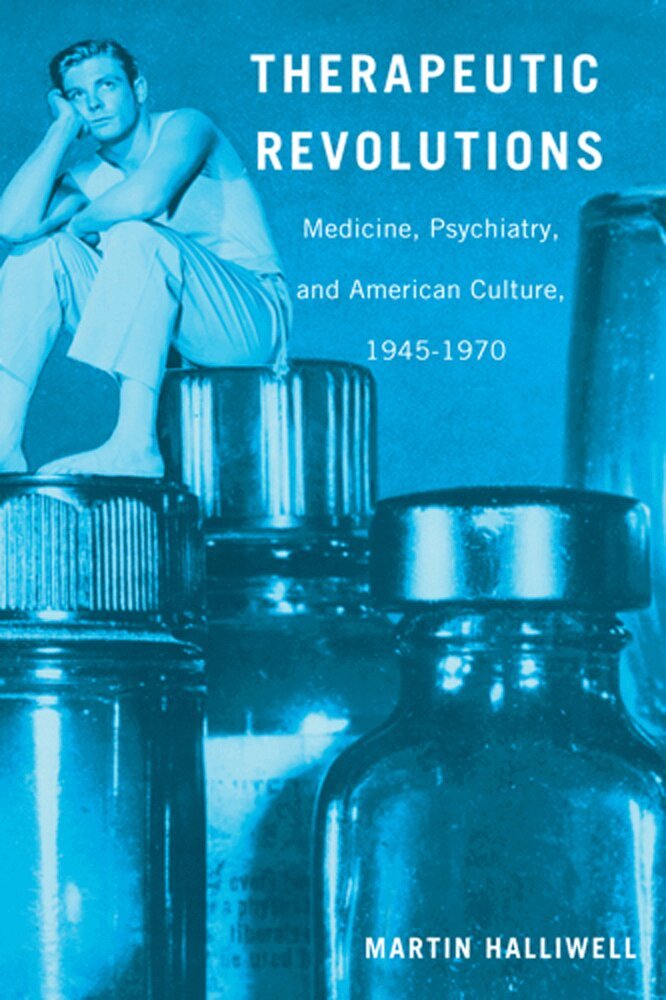
    Therapeutic Revolutions

    Medicine, Psychiatry, and American Culture, 1945-1970

    AvMartin Halliwell

    Häftad, Engelska, 2014

    527 kr

    Beställningsvara. Skickas inom 5-8 vardagar. Fri frakt över 249 kr.

    Beskrivning

    Therapeutic Revolutions examines the evolving relationship between American medicine, psychiatry, and culture from World War II to the dawn of the 1970s. In this richly layered intellectual history, Martin Halliwell ranges from national politics, public reports, and healthcare debates to the ways in which film, literature, and the mass media provided cultural channels for shaping and challenging preconceptions about health and illness.Beginning with a discussion of the profound impact of World War II and the Cold War on mental health, Halliwell moves from the influence of work, family, and growing up in the Eisenhower years to the critique of institutional practice and the search for alternative therapeutic communities during the 1960s. Blending a discussion of such influential postwar thinkers as Erich Fromm, William Menninger, Erving Goffman, Erik Erikson, and Herbert Marcuse with perceptive readings of a range of cultural text that illuminate mental health issues--among them Spellbound, Shock Corridor, Revolutionary Road, and I Never Promised You a Rose Garden--this compelling study argues that the postwar therapeutic revolutions closely interlink contrasting discourses of authority and liberation.

    Produktinformation

    • Utgivningsdatum:2014-09-30
    • Mått:156 x 235 x 23 mm
    • Vikt:560 g
    • Format:Häftad
    • Språk:Engelska
    • Antal sidor:448
    • Förlag:Rutgers University Press
    • ISBN:9780813560656

    Utforska kategorier

    • Medicinhistoria inom Medicin
    • Psykisk hälsovård inom Medicin
    • Psykiatri inom Medicin

    Mer om författaren

    MARTIN HALLIWELL is a professor of American studies and deputy pro-vice-chancellor for Internationalization at the University of Leicester, U.K. He was the 18th chair of the British Association for American Studies (2010-13), he is a fellow of the Royal Society of Arts, and the author of eight monographs and two edited volumes, most recently William James and the Transatlantic Conversation.

    Recensioner i media

    "Martin Halliwell offers fresh and inventive insights into the postwar period, showing mastery over an amazing range of material to demonstrate how fully the therapeutic triumphed in American culture."- Stephen Whitfield (author of The Culture of the Cold War) "Following varied terms of health and illness, mind and body, through successive changes in the healing arts, Halliwell shows the postwar 'triumph of the therapeutic' in a wholly new light." - Howard Brick (Louis Evans Professor of History University of Michigan) "Therapeutic Revolutions makes a very good read. It should be on the reading list of every scholar concerned with postwar America, especially with the nature of therapeutic culture." (Reviews in American History) "Martin Halliwell’s Therapeutic Revolutions traces the major post-World War II transformations in medicine and psychiatry through the lens of popular culture. To accomplish this ambitious goal, he uses an immense number of sources that include movies, novels, poetry, television shows, popular music, magazine stories, and government and foundation reports, as well as scholarly books, articles, ethnographies, and Ph.D. theses ... The strengths of this book stem from Halliwell’s comprehensive analysis of an astonishing array of diffuse material." (Journal of the History of Medicine and Allied Sciences) "When it comes to changes and culture, Halliwell knows his subject area. Throughout the book, he reveals his deep and thorough understanding of these diverse events as they evolved in the developing 'therapeutic revolutions.' He does so through a careful analysis of the writings of the period's therapeutic authorities, integrated with abundant examples from American popular culture. Throughout the book, Halliwell convincingly shows that the variables-events, popular culture, and postwar therapies-emerged as interdependent constructions." (H-Disability, H-Net Reviews)

    Innehållsförteckning

    • Introduction: The Therapeutic Revolutions of Postwar America Part One   Fragmentation: 1945– 19531 Going Home: World War II and Demobilization   2 In the Noir Mirror: Neurosis, Aggression, and Disguise    3 Ground Zero: Science, Medicine, and the Cold WarPart Two   Organization: 1953–1961    4 Organization Men: Individualism Versus Incorporation   5 In the Family Circle: The Suburban Medicine Cabinet   6 Outside the Circle: Growing Pains, Delinquency, and SexualityPart Three   Reorganization: 1961–1970    7 Institutions of Care and Oppression: Another America Speaks    8 The Human Face of Therapy: Humanistic and Existential Trends    9 Counterculture: Dissent, Drugs, and Holistic Communities Conclusion: Beyond the Two Cultures?