• Fri frakt över 249 kr
  • •
  • Snabba leveranser
  • •
  • Billiga böcker
Kundservice

Du är på sajten för privatpersoner.

Företag, bibliotek eller offentlig verksamhet?

Du handlar på classic.bokus.com, där alla dina funktioner finns intakta.
Till classic.bokus.com
Bokus logotyp. Gå till startsidan.
  • Erbjudanden
  • Nyheter
  • Student
  • Topplistor
  • Barn & ungdom
  • Bokus Play
  • E-böcker
  • Pocketböcker
  • Spel & pussel

10% rabatt på allt med kod: NYSTART10 →

Sidfot

Mina sidor

    Hjälp

    • Kundservice
    • Vanliga frågor och svar
    • Frakt och leverans
    • Retur vid ångerrätt
    • Reklamera vara
    • Betalning
    • Köpvillkor
    • Allmänna villkor
    • Information om webbplatsens tillgänglighet

    Om Bokus

    • Om oss
    • Pressrum
    • För studenter
    • För företag
    • För bibliotek och offentlig verksamhet
    • För leverantörer
    • Hållbarhet

    Populärt

    • Aktuella erbjudanden
    • Presentkort
    • Studentlitteratur
    • Nya böcker
    • Topplistor
    • Signerade böcker
    • Engelska böcker

    Inspiration

    • Boktips
    • BookTok
    • Populära bokserier
    • Barnbokskaraktärer
    • Populära författare
    Logotyp för Bokus
    Följ oss på Facebook (extern länk)Följ oss på Instagram (extern länk)Följ oss på YouTube (extern länk)Följ oss på TikTok (extern länk)
    bokus @ CookiesAnpassa cookiesIntegritetspolicyKöpvillkor
    Till Citymail hemsida (extern länk)Till Budbee hemsida (extern länk)Till Postnord hemsida (extern länk)Till Schenker hemsida (extern länk)Till Early Bird hemsida (extern länk)Till Walleys hemsida (extern länk)
    1. Psykologi och pedagogik
    2. Pedagogik
    3. Studievägledning och yrkesorientering

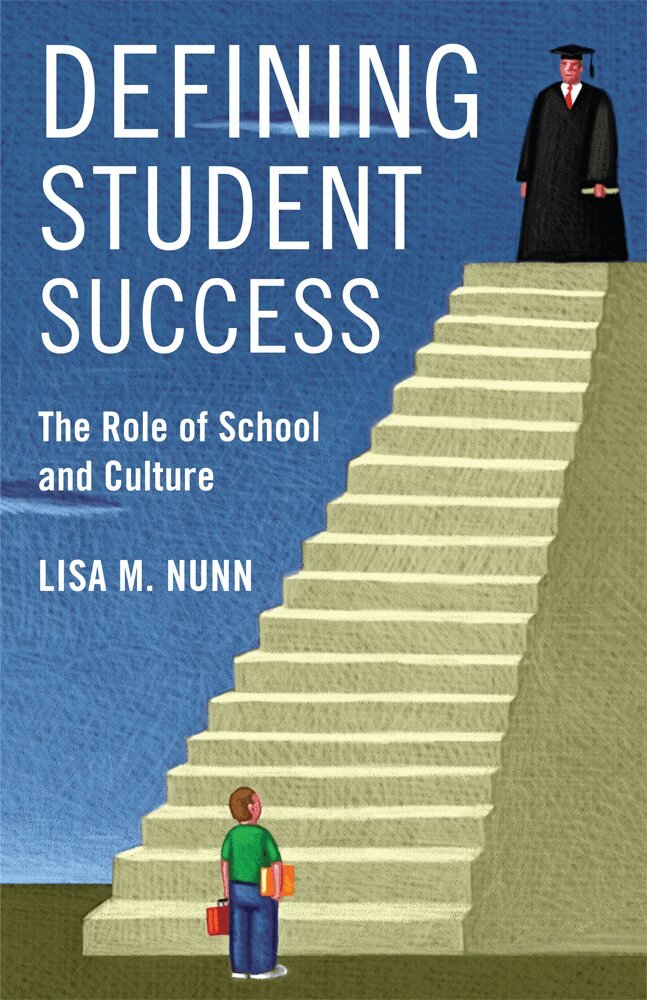
    Defining Student Success

    The Role of School and Culture

    AvLisa M. Nunn

    Häftad, Engelska, 2014

    Del i serien Rutgers Series in Childhood Studies

    366 kr

    Beställningsvara. Skickas inom 5-8 vardagar. Fri frakt över 249 kr.

    Fler format och utgåvor

    Inbunden

    1 376 kr

    Beskrivning

    2020 Scholarly Contributions to Teaching and Learning Award from the ASAThe key to success, our culture tells us, is a combination of talent and hard work. Why then, do high schools that supposedly subscribe to this view send students to college at such dramatically different rates?  Why do students from one school succeed while students from another struggle? To the usual answer-an imbalance in resources-this book adds a far more subtle and complicated explanation. Defining Student Success shows how different schools foster dissimilar and sometimes conflicting ideas about what it takes to succeed-ideas that do more to preserve the status quo than to promote upward mobility.Lisa Nunn’s study of three public high schools reveals how students’ beliefs about their own success are shaped by their particular school environment and reinforced by curriculum and teaching practices. While American culture broadly defines success as a product of hard work or talent (at school, intelligence is the talent that matters most), Nunn shows that each school refines and adapts this American cultural wisdom in its own distinct way-reflecting the sensibilities and concerns of the people who inhabit each school. While one school fosters the belief that effort is all it takes to succeed, another fosters the belief that hard work will only get you so far because you have to be smart enough to master course concepts. Ultimately, Nunn argues that these school-level adaptations of cultural ideas about success become invisible advantages and disadvantages for students’ college-going futures. Some schools’ definitions of success match seamlessly with elite college admissions’ definition of the ideal college applicant, while others more closely align with the expectations of middle or low-tier institutions of higher education.With its insights into the transmission of ideas of success from society to school to student, this provocative work should prompt a reevaluation of the culture of secondary education. Only with a thorough understanding of this process will we ever find more consistent means of inculcating success, by any measure.

    Produktinformation

    • Utgivningsdatum:2014-04-15
    • Mått:152 x 229 x 15 mm
    • Vikt:286 g
    • Format:Häftad
    • Språk:Engelska
    • Serie:Rutgers Series in Childhood Studies
    • Antal sidor:224
    • Förlag:Rutgers University Press
    • ISBN:9780813563619

    Utforska kategorier

    • Studievägledning och yrkesorientering inom Psykologi och pedagogik

    Mer om författaren

    LISA M. NUNN is an assistant professor of sociology at the University of San Diego.

    Recensioner i media

    "In Defining Student Success, Nunn demonstrates that she is a careful and nuanced writer who brings life and character into her discussion of how ideas about success are negotiated within the schools she studied."  - Rubén Gaztambide-Fernández (author of The Best of the Best: Becoming Elite at an American Boarding School) "Beautifully done. Lisa Nunn deftly shows how particular high schools refract American ideals of merit, hard work, and intelligence in ways that encourage some students toward elite colleges and nudge many others toward alternate futures. Nunn’s careful ear and sophisticated analysis combine for an especially thoughtful sociology of aspiration." - Mitchell Stevens (Stanford University) "This book provides readers with a valuable framework for understanding the enculturation of academic values in different types of secondary schools. The volume’s rich descriptions and structured comparisons allow for thoughtful deliberation of what would be an optimal school message and mission for adolescents with different backgrounds, academic abilities, and aspirations. Recommended." (Choice) "Overall, Defining Student Success is itself a success.Lisa Nunn has written a book that is theoretically grounded, empirically detailed, and fills important gaps in what we previously knew about the relationships between institutions, student identity, and education." (American Journal of Sociology) "In Defining Student Success, Nunn demonstrates that she is a careful and nuanced writer who brings life and character into her discussion of how ideas about success are negotiated within the schools she studied."  - Rubén Gaztambide-Fernández (author of The Best of the Best: Becoming Elite at an American Boarding School) "Beautifully done. Lisa Nunn deftly shows how particular high schools refract American ideals of merit, hard work, and intelligence in ways that encourage some students toward elite colleges and nudge many others toward alternate futures. Nunn’s careful ear and sophisticated analysis combine for an especially thoughtful sociology of aspiration." - Mitchell Stevens (Stanford University) "This book provides readers with a valuable framework for understanding the enculturation of academic values in different types of secondary schools. The volume’s rich descriptions and structured comparisons allow for thoughtful deliberation of what would be an optimal school message and mission for adolescents with different backgrounds, academic abilities, and aspirations. Recommended." (Choice) "Overall, Defining Student Success is itself a success.Lisa Nunn has written a book that is theoretically grounded, empirically detailed, and fills important gaps in what we previously knew about the relationships between institutions, student identity, and education." (American Journal of Sociology)

    Innehållsförteckning

    • AcknowledgmentsIntroduction: Three High Schools with Three Distinct Ideas about School Success1. Alternative High: Effort Explains School Success2. Fearing Failure at Alternative High3. Comprehensive High: Effort Is Helpful, but Intelligence Limits School Success4. Separate Worlds, Separate Concerns: AP versus “Regular” Track at Comprehensive High5. Elite Charter High: Intelligence Plus Initiative Bring School Success6. Competitive Classmates at Elite Charter High7. Beyond Identity: Consequences of School Beliefs on Students’ FuturesAppendix A: Identity Theory and Inhabited InstitutionalismAppendix B: Methodology: Interviewing Students about Success IdentityAfterwordNotesBibliographyIndex