• Fri frakt över 249 kr
  • •
  • Snabba leveranser
  • •
  • Billiga böcker
Kundservice

Du är på sajten för privatpersoner.

Företag, bibliotek eller offentlig verksamhet?

Du handlar på classic.bokus.com, där alla dina funktioner finns intakta.
Till classic.bokus.com
Bokus logotyp. Gå till startsidan.
  • Erbjudanden
  • Nyheter
  • Student
  • Topplistor
  • Barn & ungdom
  • Bokus Play
  • E-böcker
  • Pocketböcker
  • Spel & pussel

10% rabatt på allt med kod: NYSTART10 →

Sidfot

Mina sidor

    Hjälp

    • Kundservice
    • Vanliga frågor och svar
    • Frakt och leverans
    • Retur vid ångerrätt
    • Reklamera vara
    • Betalning
    • Köpvillkor
    • Allmänna villkor
    • Information om webbplatsens tillgänglighet

    Om Bokus

    • Om oss
    • Pressrum
    • För studenter
    • För företag
    • För bibliotek och offentlig verksamhet
    • För leverantörer
    • Hållbarhet

    Populärt

    • Aktuella erbjudanden
    • Presentkort
    • Studentlitteratur
    • Nya böcker
    • Topplistor
    • Signerade böcker
    • Engelska böcker

    Inspiration

    • Boktips
    • BookTok
    • Populära bokserier
    • Barnbokskaraktärer
    • Populära författare
    Logotyp för Bokus
    Följ oss på Facebook (extern länk)Följ oss på Instagram (extern länk)Följ oss på YouTube (extern länk)Följ oss på TikTok (extern länk)
    bokus @ CookiesAnpassa cookiesIntegritetspolicyKöpvillkor
    Till Citymail hemsida (extern länk)Till Budbee hemsida (extern länk)Till Postnord hemsida (extern länk)Till Schenker hemsida (extern länk)Till Early Bird hemsida (extern länk)Till Walleys hemsida (extern länk)
    1. Naturvetenskap och teknik
    2. Teknik och industri
    3. Tillverkningsteknik

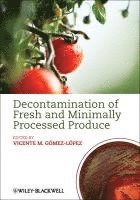
    Decontamination of Fresh and Minimally Processed Produce

    AvVicente M. Gómez-López

    Inbunden, Engelska, 2012

    2 705 kr

    Beställningsvara. Skickas inom 5-8 vardagar. Fri frakt över 249 kr.

    Beskrivning

    Attempts to provide safer and higher quality fresh and minimally processed produce have given rise to a wide variety of decontamination methods, each of which have been extensively researched in recent years. Decontamination of Fresh and Minimally Processed Produce is the first book to provide a systematic view of the different types of decontaminants for fresh and minimally processed produce. By describing the different effects – microbiological, sensory, nutritional and toxicological – of decontamination treatments, a team of internationally respected authors reveals not only the impact of decontaminants on food safety, but also on microbial spoilage, vegetable physiology, sensory quality, nutritional and phytochemical content and shelf-life. Regulatory and toxicological issues are also addressed. The book first examines how produce becomes contaminated, the surface characteristics of produce related to bacterial attachment, biofilm formation and resistance, and sublethal damage and its implications for decontamination. After reviewing how produce is washed and minimally processed, the various decontamination methods are then explored in depth, in terms of definition, generation devices, microbial inactivation mechanisms, and effects on food safety. Decontaminants covered include: chlorine, electrolyzed oxidizing water, chlorine dioxide, ozone, hydrogen peroxide, peroxyacetic acid, essential oils and edible films and coatings. Other decontamination methods addressed are biological strategies (bacteriophages, protective cultures, bacteriocins and quorum sensing) and physical methods (mild heat, continuous UV light, ionizing radiation) and various combinations of these methods through hurdle technology. The book concludes with descriptions of post-decontamination methods related to storage, such as modified atmosphere packaging, the cold chain, and modeling tools for predicting microbial growth and inactivation.The many methods and effects of decontamination are detailed, enabling industry professionals to understand the available state-of-the-art methods and select the most suitable approach for their purposes. The book serves as a compendium of information for food researchers and students of pre- and postharvest technology, food microbiology and food technology in general. The structure of the book allows easy comparisons among methods, and searching information by microorganism, produce, and quality traits.

    Produktinformation

    • Utgivningsdatum:2012-03-23
    • Mått:178 x 252 x 28 mm
    • Vikt:1 153 g
    • Format:Inbunden
    • Språk:Engelska
    • Antal sidor:576
    • Förlag:John Wiley and Sons Ltd
    • ISBN:9780813823843

    Utforska kategorier

    • Tillverkningsteknik inom Naturvetenskap och teknik

    Mer om författaren

    Dr. Vicente M. Gómez-López is a Senior Researcher at the Centro de Edafología y Biología Aplicada del Segura (CEBAS-CSIC, Murcia, Spain) and a former Associate Professor at the Instituto de Ciencia y Tecnología de Alimentos, Facultad de Ciencias, Universidad Central de Venezuela

    Innehållsförteckning

    • Preface xvii List of Contributors xixSECTION I PRODUCE CONTAMINATION 11 Microbial ecology 3Marilyn C. Erickson1.1 Introduction 31.2 Sources of preharvest contamination 41.3 Fate of pathogen contamination in plant production systems 121.3.1 Experimental studies – field studies versus growth chamber studies 121.3.2 Rhizosphere and bulk soil systems 161.3.3 Phyllosphere 221.4 Molecular and biochemical responses of enteric pathogens and plant hosts 271.4.1 Mechanisms employed by enteric pathogens to survive as plant endophytes or epiphytes 271.4.2 Mechanisms employed by plant hosts to resist invasion by enteric pathogens 271.5 Cross-contamination of enteric pathogens to produce during harvest 281.6 Concluding comments 29References 292 Surface characteristics of fresh produce and their impact on attachment and removal of human pathogens on produce surfaces 43Hua Wang, Bin Zhou, and Hao Feng2.1 Introduction 432.2 Produce surface characteristics 442.2.1 Surface topography 442.2.2 Surface hydrophobicity 462.3 Means to determine produce surface characteristics 472.3.1 Determination of surface roughness 472.3.2 Surface roughness determination with CLSM 482.3.3 Determination of hydrophobicity 512.4 Effect of surface characteristics on attachment and removal of human pathogens 512.4.1 Effect of surface roughness 512.4.2 Effect of hydrophobicity 542.4.3 Effect of hydrodynamics 55References 553 Biofilms 59Shin-Hee Kim and Cheng-i Wei3.1 Introduction 593.2 Biofilm formation 603.3 Presence of biofilms on the produce surface 663.4 Antimicrobial resistance of biofilms versus planktonic cells 683.5 Perspective 71References 714 Resistance and sublethal damage 77Pascal Delaquis and Susan Bach4.1 Introduction 774.2 Basic concepts 784.2.1 Definitions 784.2.2 Chemical interventions used in the produce industry 784.2.3 Physical interventions used in the produce industry 794.2.4 Mode of action of biocides, food antimicrobials, and physical treatments 794.3 Stress and resistance to biocides and antimicrobial physical treatments 814.4 Implications of stress, resistance, and sublethal damage in fresh produce decontamination 83References 84SECTION II DECONTAMINANTS 875 Produce washers 89Steven Pao, Wilbert Long III, Chyer Kim, and D. Frank Kelsey5.1 Basic concepts 895.2 Types of washers 915.2.1 Immersion washers 925.2.2 Non-immersion washers 955.3 Factors influencing the efficacy of washing 975.3.1 Time of contamination 985.3.2 Sanitation practices 985.3.3 Water quality 995.3.4 Surfactants and antimicrobials 995.3.5 Pathogen internalization 1005.4 Conclusion 100Acknowledgment 101References 1016 Minimal processing 105Maria I. Gil and Ana Allende6.1 Introduction 1056.2 Effect of minimal processing on pathogenic bacteria 1066.3 Effect of minimal processing on spoilage bacteria 1086.4 Effect of minimal processing on vegetable physiology 1106.5 Effect of minimal processing on quality and shelf life 1136.6 Effect of minimal processing on nutritional and phytochemical composition 1146.7 Conclusion 115References 1167 Chlorine 121Cristóbal Chaidez, Nohelia Castro-del Campo, J. Basilio Heredia, Laura Contreras-Angulo, Gustavo González–Aguilar, and J. Fernando Ayala–Zavala7.1 Definition 1217.2 Inactivation mechanism 1227.3 Effect of chlorine on pathogenic microorganisms 1237.4 Effect of chlorine on spoilage microorganisms and shelf life 1257.5 Effect of chlorine on vegetable physiology 1257.6 Effect of chlorine on sensory quality 1277.7 Effect of chlorine on nutritional and phytochemical composition 1277.8 Chlorine residues and formation of toxic by-products 1287.9 Regulatory status 129References 1318 Electrolyzed oxidizing water 135Muhammad Imran Al-Haq and Vicente M. Gómez-López8.1 Definition 1358.2 Generation devices 1388.3 Inactivation mechanism and factors affecting EO efficacy 1428.4 Effect of EO water on pathogenic microorganisms 1538.5 Effect of EO water on spoilage microorganisms and shelf life 1538.6 Effects of EO water on vegetable physiology 1548.7 Effect of EO water on sensory quality 1558.8 Effect of EO water on nutritional and phytochemical composition 1568.9 Residues and formation of toxic by-products 1568.10 Regulatory status 157References 1579 Chlorine dioxide 165Vicente M. Gómez-López9.1 Definition and generalities 1659.2 Inactivation mechanism 1669.3 Effect of chlorine dioxide on pathogenic microorganisms 1679.4 Spoilage and shelf life 1699.5 Sensory quality 1709.6 Effect of chlorine dioxide on vegetable physiology 1719.7 Effect of chlorine dioxide on nutritional and phytochemical composition 1719.8 Residues and toxic by-products 1719.9 Legal framework 172References 17210 Ozone 177Hülya Ölmez10.1 Definition 17710.2 Generation devices 17810.3 Inactivation mechanism 17910.4 Effect of ozone on pathogenic microorganisms 18110.5 Effect of ozone on spoilage microorganisms and shelf life 18510.6 Effect of ozone on vegetable physiology 18510.7 Effect of ozone on sensory quality 18710.8 Effect of ozone on nutritional and phytochemical composition 18810.9 Ozone residues and formation of toxic by-products 18810.10 Regulatory status 191References 19111 Hydrogen peroxide 197Dike O. Ukuku, Latiful Bari, and Shinichi Kawamoto11.1 Introduction 19711.2 Definition of hydrogen peroxide 19811.3 Inactivation mechanism 19811.4 Effect of hydrogen peroxide on pathogenic microorganisms 20111.5 Effect of hydrogen peroxide on spoilage microorganisms and shelf life 20311.6 Effect of hydrogen peroxide on vegetable physiology 20611.7 Effect of hydrogen peroxide on sensory quality 20711.8 Effect of hydrogen peroxide on nutritional and phytochemical composition 20911.9 Effect of hydrogen peroxide on residues and formation of toxic by-products 211References 21212 Peroxyacetic acid 215Gustavo González-Aguilar, J. Fernando Ayala-Zavala, Cristóbal Chaidez-Quiroz, J. Basilio Heredia, and Nohelia Castro-del Campo12.1 Definition 21512.2 Inactivation mechanism 21612.3 Effect of PAA on pathogenic microorganisms 21712.4 Effect of PAA on spoilage microorganisms and shelf life 21812.5 Effect of PAA on vegetable physiology 21912.6 Effect of PAA on sensory quality 21912.7 Effect of PAA on nutritional and phytochemical composition 22012.8 PAA residues and formation of toxic by-products 22012.9 Regulatory status 221References 22113 Essential oils for the treatment of fruit and vegetables 225Catherine Barry-Ryan and Paula Bourke13.1 Introduction to essential oils 22513.1.1 Decontamination in the fruit and vegetable industry 22513.1.2 Definition of essential oils 22613.2 Inactivation mechanism of essential oils 22613.2.1 The mechanisms of action of essential oils 22613.2.2 Effect of essential oil profile on mechanism of action 22813.2.3 Other factors that affect the mechanism of action of essential oils 22913.3 Effect of essential oils on microorganisms 23013.3.1 Effect of essential oils on pathogenic microorganisms 23013.3.2 Effect of essential oils on spoilage microorganisms 23113.3.3 Effect of essential oils on Gram-positive versus Gram-negative microorganisms 23213.3.4 Effect of specific essential oils on microorganisms 23313.4 Effect of essential oils on fruit and vegetable physiology 23513.5 Effect of essential oils on sensory quality 23513.6 Effect of essential oils on nutritional and phytochemical composition 23713.7 Toxicity of essential oils 23813.8 Regulatory status of essential oils 239References 23914 Edible fi lms and coatings 247María Alejandra Rojas-Graü, Laura Salvia-Trujillo, Robert Soliva-Fortuny, and Olga Martín-Belloso14.1 Definition 24714.2 Composition and application of edible films and coatings 24814.3 Edible films and coatings as antimicrobials 25114.3.1 Edible films and coatings with antimicrobial properties 25114.3.2 Antimicrobial agents incorporated into edible films and coatings 25214.3.3 Methods to evaluate effectiveness of antimicrobial films and coatings 25814.3.4 Effect of edible coatings on pathogenic microorganisms 25914.3.5 Effect of edible coatings on microbial spoilage and shelf life 26014.4 Effect of edible coatings on vegetable physiology 26314.5 Effect of edible coatings on sensory quality 26514.6 Effect of edible coatings on nutritional aspects 26614.7 Toxicity 26614.8 Regulatory status 267References 26715 Miscellaneous decontaminants 277Vicente M. Gómez-López15.1 Introduction 27715.2 Acidified sodium chlorite 27815.3 Lactic acid 27915.4 Calcinated calcium 28015.5 Levulinic acid 28015.6 Benzalkonium chloride 280References 281SECTION III BIOLOGICAL DECONTAMINATION STRATEGIES 28316 Bacteriophages 285Manan Sharma and Govind C. Sharma16.1 Introduction 28516.2 Inactivation mechanism 28616.3 Effect of bacteriophages on pathogenic microorganisms 28816.3.1 Lytic bacteriophages and leafy greens 28916.3.2 Lytic bacteriophages and tomatoes 29016.3.3 Lytic bacteriophages and sprouts 29016.3.4 Lytic bacteriophages and melons 29116.3.5 Lytic bacteriophages and apples 29116.3.6 Lytic bacteriophages and hard surfaces 29216.4 Risks to human health 29316.5 Regulatory status 29316.6 Conclusions 294References 29417 Protective cultures 297Antonio Gálvez, Rubén Pérez Pulido, Hikmate Abriouel, Nabil Ben Omar, and María José Grande Burgos17.1 Basic concepts 29717.2 Effect of protective cultures on pathogenic microorganisms 29817.3 Effect of protective cultures on spoilage microorganisms and shelf life 30517.4 Effect of protective cultures on sensory quality and nutritional and phytochemical composition 30917.5 Risks to health 31017.6 Regulatory status 311References 31218 Bacteriocins 317Antonio Gálvez, Rosario Lucas, Hikmate Abriouel, María José Grande Burgos, and Rubén Pérez Pulido18.1 Definition 31718.2 Inactivation mechanism 31818.3 Effect of bacteriocins on pathogenic microorganisms 31918.4 Effect of bacteriocins on spoilage microorganisms and shelf life 32318.5 Effect of bacteriocins on sensory quality and nutritional and phytochemical composition 32418.6 Toxicity 32518.7 Regulatory status 327References 32819 Quorum sensing 333María S. Medina-Martínez and María Angélica Santana19.1 Introduction 33319.2 Quorum sensing: basic concepts 33419.3 Quorum sensing and vegetable spoilage 33619.4 Quorum sensing and biofilm formation 33719.5 Quorum sensing interference and food industry 338References 341SECTION IV PHYSICAL METHODS 34520 The use of mild heat treatment for fruit and vegetable processing 347Catherine Barry-Ryan20.1 Introduction to the use of mild heat treatment for fruit and vegetable processing 34720.2 Definition of heat treatment 34820.3 Mechanism of action of heat treatment 34920.4 Effect of mild heat treatment on microorganisms 34920.5 Effect of mild heat treatment on fruit and vegetable physiology 35020.5.1 The responses of plant tissue to heat treatment 35020.5.2 Effect of mild heat treatment on respiration and ethylene production 35120.5.3 Effect of mild heat treatment on quality 35220.5.4 Effect of mild heat treatment on weight loss 35320.6 Effect of mild heat treatment on fruit and vegetable sensory quality 35320.6.1 Effect of mild heat treatment on texture 35320.6.2 Effect of mild heat treatment on color 35420.6.3 Effect of mild heat treatment on other sensory characteristics 35620.7 Effect of mild heat treatment on nutritional and phytochemical composition of fruit and vegetables 35720.8 Safety and implications of heat treatment 357References 35821 Continuous UV-C light 365Vicente M. Gómez-López21.1 Definition 36521.2 Inactivation mechanism 36621.3 Effect of continuous UV light on pathogenic microorganisms 36721.4 Effect of continuous UV light on spoilage microorganisms and shelf life 36821.5 Effect of continuous UV light on vegetable physiology 36921.6 Effect of continuous UV light on sensory quality 37021.7 Effect of continuous UV-C light on nutritional and phytochemical composition 37221.8 Toxicity 37421.9 Regulatory status 375References 37522 Ionizing radiation 379Xuetong Fan22.1 Definition 37922.2 Inactivation mechanism 38022.3 Effect of ionizing radiation on pathogenic microorganisms 38122.4 Effect of ionizing radiation on spoilage microorganisms and shelf life 38522.5 Effect of ionizing radiation on physiology 38622.5.1 Ethylene production and respiration 38622.5.2 Enzymes involved in tissue browning 38822.5.3 Enzymes involved in tissue softening 38922.5.4 Other enzymes 38922.6 Effects of ionizing radiation on sensory quality 39022.6.1 Reduction of losses in quality 39222.7 Effect of ionizing radiation on nutritional and phytochemical composition 39222.7.1 Vitamin C 39522.8 Toxicity 39622.9 Regulatory status 397Disclaimer 398References 39823 Miscellaneous physical methods 407Vicente M. Gómez-López23.1 Introduction 40723.2 Pulsed light 40723.3 Photosensitization 40923.4 Low-temperature plasma 40923.5 Steamer jet injection 41123.6 Radio-frequency heating 41223.7 Vacuum–steam–vacuum 41223.8 Power ultrasound 413References 41424 Hurdle technology principles applied in decontamination of whole and fresh-cut produce 417María S. Tapia and Jorge Welti-Chanes24.1 Introduction 41724.2 Mild technologies: whole and fresh-cut hurdles: Summing up steps for decontamination 41924.3 “All that washing”: Washing and sanitizing treatments for the produce industry 42024.4 To kill or not to kill: Safety without having a true kill step 43424.5 Combination of whole and fresh-cut hurdles 43924.6 Final remarks 442Acknowledgments 443References 443SECTION V STORAGE STRATEGIES 45125 Modified atmosphere packaging 453Matteo Alessandro Del Nobile, Amalia Conte, Marianna Mastromatteo, and Marcella Mastromatteo25.1 Basic concepts 45325.2 Relevant case studies of passive and active MAP 45725.2.1 Vegetables 45725.2.2 Fruit 45925.3 Mathematical models to optimize headspace conditions for packaging minimally processed food 46025.3.1 Steady-state conditions 46125.3.2 Transient conditions 462References 46326 Cold chain 469Pramod V. Mahajan and Jesus Frías26.1 Introduction 46926.2 Cold chain 47026.3 Sustainability of the cold chain 47026.4 Cold chain and safety 47126.5 Cold chain framework 47226.6 Cold chain and quality 47326.7 The cold chain and fresh produce distribution 47426.7.1 Precooling 47526.7.2 Convective-air and evaporative cooling 47526.7.3 Contact or package icing 47626.7.4 Hydrocooling 47626.7.5 Forced-air cooling 47626.7.6 Vacuum cooling 47626.7.7 Cryogenic cooling 47726.7.8 Freeze chilling 47726.8 Transportation 47726.9 Retail display 47726.10 Compliance in the cold chain 47826.11 Monitoring the cold chain 47926.11.1 The use of sensors in cold chain assessment 47926.12 Cold chain assessment 481Acknowledgment 482References 482SECTION VI MODELING TOOLS 48527 Modeling microbial responses during decontamination processes 487Eva Van Derlinden, Astrid M. Cappuyns, Laurence Mertens, Jan F. Van Impe, and Vasilis P. Valdramidis27.1 Introduction 48727.2 Experiment design 48827.2.1 Design of experiments (DOE) 48927.2.2 Optimal experiment design for parameter estimation (OED/PE) 49127.2.3 Implementations of OED/PE for microbial inactivation modeling 49327.3 Model structure (selection) 49427.3.1 Kinetic modeling 49527.3.2 Probabilistic modeling 50727.3.3 Dose–response modeling 50927.3.4 Parameter estimation 51327.4 Model validation 51427.4.1 Model validation data 51527.4.2 Graphical model structure and performance evaluation 51527.4.3 Quantitative model structure and performance evaluation 51627.5 Conclusions 519References 51928 Modeling microbial growth 529Milena Sinigaglia, Maria Rosaria Corbo, and Antonio Bevilacqua28.1 Introduction 52928.2 Logistic model 53228.3 Gompertz equation 53228.4 Baranyi equation 53328.5 Shelf life evaluation: the classical approach 53528.6 The stability time 53628.7 The risk time 53728.8 Mathematical modeling: some key limitations 537References 538Index 541