• Fri frakt över 249 kr
  • •
  • Snabba leveranser
  • •
  • Billiga böcker
Kundservice

Du är på sajten för privatpersoner.

Företag, bibliotek eller offentlig verksamhet?

Du handlar på classic.bokus.com, där alla dina funktioner finns intakta.
Till classic.bokus.com
Bokus logotyp. Gå till startsidan.
  • Erbjudanden
  • Nyheter
  • Student
  • Topplistor
  • Barn & ungdom
  • Bokus Play
  • E-böcker
  • Pocketböcker
  • Spel & pussel

10% rabatt på allt med kod NYSTART10 →

Sidfot

Mina sidor

    Hjälp

    • Kundservice
    • Vanliga frågor och svar
    • Frakt och leverans
    • Retur vid ångerrätt
    • Reklamera vara
    • Betalning
    • Köpvillkor
    • Allmänna villkor
    • Information om webbplatsens tillgänglighet

    Om Bokus

    • Om oss
    • Pressrum
    • För studenter
    • För företag
    • För bibliotek och offentlig verksamhet
    • För leverantörer
    • Hållbarhet

    Populärt

    • Aktuella erbjudanden
    • Presentkort
    • Studentlitteratur
    • Nya böcker
    • Topplistor
    • Signerade böcker
    • Engelska böcker

    Inspiration

    • Boktips
    • BookTok
    • Populära bokserier
    • Barnbokskaraktärer
    • Populära författare
    Logotyp för Bokus
    Följ oss på Facebook (extern länk)Följ oss på Instagram (extern länk)Följ oss på YouTube (extern länk)Följ oss på TikTok (extern länk)
    bokus @ CookiesAnpassa cookiesIntegritetspolicyKöpvillkor
    Till Citymail hemsida (extern länk)Till Budbee hemsida (extern länk)Till Postnord hemsida (extern länk)Till Schenker hemsida (extern länk)Till Early Bird hemsida (extern länk)Till Walleys hemsida (extern länk)
    1. Samhälle och politik
    2. Sociologi och antropologi
    3. Sociologi

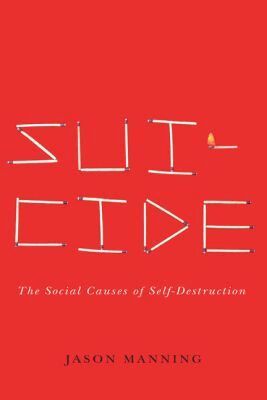
    Suicide

    The Social Causes of Self-Destruction

    AvJason Manning

    Häftad, Engelska, 2020

    Del i serien Studies in Pure Sociology

    507 kr

    Beställningsvara. Skickas inom 3-6 vardagar. Fri frakt över 249 kr.

    Fler format och utgåvor

    Inbunden

    582 kr

    E-bok

    401 kr

    Beskrivning

    The conventional approach to suicide is psychiatric: ask the average person why people kill themselves, and they will likely cite depression. But this approach fails to recognize suicide’s social causes. People kill themselves because of breakups and divorces, because of lost jobs and ruined finances, because of public humiliations and the threat of arrest. While some psychological approaches address external stressors, this comprehensive study is the first to systematically examine suicide as a social behavior with social catalysts.Drawing on Donald Black’s theories of conflict management and pure sociology, Suicide presents a new theory of the social conditions that compel an aggrieved person to turn to self-destruction. Interpersonal conflict plays a central but underappreciated role in the incidence of suicide. Examining a wide range of cross-cultural cases, Jason Manning argues that suicide arises from increased inequality and decreasing intimacy, and that conflicts are more likely to become suicidal when they occur in a context of social inferiority. As suicide rates continue to rise around the world, this timely new theory can help clinicians, scholars, and members of the general public to explain and predict patterns of self-destructive behavior.

    Produktinformation

    • Utgivningsdatum:2020-06-30
    • Mått:165 x 226 x 15 mm
    • Vikt:272 g
    • Format:Häftad
    • Språk:Engelska
    • Serie:Studies in Pure Sociology
    • Antal sidor:236
    • Förlag:University of Virginia Press
    • ISBN:9780813944395

    Utforska kategorier

    • Sociologi inom Samhälle och politik

    Mer om författaren

    Jason Manning is Associate Professor of Sociology at West Virginia University and coauthor of The Rise of Victimhood Culture: Microaggressions, Safe Spaces, and the New Culture Wars.

    Recensioner i media

    Sophisticated, original, and highly readable, Manning’s important new study offers an alternative to the incomplete psychiatric approach to understanding suicide.""This book is a breath of fresh air and should motivate the discipline to be innovative when it comes to the study self-harm, both as a framework guiding future research and as inspiration for creative forward thinking social science.