• Fri frakt över 249 kr
  • •
  • Snabba leveranser
  • •
  • Billiga böcker
Kundservice

Du är på sajten för privatpersoner.

Företag, bibliotek eller offentlig verksamhet?

Du handlar på classic.bokus.com, där alla dina funktioner finns intakta.
Till classic.bokus.com
Bokus logotyp. Gå till startsidan.
  • Erbjudanden
  • Nyheter
  • Student
  • Topplistor
  • Barn & ungdom
  • Bokus Play
  • E-böcker
  • Pocketböcker
  • Spel & pussel

10% rabatt på allt med kod: NYSTART10 →

Sidfot

Mina sidor

    Hjälp

    • Kundservice
    • Vanliga frågor och svar
    • Frakt och leverans
    • Retur vid ångerrätt
    • Reklamera vara
    • Betalning
    • Köpvillkor
    • Allmänna villkor
    • Information om webbplatsens tillgänglighet

    Om Bokus

    • Om oss
    • Pressrum
    • För studenter
    • För företag
    • För bibliotek och offentlig verksamhet
    • För leverantörer
    • Hållbarhet

    Populärt

    • Aktuella erbjudanden
    • Presentkort
    • Studentlitteratur
    • Nya böcker
    • Topplistor
    • Signerade böcker
    • Engelska böcker

    Inspiration

    • Boktips
    • BookTok
    • Populära bokserier
    • Barnbokskaraktärer
    • Populära författare
    Logotyp för Bokus
    Följ oss på Facebook (extern länk)Följ oss på Instagram (extern länk)Följ oss på YouTube (extern länk)Följ oss på TikTok (extern länk)
    bokus @ CookiesAnpassa cookiesIntegritetspolicyKöpvillkor
    Till Citymail hemsida (extern länk)Till Budbee hemsida (extern länk)Till Postnord hemsida (extern länk)Till Schenker hemsida (extern länk)Till Early Bird hemsida (extern länk)Till Walleys hemsida (extern länk)
    1. Historia och arkeologi
    2. Historia
    3. Amerikas historia

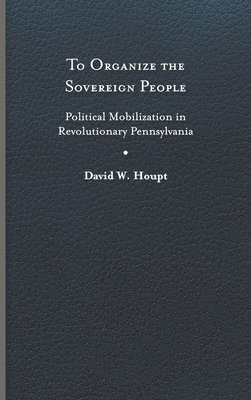
    To Organize the Sovereign People

    Political Mobilization in Revolutionary Pennsylvania

    AvDavid W. Houpt

    Inbunden, Engelska, 2023

    Del i serien Early American Histories

    1 322 kr

    Beställningsvara. Skickas inom 10-15 vardagar. Fri frakt över 249 kr.

    Fler format och utgåvor

    Häftad

    379 kr

    E-bok

    491 kr

    Beskrivning

    This book explores the struggle to define self-government in the critical years following the Declaration of Independence, when Americans throughout the country looked to the Keystone State of Pennsylvania for guidance on political mobilization and the best ways to create a stable arrangement that could balance liberty with order. In 1776 radicals mobilized the people to overthrow the Colonial Assembly and adopt a new constitution, one that asserted average citizens’ rights to exercise their sovereignty directly not only through elections but also through town meeting, petitions, speeches, parades, and even political violence. Although highly democratic, this system proved unwieldy and chaotic.David Houpt finds that over the course of the 1780s, a relatively small group of middling and elite Pennsylvanians learned to harness these various forms of "popular" mobilization to establish themselves as the legitimate spokesmen of the entire citizenry. In examining this process, he provides a granular account of how the meaning of democracy changed, solidifying around party politics and elections, and how a small group of white men succeeded in setting the framework for what self-government means in the United States to this day.

    Produktinformation

    • Utgivningsdatum:2023-11-08
    • Mått:152 x 229 x 32 mm
    • Vikt:272 g
    • Format:Inbunden
    • Språk:Engelska
    • Serie:Early American Histories
    • Antal sidor:264
    • Förlag:University of Virginia Press
    • ISBN:9780813950488

    Utforska kategorier

    • Amerikas historia inom Historia och arkeologi
    • Sociala grupper och identitet inom Samhälle och politik

    Mer om författaren

    David W. Houpt is Assistant Professor of History at the University of North Carolina Wilmington.

    Innehållsförteckning

    • Introduction1. "The Mobility Triumphant": The Revolutionary Regime2. Mobilizing the Moderates3. Choppy Beginnings: Launching the Constitution4. From Opposition to Party5. Establishing a Democratic RepublicConclusion: Race, the People, and the Legacy of 1808