• Fri frakt över 249 kr
  • •
  • Snabba leveranser
  • •
  • Billiga böcker
Kundservice

Du är på sajten för privatpersoner.

Företag, bibliotek eller offentlig verksamhet?

Du handlar på classic.bokus.com, där alla dina funktioner finns intakta.
Till classic.bokus.com
Bokus logotyp. Gå till startsidan.
  • Erbjudanden
  • Nyheter
  • Student
  • Topplistor
  • Barn & ungdom
  • Bokus Play
  • E-böcker
  • Pocketböcker
  • Spel & pussel

Må bättre, för mindre! Upp till 50% rabatt på hälsoböcker

Sidfot

Mina sidor

    Hjälp

    • Kundservice
    • Vanliga frågor och svar
    • Frakt och leverans
    • Retur vid ångerrätt
    • Reklamera vara
    • Betalning
    • Köpvillkor
    • Allmänna villkor
    • Information om webbplatsens tillgänglighet

    Om Bokus

    • Om oss
    • Pressrum
    • För studenter
    • För företag
    • För bibliotek och offentlig verksamhet
    • För leverantörer
    • Hållbarhet

    Populärt

    • Aktuella erbjudanden
    • Presentkort
    • Studentlitteratur
    • Nya böcker
    • Topplistor
    • Signerade böcker
    • Engelska böcker

    Inspiration

    • Boktips
    • BookTok
    • Populära bokserier
    • Barnbokskaraktärer
    • Populära författare
    Logotyp för Bokus
    Följ oss på Facebook (extern länk)Följ oss på Instagram (extern länk)Följ oss på YouTube (extern länk)Följ oss på TikTok (extern länk)
    bokus @ CookiesAnpassa cookiesIntegritetspolicyKöpvillkor
    Till Citymail hemsida (extern länk)Till Budbee hemsida (extern länk)Till Postnord hemsida (extern länk)Till Schenker hemsida (extern länk)Till Early Bird hemsida (extern länk)Till Walleys hemsida (extern länk)
    1. Filosofi och religion
    2. Religion och tro
    3. Kristendom
    4. Biblar

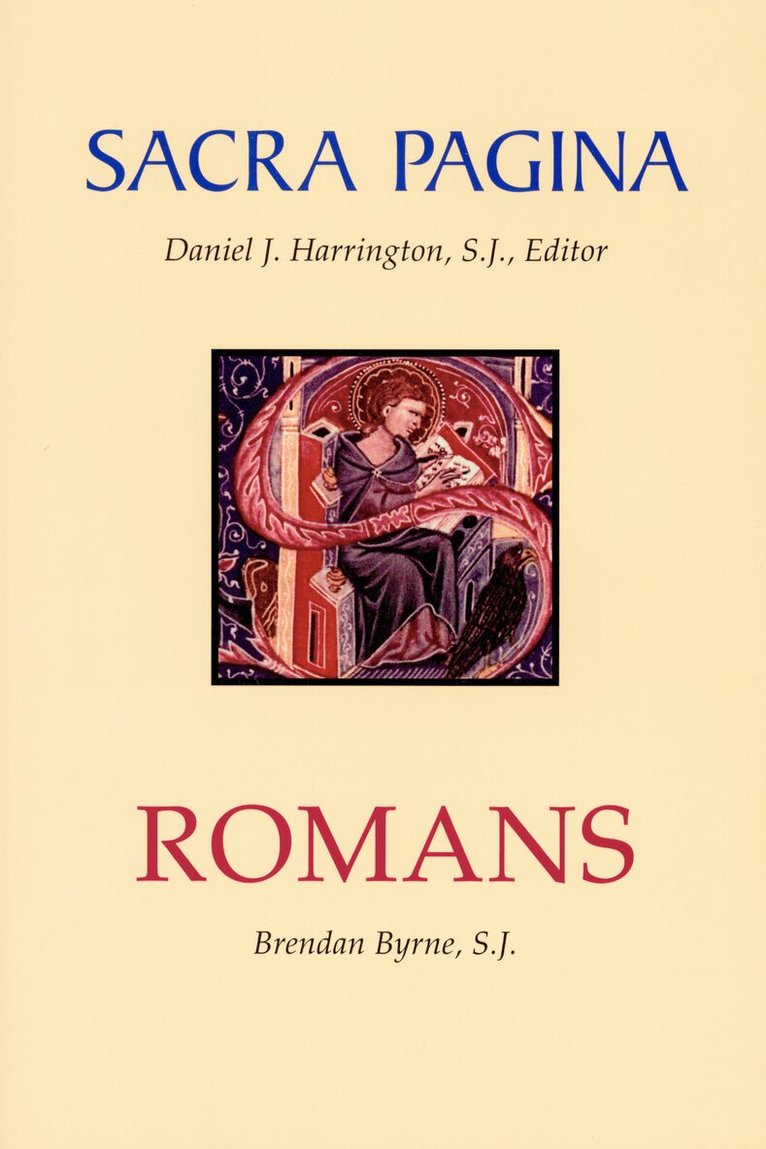
    Sacra Pagina: Romans

    AvBrendan Byrne SJ

    Häftad, Engelska, 2007

    Del 6 i serien Sacra Pagina

    550 kr

    Beställningsvara. Skickas inom 3-6 vardagar. Fri frakt över 249 kr.

    Fler format och utgåvor

    Inbunden

    832 kr

    Beskrivning

    This commentary adopts a literary-rhetorical approach, viewing the letter as an instrument of persuasion designed to transform readers through a celebratory presentation of the Gospel. Reflecting upon the fate of Jews and Gentiles, Paul wins his audience to a vision of a God who always acts inclusively. The God who, in the person of Israel's Messiah (Jesus), has acted faithfully to include the Gentile peoples within the community of salvation, will not fail to see to the eventual inclusion of Israel as well. In the victory of grace displayed already in the risen humanity of Jesus, the original design of the Creator for human communities and for the world begins to come true.The interpretation of Paul's letter to Rome has accompanied and stimulated the path of Christian theology down to today. Romans touches upon virtually all main issues of Christian theology, as well as presenting a rewarding introduction to Paul. Byrne facilitates full access to Paul and his Gospel through the letter, allowing Christians today to hear his voice as intelligibly and powerfully as it has spoken to past generations.

    Produktinformation

    • Utgivningsdatum:2007-10-01
    • Mått:152 x 229 x 26 mm
    • Vikt:700 g
    • Format:Häftad
    • Språk:Engelska
    • Serie:Sacra Pagina
    • Antal sidor:536
    • Förlag:Liturgical Press
    • ISBN:9780814659694

    Utforska kategorier

    • Biblar inom Filosofi och religion

    Mer om författaren

    Brendan Byrne, SJ, is a professor of New Testament at Jesuit Theological College, within the United Faculty of Theology, Parkville, Melbourne, Australia. He is the author of Romans (1996) in the Sacra Pagina series, Lifting the Burden: Reading Matthew's Gospel in the Church Today (2004), A Costly Freedom: A Theological Reading of Mark's Gospel (2008), Life Abounding: A Reading of John’s Gospel (2014), and The Hospitality of God: A Reading of Luke's Gospel (2015), published by Liturgical Press.

    Recensioner i media

    This is a lucid, major commentary on Romans.America

    Innehållsförteckning

    • CONTENTSEditor’s Preface   ixPreface   xiNote on References   xiiiAbbreviations   xvIntroductionA. Recent Interpretation of Romans   21. History as Paradigm   22. New Approaches to the Interpretation of Romans   33. The Approach Taken by This Commentary   8B. Why Paul Wrote to Rome   81. The Historical Circumstances   8a) Paul’s Own Situation   8b) The Christians in Rome   102. Romans as a Letter and Instrument of Persuasion   13a) Letter Form   13b) Instrument of Persuasion   163. Why Paul Wrote to Rome: Conclusion   18C. Paul’s Rhetorical Task   191. “Knowledge” Paul Has in Common with the Christians of Rome   20a) The Heritage from Judaism   20b) The Shared Christian Pattern of Belief   212. “Knowledge” More Particularly Distinctive of Paul   22D. The Structure of the Letter   26Outline of the Structure of the Letter   27E. Two Further Issues   291. The Integrity of the Letter   292. Paul and Israel   29 General Bibliography  31A. The Socio-Rhetorical Approach   31B. Christianity in Rome   32C. Occasion and Purpose of Romans   33D. Commentaries   33E. General   34Translation, Interpretation, NotesIntroduction (1:1-17)   37a) Address and Greeting (1:1-7)   37b) Thanksgiving and Theme (1:8-17)   47Body of the Letter (1:18–15:13)   62I. THE INCLUSIVE SAVING POWER OF THE GOSPEL (1:18–11:36)   62A. The Inclusion of the Gentiles on the Basis of Righteousness by Faith (1:18–4:25)   62i. No Other Righteousness (1:18–3:20)   63a) The Revelation of God’s Wrath Against the Gentile World (1:18-32)   63b) Those Who “judge” Are Not Immune from the Wrath (2:1-11)   79c) Possession of the Law Makes No Difference (2:12-29)   871. The Law and the Gentiles (2:12-16)   872. The Law and the Jews (2:17-24)   953. The “Real Jew” (2:25-29)   101d) God’s Faithfulness to Israel Stands (3:1-8)   106e) Scripture’s Witness to Universal Lack of Righteousness (3:9-20)   115ii. The “Righteousness of God” Now Available to All Believers (3:21-26)   122iii. Faith, the Sole Basis Upon Which the One God Justifies All (3:27-31)   135iv. Scripture’s Witness to Righteousness by Faith (4:1-25)   141a) Abraham, Justified on the Basis of Faith (4:1-12)   144b) Abraham, Paradigm Receiver of the Promise on the Basis of Faith (4:13-25)   151B. The Sure Hope of Salvation Springing from Righteousness by Faith (5:1–8:39)   162i. The Hope That Springs from God’s Love (5:1-11)   164ii. The Legacy of Christ (Righteousness and Life) Outweighs the Legacy of Adam (Sin and Death) (5:12-21)   173iii. The Freedom to Live Out the Righteousness of God (6:1–8:13)   187a) Dead to Sin/Alive to God in Christ (6:1-14)   188b) The New Obedience (6:15-23)   199c) Free in Christ from the Law (7:1-6)   208d) The Fatal Encounter with the Law (7:7-13)   216e) Life Under the Law—Ethical “Impossibility’’ (7:14-25)   224f) Life in the Spirit—Ethical “Possibility” (8:1-13)   234iv. Hope of Glory for God’s Children (8:14-30)   247a) Children and Heirs of God (8:14-17)   247b) The “Groaning’’ of Creation (8:18-22)   254c) The “Groaning” of “Ourselves” (8:23-25)   262d) The “Groaning” of the Spirit (8:26-28) and God’s Eternal Plan (8:29-30)   266v. The Coming Victory of God’s Love (8:31-39)   274C. The Inclusion of Israel (9:1–11:36)   281i. The Bitter Problem of Israel’s Present Unbelief (9:1-5)   284ii. The Elective Pattern of God’s Working (9:6-29)   289a) The Elective Pattern Shown in the Patriarchs (9:6-13)   291b) The Elective Pattern Shown in Moses and Pharaoh (9:14-18)   295c) God’s Freedom Defended Against Human Complaint (9:19-21)   296d) The Elective Pattern Shown in the Composition of the Believing Community (9:22-29)   300iii. Israel’s Present Rejection of the Gospel (9:30–10:21)   307a) “Stumbling” Before the Righteousness of God (9:30–10:4)   308b) Scripture’s Witness to Righteousness by Faith (10:5-13)   316c) Israel Has Heard but Not Responded to the Gospel (10:14-21)   323iv. Israel’s Ultimate Inclusion in the Community of Salvation (11:1-32)   328a) God Has Not Rejected Israel—the “Remnant” (11:1-10)   329b) Israel’s “Stumbling” Has a Saving Purpose (11:11-24)  336c) The “Mystery”: the Final Salvation of “All Israel” (11:25-32)   348v. Hymn to God’s Inscrutable Wisdom (11:33-36)   358II. SUMMONS TO LIVE ACCORDING TO THE GOSPEL (12:1–15:13)   361i. Christian Life as “Rational Worship” (12:1-2)   362 ii. The Basic Demands of Christian Living (12:3–13:14)   367a) A Due Assessment of One’s Personal Gift (12:3-8)   367b) Love in Action Within the Community (12:9-16)   374c) Love in Action Outside the Community (12:17-21)   380d) Duties Towards Civil Authorities (13:1-7)   384e) The Sole Debt of Love (13:8-10)   393f) “Knowing the Time” (13:11-14)   397iii. Tolerance in Contentious Areas of Community Life (14:1–15:13)   403a) The Tolerance Incumbent upon All (14:1-12)   407b) The Tolerance Asked Particularly of the “Strong” (14:13-23)   414c) The Example of Christ as Grounds for Tolerance (15:1-6)   423d) Christ’s “Acceptance” as Model for Community Acceptance (15:7-13)   428Conclusion of the Letter (15:14–16:24[27])   433i. Paul’s Ministry of the Gospel to the Gentiles (15:14-33)   433a) Paul’s Apostolic Mission Until Now (15:14-21)   434b) Paul’s Plans for the Future and Concluding “Grace” I (15:22-33)   439ii. Commendation and Greetings (16:1-27)   446a) Commendation of Phoebe (16:1-2)   447b) Greetings I (16:3-16)   449c) A Warning (16:17-20)   455d) Greetings II and Concluding “Grace” II (16:21-24)   459e) (Inauthentic) Concluding Doxology (16:25-27)   461IndexesScripture Index    465Index of Ancient Writings    487Author Index    494Subject Index    499Supplementary Bibliography    504