• Fri frakt över 249 kr
  • •
  • Snabba leveranser
  • •
  • Billiga böcker
Kundservice

Du är på sajten för privatpersoner.

Företag, bibliotek eller offentlig verksamhet?

Du handlar på classic.bokus.com, där alla dina funktioner finns intakta.
Till classic.bokus.com
Bokus logotyp. Gå till startsidan.
  • Erbjudanden
  • Nyheter
  • Student
  • Topplistor
  • Barn & ungdom
  • Bokus Play
  • E-böcker
  • Pocketböcker
  • Spel & pussel

10% rabatt på allt med kod: NYSTART10 →

Sidfot

Mina sidor

    Hjälp

    • Kundservice
    • Vanliga frågor och svar
    • Frakt och leverans
    • Retur vid ångerrätt
    • Reklamera vara
    • Betalning
    • Köpvillkor
    • Allmänna villkor
    • Information om webbplatsens tillgänglighet

    Om Bokus

    • Om oss
    • Pressrum
    • För studenter
    • För företag
    • För bibliotek och offentlig verksamhet
    • För leverantörer
    • Hållbarhet

    Populärt

    • Aktuella erbjudanden
    • Presentkort
    • Studentlitteratur
    • Nya böcker
    • Topplistor
    • Signerade böcker
    • Engelska böcker

    Inspiration

    • Boktips
    • BookTok
    • Populära bokserier
    • Barnbokskaraktärer
    • Populära författare
    Logotyp för Bokus
    Följ oss på Facebook (extern länk)Följ oss på Instagram (extern länk)Följ oss på YouTube (extern länk)Följ oss på TikTok (extern länk)
    bokus @ CookiesAnpassa cookiesIntegritetspolicyKöpvillkor
    Till Citymail hemsida (extern länk)Till Budbee hemsida (extern länk)Till Postnord hemsida (extern länk)Till Schenker hemsida (extern länk)Till Early Bird hemsida (extern länk)Till Walleys hemsida (extern länk)
    1. Filosofi och religion
    2. Religion och tro
    3. Religion: allmänt

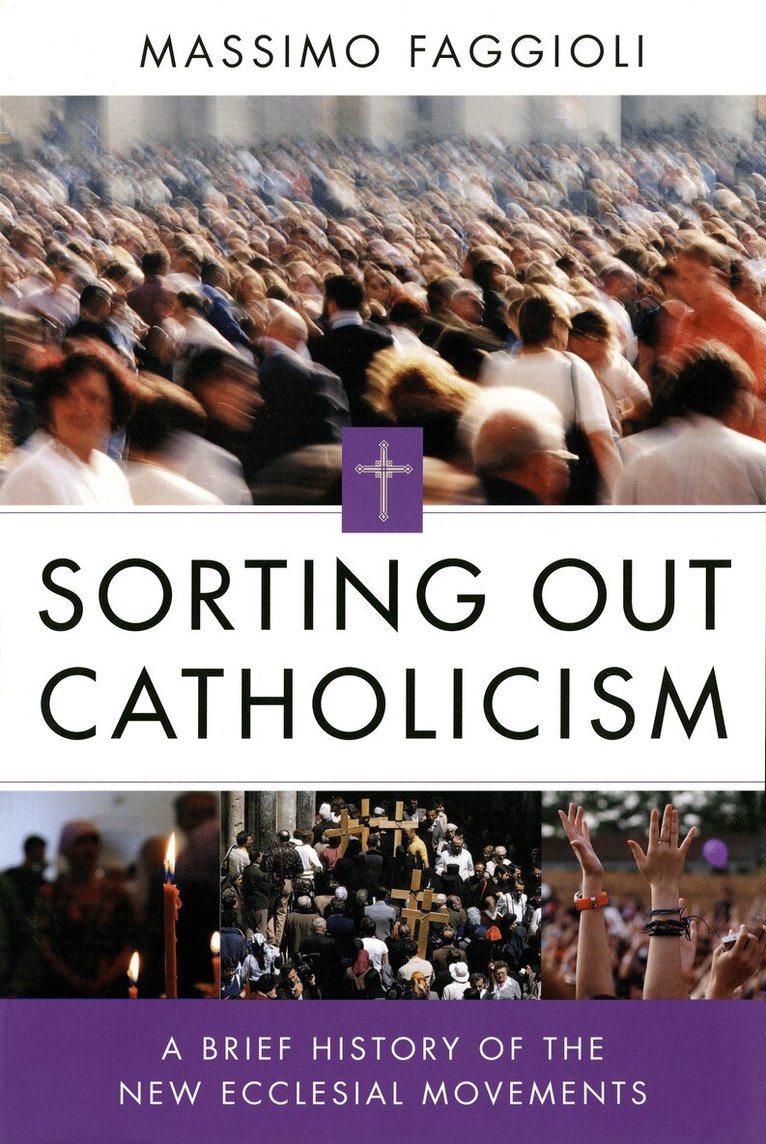
    Sorting Out Catholicism

    A Brief History of the New Ecclesial Movements

    AvMassimo Faggioli

    Häftad, Engelska, 2014

    268 kr

    Beställningsvara. Skickas inom 3-6 vardagar. Fri frakt över 249 kr.

    Fler format och utgåvor

    E-bok

    267 kr

    Beskrivning

    Focolare, Community of Sant’Egidio, Neocatechumenal Way, Legionaries of Christ, Communion and Liberation, Opus Dei. These are but a few of the most recognizable names in the broader context of the so-called ecclesial movements. Their history goes back to the period following the First Vatican Council, crosses Vatican II, and develops throughout the twentieth century. It is a history that prepares the movements’ rise in the last three decades, from John Paul II to Francis. These movements are a complex phenomenon that shapes the Church now more than before, and they play a key role for the future of Catholicism as a global community, in transition from a Europe-centered tradition to a world Church.

    Produktinformation

    • Utgivningsdatum:2014-11-07
    • Mått:152 x 229 x 13 mm
    • Vikt:335 g
    • Format:Häftad
    • Språk:Engelska
    • Antal sidor:248
    • Förlag:Liturgical Press
    • ISBN:9780814683057
    • Översättare:Demetrio S. Yocum

    Utforska kategorier

    • Religion: allmänt inom Filosofi och religion
    • Kristendom inom Filosofi och religion

    Mer om författaren

    Massimo Faggioli is professor in the department of theology and religious studies at Villanova University. He is an internationally established scholar in the area of Vatican II and the papacy especially, and a renowned public commentator on church affairs. He is co-editor of The Oxford Handbook of Vatican II (edited with Catherine Clifford, 2023). Among his books with Liturgical Press are The Legacy and Limits of Vatican II in an Age of Crisis (2025); Catholicism and Citizenship: Political Cultures of the Church in the Twenty-First Century (2017); Sorting Out Catholicism: A Brief History of the New Ecclesial Movements (2014); Pope John XXIII: The Medicine of Mercy (2014); and True Reform: Liturgy and Ecclesiology in Sacrosanctum Concilium (2012).

    Recensioner i media

    Massimo Faggioli has become one of the most respected theological interpreters of Vatican II and the battle over its meaning. This new book explores a wider set of issues with a related agenda. How are we to assess the variety of new Catholic movements and their relationship to the legacy of Vatican II? His analysis and findings will undoubtedly shape the future debate.Bradford Hinze, Fordham University

    Innehållsförteckning

    • ContentsPrologue to the New English Edition   ixPart 1: The History of the Movements1. Reasons for a Historical Survey of the Movements   31. Christianity’s Return to Being a “Movement”   82. Framing the Movement   103. Chronology and Historical Framing of the Phenomenon   114. A History beyond the Foundational Myths   125. Movements beyond Lobbies   136. The “Spring of the Movements” and the Second Vatican Council   147. Ecclesial Movements within the Twentieth-Century Movement Culture   158. Retreat? Or New Birth?   162. Religious Movements and Catholic Movements in the History of Scholarly Literature   171. “Religious Cults,” “New Religious Movements,” and “Ecclesial Movements”   172. Juridical Ecclesiology and Movements as “Sects”   183. “Theology of the Laity” and Social Origins of Religious Groups   214. The Turning Point of the 1960s and 1970s   225. Religious Movements, Fundamentalism, and Revanche de Dieu   246. Movements in the Catholic Church   263. “Catholic Movement,” “Catholic Action,” and the Reform Movements of the Late Nineteenth and Early Twentieth Centuries   301. Emergence of Catholic Movements   302. The “Catholic Movement” of Leo XIII and Pius X   323. From Pius IX to Pius X: The Catholic Movement from the Counter-Revolution to the “Social Question”   354. Origins of the Organized Catholic Laity   375. Origin and Crisis of the “Reform Movements”   424. Catholic Movement and Political Ideologies of the Twentieth Century   451. Movement and Society during Pius XI’s Pontificate   462. Pius XI’s Catholic Action   483. Between Catholic Action and the Reconquista: Opus Dei, the Legionaries of Christ, and the Cursillos de Cristianidad   524. Catholic Movements between War and Reconstruction: Focolare and Gioventù Studentesca   565. Beyond Catholic Action: The Second Vatican Council and the Birth of the Movements   611. Pius XII’s Militant Church   612. The Event of Vatican II and Ecclesial Movements   643. From the Council to the Postconciliar Period: The “Rise of the Movements”   716. Ecclesial Movements and the Postconciliar Period: “Culture of Presence,” Catholic Dissent, and Monastic Communities   821. The Movements and Paul VI: Between the Council and the Postconciliar Period   822. High Fidelity: From Catholic Action to Communion and Liberation   913. Catholic Dissent   984. Neo-Monastic Communities: Taizé and Bose   995. The Last “Pope of Catholic Action”: Paul VI   1027. John Paul II and the Global Pontificate as Movement   1041. The Pope of the Movements   1042. John Paul II’s and Other Views of the Ecclesial Movements   1143. A Pontificate of Movement Predilection   1174. The Rise and Reality of a Phenomenon   1205. Lay Identities and Clerical Tendencies   1258. The Ecclesial Movements from Benedict XVI to Francis   1271. Pope Benedict XVI and John Paul II’s Legacy for the Movements   1272. The Ecclesiologies of Benedict XVI and the Movements   1293. A Step Backward?   1324. The Two Approaches   1375. Between Pope Benedict XVI’s Orthodoxy and “Custom-Made” Faith   1406. Pope Francis’s “Theology of the People” and the Movements   142Part 2: The New Issues9. New Catholic Movements and Priestly Formation in the Seminaries   1471. The New Catholic Movements: From Lay Groups to “Multi-Vocational Groups”   1472. Movements and Seminaries: The Case of the Neocatechumenal Way   1513. Canonical and Theological Issues   15510. Catholic Movements and the “Apologetics of Enmity” in the Postconciliar Church   1581. Ecclesiology of the Tridentine Period, of Vatican II, and of the Reconquista   1582. The First Three Stages of the Contemporary Catholic Movements (1870–1970)   1613. The Fourth Stage of Catholic Movements (1980–)   1664. Weltanschauung and the Ecclesiology of the Reconquista   1695. Winners and Losers of the Apologetics of Enmity: The Bishops   1726. Winners and Losers of the Apologetics of Enmity: The Clergy   1747. Winners and Losers of the Apologetics of Enmity: The “Lay Laity”  1758. The Movements of the Reconquista and Current Loci Theologici   17711. Inclusion and Exclusion in the Ecclesiology of the New Catholic Movements   1801. The New Catholic Movements’ Ecclesiology   1802. Antimodern Weltanschauung and Catholic Weltanschauung   1833. Membership and Relationship with the Ecclesiastical Institution   1854. The Impact of the Movements on the Issue of Inclusion and Exclusion   1865. A Setback for Inclusiveness in the Church?   19212. The Ecclesial Movements and Post–Vatican II Catholicism: An Assessment   1961. Beyond the Apologetics on the New Catholic Movements   1962. Continuity and Ruptures between Movement and Movements   1983. Catholic Movements and the European Political Arena   2004. Between Secularization and the End of Confessionalization   2025. Conciliar and Anticonciliar Legacies   2056. Between Revanchism in the World and Redemption in the Church   2097. A Difficult Symbiosis   211Bibliography   215Index of Names   224Index of Subjects   227