• Fri frakt över 249 kr
  • •
  • Snabba leveranser
  • •
  • Billiga böcker
Kundservice

Du är på sajten för privatpersoner.

Företag, bibliotek eller offentlig verksamhet?

Du handlar på classic.bokus.com, där alla dina funktioner finns intakta.
Till classic.bokus.com
Bokus logotyp. Gå till startsidan.
  • Erbjudanden
  • Nyheter
  • Student
  • Topplistor
  • Barn & ungdom
  • Bokus Play
  • E-böcker
  • Pocketböcker
  • Spel & pussel

10% rabatt på allt med kod NYSTART10 →

Sidfot

Mina sidor

    Hjälp

    • Kundservice
    • Vanliga frågor och svar
    • Frakt och leverans
    • Retur vid ångerrätt
    • Reklamera vara
    • Betalning
    • Köpvillkor
    • Allmänna villkor
    • Information om webbplatsens tillgänglighet

    Om Bokus

    • Om oss
    • Pressrum
    • För studenter
    • För företag
    • För bibliotek och offentlig verksamhet
    • För leverantörer
    • Hållbarhet

    Populärt

    • Aktuella erbjudanden
    • Presentkort
    • Studentlitteratur
    • Nya böcker
    • Topplistor
    • Signerade böcker
    • Engelska böcker

    Inspiration

    • Boktips
    • BookTok
    • Populära bokserier
    • Barnbokskaraktärer
    • Populära författare
    Logotyp för Bokus
    Följ oss på Facebook (extern länk)Följ oss på Instagram (extern länk)Följ oss på YouTube (extern länk)Följ oss på TikTok (extern länk)
    bokus @ CookiesAnpassa cookiesIntegritetspolicyKöpvillkor
    Till Citymail hemsida (extern länk)Till Budbee hemsida (extern länk)Till Postnord hemsida (extern länk)Till Schenker hemsida (extern länk)Till Early Bird hemsida (extern länk)Till Walleys hemsida (extern länk)
    1. Samhälle och politik
    2. Social välfärd och brottslighet
    3. Brottslighet och kriminologi

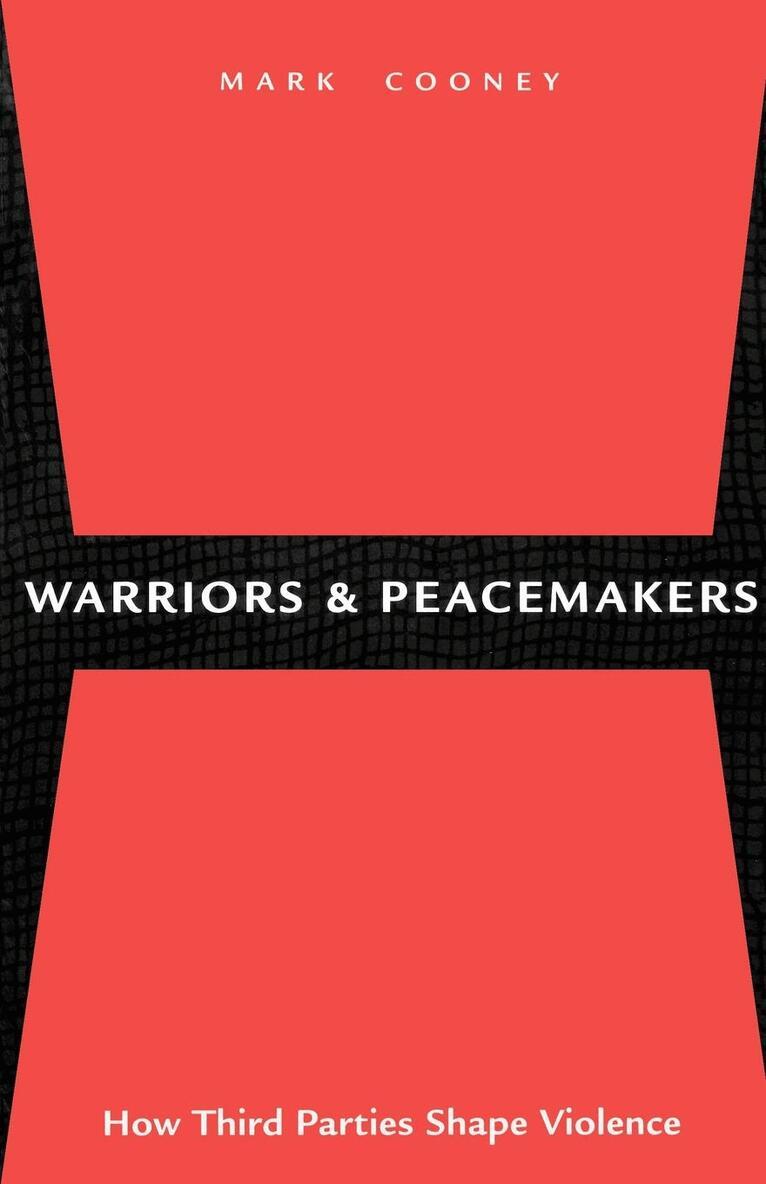
    Warriors and Peacemakers

    How Third Parties Shape Violence

    AvMark Cooney,Mark Cooney

    Häftad, Engelska, 1998

    377 kr

    Beställningsvara. Skickas inom 5-8 vardagar. Fri frakt över 249 kr.

    Fler format och utgåvor

    Inbunden

    952 kr

    Beskrivning

    Why do some conflicts escalate into violence while others dissipate harmlessly? Under what circumstances will people kill, and why?While homicide has been viewed largely in the pathological terms of "crime" and "deviance," violence, Mark Cooney contends, is a naturally-occurring form of conflict found throughout history and across cultures under certain social conditions. Cooney has analyzed the social control of homicide within and across over 30 societies and interviewed several dozens of prisoners incarcerated for murder or manslaughter, as well as members of their families. Violence such as homicide can only be understood, he argues, by transcending the traditional focus on the social characteristics of the killer and victims, and by looking at the role played by family members, friends, neighbors, onlookers, police officers, and judges. These third parties can be a source of peace or violence, depending on how they are configured in particular cases. Violence flourishes, Cooney demonstrates, when authority is either very strong or very weak and when third-party ties are strong and boundaries between groups sharply defined.Drawing on recent theory in the lively new sociological speciality of conflict management, Mark Cooney has culled a vast array of evidence from modern and preindustrial societies to provide us with the first general sociological analysis of human violence.

    Produktinformation

    • Utgivningsdatum:1998-04-01
    • Mått:152 x 229 x 15 mm
    • Vikt:318 g
    • Format:Häftad
    • Språk:Engelska
    • Antal sidor:222
    • Förlag:New York University Press
    • ISBN:9780814715673

    Utforska kategorier

    • Brottslighet och kriminologi inom Samhälle och politik
    • Våld och övergrepp inom Samhälle och politik

    Mer om författaren

    "Assistant Professor of Sociology at the University of Georgia, Mark Cooney holds a Ph.D. in Sociology from the University of Virginia and an S.J.D. from Harvard Law School.

    Recensioner i media

    "Cooney raises fundamental issues concerning the nature of the sociological enterprise in general and of the understanding of violence and conflict within society in particular. [He] is convincing in his demonstration that any understanding of violence and conflict within society must take into account the role of third parties (e.g., relatives, friends, neighbors, strangers, or legal officials) as a force for violence or peace." (Choice)