• Fri frakt över 249 kr
  • •
  • Snabba leveranser
  • •
  • Billiga böcker
Kundservice

Du är på sajten för privatpersoner.

Företag, bibliotek eller offentlig verksamhet?

Du handlar på classic.bokus.com, där alla dina funktioner finns intakta.
Till classic.bokus.com
Bokus logotyp. Gå till startsidan.
  • Erbjudanden
  • Nyheter
  • Student
  • Topplistor
  • Barn & ungdom
  • Bokus Play
  • E-böcker
  • Pocketböcker
  • Spel & pussel

10% rabatt på allt med kod: NYSTART10 →

Sidfot

Mina sidor

    Hjälp

    • Kundservice
    • Vanliga frågor och svar
    • Frakt och leverans
    • Retur vid ångerrätt
    • Reklamera vara
    • Betalning
    • Köpvillkor
    • Allmänna villkor
    • Information om webbplatsens tillgänglighet

    Om Bokus

    • Om oss
    • Pressrum
    • För studenter
    • För företag
    • För bibliotek och offentlig verksamhet
    • För leverantörer
    • Hållbarhet

    Populärt

    • Aktuella erbjudanden
    • Presentkort
    • Studentlitteratur
    • Nya böcker
    • Topplistor
    • Signerade böcker
    • Engelska böcker

    Inspiration

    • Boktips
    • BookTok
    • Populära bokserier
    • Barnbokskaraktärer
    • Populära författare
    Logotyp för Bokus
    Följ oss på Facebook (extern länk)Följ oss på Instagram (extern länk)Följ oss på YouTube (extern länk)Följ oss på TikTok (extern länk)
    bokus @ CookiesAnpassa cookiesIntegritetspolicyKöpvillkor
    Till Citymail hemsida (extern länk)Till Budbee hemsida (extern länk)Till Postnord hemsida (extern länk)Till Schenker hemsida (extern länk)Till Early Bird hemsida (extern länk)Till Walleys hemsida (extern länk)
    1. Samhälle och politik
    2. Social välfärd och brottslighet
    3. Brottslighet och kriminologi

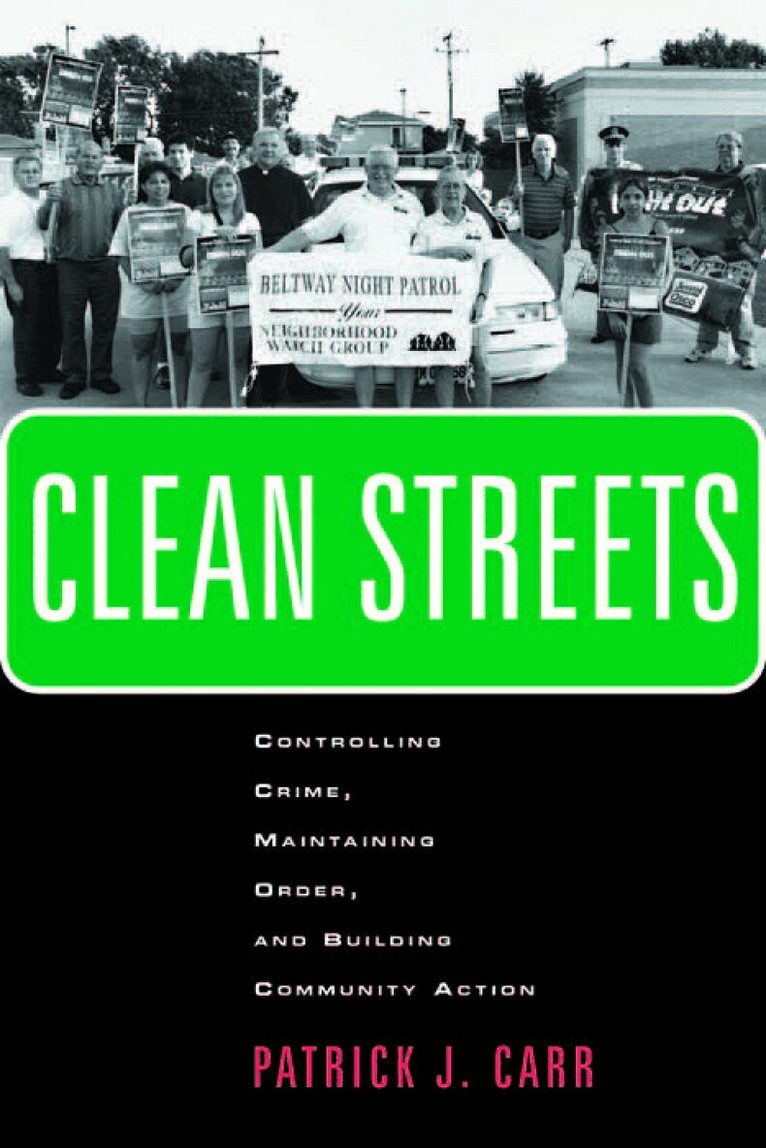
    Clean Streets

    Controlling Crime, Maintaining Order, and Building Community Activism

    AvPatrick J. Carr

    Häftad, Engelska, 2005

    Del i serien New Perspectives in Crime, Deviance, and Law

    376 kr

    Beställningsvara. Skickas inom 5-8 vardagar. Fri frakt över 249 kr.

    Fler format och utgåvor

    Inbunden

    951 kr

    Beskrivning

    With the close proximity of gangs and the easy access to drugs, keeping urban neighborhoods safe from crime has long been a central concern for residents. In Clean Streets, Patrick Carr draws on five years of research in a white, working-class community on Chicago's South side to see how they tried to keep their streets safe. Carr details the singular event for this community and the resulting rise of community activism: the shootings of two local teenage girls outside of an elementary school by area gang members. As in many communities struck by similar violence, the shootings led to profound changes in the community's relationship to crime prevention. Notably, their civic activism has proved successful and, years after the shooting, community involvement remains strong.Carr mines this story of an awakened neighborhood for unique insights, contributing a new perspective to the national debate on community policing, civic activism, and the nature of social control. Clean Streets offers an important story of one community's struggle to confront crime and to keep their homes safe. Their actions can be seen as a model for how other communities can face up to similarly difficult problems.

    Produktinformation

    • Utgivningsdatum:2005-12-01
    • Mått:152 x 229 x 6 mm
    • Vikt:318 g
    • Format:Häftad
    • Språk:Engelska
    • Serie:New Perspectives in Crime, Deviance, and Law
    • Antal sidor:209
    • Förlag:New York University Press
    • ISBN:9780814716632

    Utforska kategorier

    • Brottslighet och kriminologi inom Samhälle och politik

    Mer om författaren

    Patrick J. Carr is Assistant Professor of Sociology at Rutgers University.

    Recensioner i media

    "For citizen groups, this research provides compelling stories of how neighborhoods can come together to resolve serious problems; for police and government officials, it shows how they can partner with residents to create truly community-based efforts to curb violence; and, for researchers, it furnishes a synthesis of research and points to new hypotheses that can be tested." -Criminal Justice Review "In an era of declining civic involvement, persistent fear of crime, and cynicism about the efficacy of grassroots community action, Clean Streets offers a story of hope. Using his eye for detail, Carr examines how community residents respond to gang violence, graffiti and other forms of physical disorder, unresponsive judges, and problems at the corner tavern. Clean Streets offers an intriguing organizational framework for community members and public officials in their fight against crime, violence, and disorder." -John H. Laub,co-author of Shared Beginnings, Divergent Lives: Delinquent Boys to Age 70 "In sum, the core theoretical achievement of Clean Streets, the development of new concepts and ideas regarding successful social control at the local level, merits close attention from sociologists of various persuasions and with varied interests." -Margarethe Kusenbach,University of South Florida "Clean Streets will take its place alongside other outstanding community ethnographies in the tradition of the Chicago School. An engaging and insightful book that will be widely cited and discussed." -William Julius Wilson,author of When Work Disappears: The World of the New Urban Poor "Patrick Carr shows us that policing can have a stimulating effect; that communities can mobilize and restore their moral force with tolerance to others and with moderation. This ethnographic study should be read. It should give us hope." -Peter K. Manning,author of Police Work: The Social Organization of Policing

    Innehållsförteckning

    • Acknowledgments1 Introduction2 Welcome to Beltway 3 Getting Things Done: Civic Engagement in Action 4 Looks Like Trouble: Early Signs of Gangs and Violence 5 Gang Violence Can Happen Here: The Hastings Murders and Their Aftermath 6 Coming Together: Problem Solving and the Neighborhood Watch 7 Conclusion: Civic Activism and the New Parochialism Appendix: Getting In and Out of Beltway NotesReferences Index About the Author