• Fri frakt över 249 kr
  • •
  • Snabba leveranser
  • •
  • Billiga böcker
Kundservice

Du är på sajten för privatpersoner.

Företag, bibliotek eller offentlig verksamhet?

Du handlar på classic.bokus.com, där alla dina funktioner finns intakta.
Till classic.bokus.com
Bokus logotyp. Gå till startsidan.
  • Erbjudanden
  • Nyheter
  • Student
  • Topplistor
  • Barn & ungdom
  • Bokus Play
  • E-böcker
  • Pocketböcker
  • Spel & pussel

10% rabatt på allt med kod: NYSTART10 →

Sidfot

Mina sidor

    Hjälp

    • Kundservice
    • Vanliga frågor och svar
    • Frakt och leverans
    • Retur vid ångerrätt
    • Reklamera vara
    • Betalning
    • Köpvillkor
    • Allmänna villkor
    • Information om webbplatsens tillgänglighet

    Om Bokus

    • Om oss
    • Pressrum
    • För studenter
    • För företag
    • För bibliotek och offentlig verksamhet
    • För leverantörer
    • Hållbarhet

    Populärt

    • Aktuella erbjudanden
    • Presentkort
    • Studentlitteratur
    • Nya böcker
    • Topplistor
    • Signerade böcker
    • Engelska böcker

    Inspiration

    • Boktips
    • BookTok
    • Populära bokserier
    • Barnbokskaraktärer
    • Populära författare
    Logotyp för Bokus
    Följ oss på Facebook (extern länk)Följ oss på Instagram (extern länk)Följ oss på YouTube (extern länk)Följ oss på TikTok (extern länk)
    bokus @ CookiesAnpassa cookiesIntegritetspolicyKöpvillkor
    Till Citymail hemsida (extern länk)Till Budbee hemsida (extern länk)Till Postnord hemsida (extern länk)Till Schenker hemsida (extern länk)Till Early Bird hemsida (extern länk)Till Walleys hemsida (extern länk)
    1. Samhälle och politik
    2. Samhälle och kultur
    3. Sociala och etiska frågor

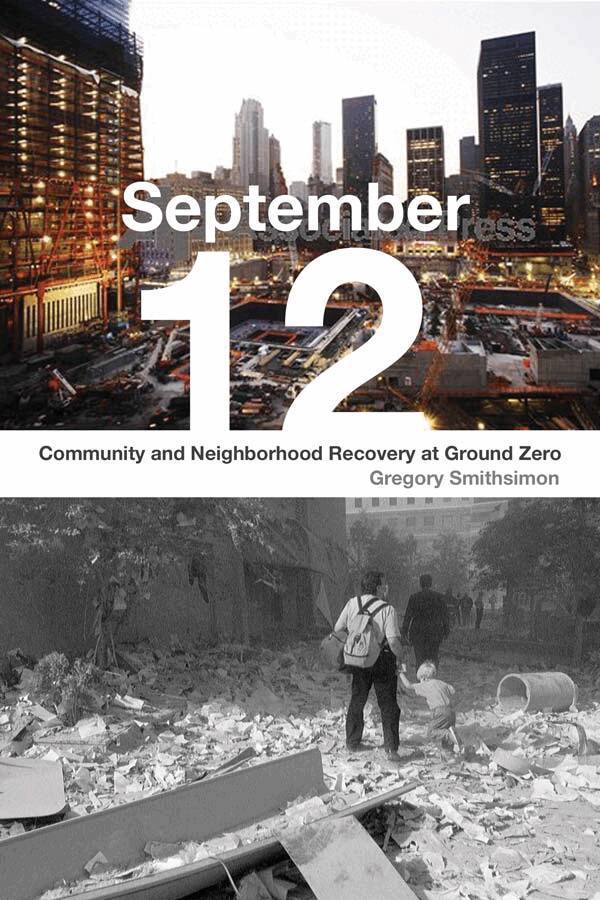
    September 12

    Community and Neighborhood Recovery at Ground Zero

    AvGregory Smithsimon

    Inbunden, Engelska, 2011

    951 kr

    Beställningsvara. Skickas inom 10-15 vardagar. Fri frakt över 249 kr.

    Fler format och utgåvor

    Häftad

    417 kr

    Beskrivning

    The collapse of the World Trade Center shattered windows across the street in Battery Park City, throwing the neighborhood into darkness and smothering homes in debris. Residents fled. In the months and years after they returned, they worked to restore their community. Until September 11, Battery Park City had been a secluded, wealthy enclave just west Wall Street, one with all the opulence of the surrounding corporate headquarters yet with a gated, suburban feel. After the towers fell it became the most visible neighborhood in New York. This ethnography of an elite planned community near the heart of New York City's financial district examines both the struggles and shortcomings of one of the city's wealthiest neighborhoods. In doing so, September 12 discovers the vibrant exclusivity that makes Battery Park City an unmatched place to live for the few who can gain entry. Focusing on both the global forces that shape local landscapes and the exclusion that segregates American urban development, Smithsimon shows the tensions at work as the neighborhood's residents mobilized to influence reconstruction plans. September 12 reveals previously unseen conflicts over the redevelopment of Lower Manhattan, providing a new understanding of the ongoing, reciprocal relationship between social conflicts and the spaces they both inhabit and create.

    Produktinformation

    • Utgivningsdatum:2011-10-01
    • Mått:153 x 229 x 21 mm
    • Vikt:578 g
    • Format:Inbunden
    • Språk:Engelska
    • Antal sidor:293
    • Förlag:New York University Press
    • ISBN:9780814740842

    Utforska kategorier

    • Sociala och etiska frågor inom Samhälle och politik
    • Sociala grupper och identitet inom Samhälle och politik

    Mer om författaren

    Gregory Smithsimon is Professor of Sociology at Brooklyn College and Graduate Center of the City University of New York. He is the author of September 12: Community and Neighborhood Recovery at Ground Zero, The Beach Beneath the Streets: Contesting New York City's Public Spaces, and Cause:…And How It Doesn't Always Equal Effect.

    Recensioner i media

    "A very successful academic micro-study of one community's response to our nation's greatest shock." (Library Journal) "A compelling ethnographic account of how residents of Battery Park City in lower Manhattan came together to heal and rebuild their community after the attack on the Twin Towers on September 11, 2011...commendable as a community study." (Contemporary Sociology) "Scientifically exacting and warmly personal, Smithsimon elucidates the residents struggles from survival to recovery, the coalescence of community groups, and the debates over redevelopment and the Ground Zero memorial. A well-illustrated, critical, yet sympathetic study of privilege and catastrophe that ultimately celebrates the vitality and diversity of a great city." (Booklist) "A valuable addition to the sociology of urban community development and inequality." - D. A Chekki (CHOICE) "In addition to providing a rich ethnographic account of a neighborhood very much in the public eye over the last decade, September 12 introduces several concepts worth of other scholars' attention and study." - Japonica Brown-Saracino (American Journal of Sociology) "A valuable study of economic privilege and spatial exclusion in the shadow of the Twin Towers and the heart of Americas biggest city." - Sharon Zukin,author of Naked City "Smithsimon explores a basic truth: just as there is no community without politics, there is no democratic politics without a multiplicity of spaces in which people can engage each other in debate. This is an outstanding ethnography of the micro-politics of daily life." - Robert Beauregard,author of When America Became Suburban "A fascinating book...[which] observes community life...through the prism of the months following 9/11." - Matthew Fenton (Broadsheet) "What hes really after in September 12, his account of the history of Battery Park City, is a broad analysis of residents political actions to defend their most unusual home...Much of Smithsimons account focuses on that gulf, both geographic and psychological, and the political mobilization of Battery Park Citys resident professionals to keep their neighborhood isolated from those who might wander in across forbidding West Street." - Alyssa Katz (The Nation)