• Fri frakt över 249 kr
  • •
  • Snabba leveranser
  • •
  • Billiga böcker
Kundservice

Du är på sajten för privatpersoner.

Företag, bibliotek eller offentlig verksamhet?

Du handlar på classic.bokus.com, där alla dina funktioner finns intakta.
Till classic.bokus.com
Bokus logotyp. Gå till startsidan.
  • Erbjudanden
  • Nyheter
  • Student
  • Topplistor
  • Barn & ungdom
  • Bokus Play
  • E-böcker
  • Pocketböcker
  • Spel & pussel

10% rabatt på allt med kod: NYSTART10 →

Sidfot

Mina sidor

    Hjälp

    • Kundservice
    • Vanliga frågor och svar
    • Frakt och leverans
    • Retur vid ångerrätt
    • Reklamera vara
    • Betalning
    • Köpvillkor
    • Allmänna villkor
    • Information om webbplatsens tillgänglighet

    Om Bokus

    • Om oss
    • Pressrum
    • För studenter
    • För företag
    • För bibliotek och offentlig verksamhet
    • För leverantörer
    • Hållbarhet

    Populärt

    • Aktuella erbjudanden
    • Presentkort
    • Studentlitteratur
    • Nya böcker
    • Topplistor
    • Signerade böcker
    • Engelska böcker

    Inspiration

    • Boktips
    • BookTok
    • Populära bokserier
    • Barnbokskaraktärer
    • Populära författare
    Logotyp för Bokus
    Följ oss på Facebook (extern länk)Följ oss på Instagram (extern länk)Följ oss på YouTube (extern länk)Följ oss på TikTok (extern länk)
    bokus @ CookiesAnpassa cookiesIntegritetspolicyKöpvillkor
    Till Citymail hemsida (extern länk)Till Budbee hemsida (extern länk)Till Postnord hemsida (extern länk)Till Schenker hemsida (extern länk)Till Early Bird hemsida (extern länk)Till Walleys hemsida (extern länk)
    1. Kultur
    2. Scenkonst och film
    3. Film

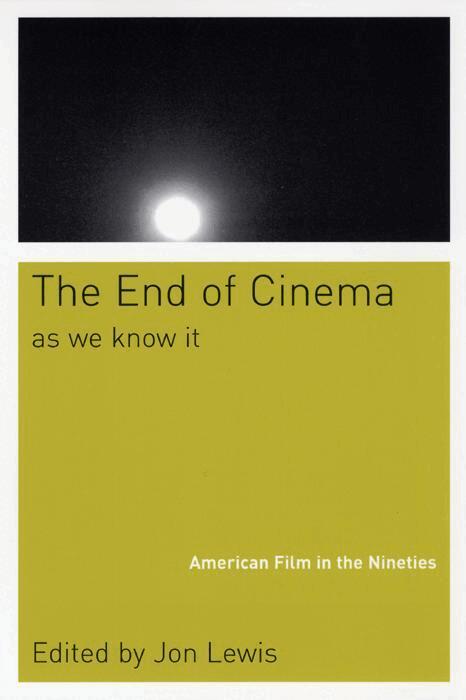
    End of Cinema As We Know It

    American Film in the Nineties

    AvCheryl Meyer,Michelle Oberman

    Inbunden, Engelska, 2001

    1 054 kr

    Beställningsvara. Skickas inom 10-15 vardagar. Fri frakt över 249 kr.

    Beskrivning

    Thirty-four essays that take a serious look at the state of modern cinemaAlmost half a century ago, Jean-Luc Godard famously remarked, "I await the end of cinema with optimism." Lots of us have been waiting forand wondering aboutthis prophecy ever since. The way films are made and exhibited has changed significantly. Films, some of which are not exactly "films" anymore, can now be projected in a wide variety of wayson screens in revamped high tech theaters, on big, high-resolution TVs, on little screens in minivans and laptops. But with all this new gear, all these new ways of viewing films, are we necessarily getting different, better movies?The thirty-four brief essays in The End of Cinema as We Know It attend a variety of topics, from film censorship and preservation to the changing structure and status of independent cinemafrom the continued importance of celebrity and stardom to the sudden importance of alternative video. While many of the contributors explore in detail the pictures that captured the attention of the nineties film audience, such as Jurassic Park, Eyes Wide Shut, South Park: Bigger, Longer and Uncut, The Wedding Banquet, The Matrix, Independence Day, Gods and Monsters, The Nutty Professor, and Kids, several essays consider works that fall outside the category of film as it is conventionally definedthe home "movie" of Pamela Anderson and Tommy Lee's honeymoon and the amateur video of the LAPD beating of Rodney King.Examining key films and filmmakers, the corporate players and industry trends, film styles and audio-visual technologies, the contributors to this volume spell out the end of cinema in terms of irony, cynicism and exhaustion, religious fundamentalism and fanaticism, and the decline of what we once used to call film culture.Contributors include: Paul Arthur, Wheeler Winston Dixon, Thomas Doherty, Thomas Elsaesser, Krin Gabbard, Henry Giroux, Heather Hendershot, Jan-Christopher Hook, Alexandra Juhasz, Charles Keil, Chuck Klienhans, Jon Lewis, Eric S. Mallin, Laura U. Marks, Kathleen McHugh, Pat Mellencamp, Jerry Mosher, Hamid Naficy, Chon Noriega, Dana Polan, Murray Pomerance, Hillary Radner, Ralph E. Rodriguez, R.L. Rutsky, James Schamus, Christopher Sharrett, David Shumway, Robert Sklar, Murray Smith, Marita Sturken, Imre Szeman, Frank P. Tomasulo, Maureen Turim, Justin Wyatt, and Elizabeth Young.

    Produktinformation

    • Utgivningsdatum:2001-12-01
    • Mått:152 x 229 x 25 mm
    • Vikt:658 g
    • Format:Inbunden
    • Språk:Engelska
    • Antal sidor:385
    • Förlag:New York University Press
    • ISBN:9780814751602

    Utforska kategorier

    • Film inom Kultur

    Mer om författaren

    Jon Lewis is Professor of English at Oregon State University where he has taught film and cultural studies since 1983. His books include Whom God Wishes to Destroy . . . Francis Coppola and the New Hollywood, The Road to Romance and Ruin: Teen Films and Youth Culture, and (as editor) The New American Cinema.

    Recensioner i media

    "The End of Cinema as We Know It: American Cinema in the Nineties, is an encouraging step in a new direction. In it, we find an impressive assembly of established as well as younger scholars grappling both with pop-film and industry concerns." (Cineaste) "The End of Cinema provides an enjoyable reading with a good balance of academic and popular qualities." (American Studies International,June 2002) "The End of Cinema As We Know It is at once academic and popular in the best sense of both terms-intelligent and erudite critical analysis conveyed through accessible and gracefully written prose. Just like the cinema of the '90s itself, this collection of thirty-four smart and sprightly essays refuses to be bound by traditional categories. Free from the homogenized consensus that too often results from the supposed advantage of historical distance, these broadly ranging essays on a period still fresh in our memory necessarily pose more questions than they answer. But they are good provocative questions and it is precisely this spirit of free-wheeling inquiry and fearless speculation that makes the book so enjoyable to read." - Robert Rosen,Dean of the UCLA School of Theater, Film, and Television "Brief on brilliant cocktail conversation? This reader-friendly collection will help you apply Foucault to Keanu, Derrida to Spielberg, Macbeth to Blair Witch, and pull it off with panache. Stimulating in small doses, its 34 essays deconstruct 1990s cinema, and the decade too, with intellectual vigor and a wry sense of humor." (Variety)