• Fri frakt över 249 kr
  • •
  • Snabba leveranser
  • •
  • Billiga böcker
Kundservice

Du är på sajten för privatpersoner.

Företag, bibliotek eller offentlig verksamhet?

Du handlar på classic.bokus.com, där alla dina funktioner finns intakta.
Till classic.bokus.com
Bokus logotyp. Gå till startsidan.
  • Erbjudanden
  • Nyheter
  • Student
  • Topplistor
  • Barn & ungdom
  • Bokus Play
  • E-böcker
  • Pocketböcker
  • Spel & pussel

10% rabatt på allt med kod: NYSTART10 →

Sidfot

Mina sidor

    Hjälp

    • Kundservice
    • Vanliga frågor och svar
    • Frakt och leverans
    • Retur vid ångerrätt
    • Reklamera vara
    • Betalning
    • Köpvillkor
    • Allmänna villkor
    • Information om webbplatsens tillgänglighet

    Om Bokus

    • Om oss
    • Pressrum
    • För studenter
    • För företag
    • För bibliotek och offentlig verksamhet
    • För leverantörer
    • Hållbarhet

    Populärt

    • Aktuella erbjudanden
    • Presentkort
    • Studentlitteratur
    • Nya böcker
    • Topplistor
    • Signerade böcker
    • Engelska böcker

    Inspiration

    • Boktips
    • BookTok
    • Populära bokserier
    • Barnbokskaraktärer
    • Populära författare
    Logotyp för Bokus
    Följ oss på Facebook (extern länk)Följ oss på Instagram (extern länk)Följ oss på YouTube (extern länk)Följ oss på TikTok (extern länk)
    bokus @ CookiesAnpassa cookiesIntegritetspolicyKöpvillkor
    Till Citymail hemsida (extern länk)Till Budbee hemsida (extern länk)Till Postnord hemsida (extern länk)Till Schenker hemsida (extern länk)Till Early Bird hemsida (extern länk)Till Walleys hemsida (extern länk)
    1. Skönlitteratur
    2. Litteraturvetenskap
    3. Litteraturvetenskap

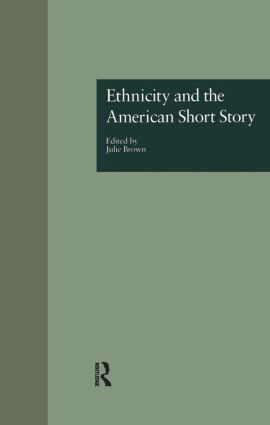
    Ethnicity and the American Short Story

    AvJulie Brown

    Inbunden, Engelska, 1997

    Del i serien Wellesley Studies in Critical Theory, Literary History and Culture

    2 784 kr

    Beställningsvara. Skickas inom 10-15 vardagar. Fri frakt över 249 kr.

    Beskrivning

    How do different ethnic groups approach the short story form? Do different groups develop culture-related themes? Do oral traditions within a particular culture shape the way in which written stories are told? Why does the community loom so large in ethnic stories? How do such traditional forms as African American slave narratives or the Chinese talk-story shape the modern short story? Which writers of color should be added to the canon? Why have some minority writers been ignored for such a long time? How does a person of color write for white publishers, editors, and readers?Each essay in this collection of original studies addresses these questions and other related concerns. It is common knowledge that most scholarly work on the short story has been on white writers: This collection is the first work to specifically focus on short story practice by ethnic minorities in America, ranging from African Americans to Native Americans, Chinese Americans to Hispanic Americans. The number of women writers discussed will be of particular interest to women studies and genre studies researchers, and the collections will be of vital interest to scholars working in American literature, narrative theory, and multicultural studies.

    Produktinformation

    • Utgivningsdatum:1997-08-01
    • Mått:138 x 216 x 18 mm
    • Vikt:476 g
    • Format:Inbunden
    • Språk:Engelska
    • Serie:Wellesley Studies in Critical Theory, Literary History and Culture
    • Antal sidor:252
    • Förlag:Taylor & Francis Inc
    • ISBN:9780815321057

    Utforska kategorier

    • Litteraturvetenskap inom Skönlitteratur

    Recensioner i media

    "Engrossing to...those studying American literature and its evolution, and those involved in ethnic studies programs." -- The Bookwatch

    Innehållsförteckning

    • Chapter 1 Identity in Community in Ethnic Short Story Cycles: Amy Tan's The Joy Luck Club, Louise Erdrich's Love Medicine, Gloria Naylor's The Women of Brewster Place, Rocío G. Davis; Chapter 2 Marking Race/Marketing Race: African American Short Fiction and the Politics of Genre, 1933-1946, Bill Mullen; Chapter 3 Womanist Storytelling: The Voice of the Vernacular, Madelyn Jablon; Chapter 4 A Minor Revolution: Chicano/a Composite Novels and the Limits of Genre, Margot Kelley; Chapter 5 Resistance and Reinvention in Sandra Cisneros' Woman Hollering Creek, Susan E. Griffin; Chapter 6 Healing Ceremonies: Native American Stories of Cultural Survival, Linda Palmer; Chapter 7 Asian American Short Stories: Dialogizing the Asian American Experience, Qun Wang; Chapter 8 The Invention of Normality in Japanese American Internment Narratives, John Streamas; Chapter 9 No Types of Ambiguity: Teaching Chinese American Texts in Hong Kong, Hardy C. Wilcoxon; Chapter 10 “Wavering” Images: Mixed-Race Identity in the Stories of Edith Eaton/Sui Sin Far, Carol Roh-Spaulding; Chapter 11 Resistance and Reclamation: Hawaii “Pidgin English” and Autoethnography in the Short Stories of Darrell H. Y. Lum, Gail Y. Okawa; Chapter 12 Conflict over Privacy in Indo-American Short Fiction, Laurie Leach; Chapter 13 Re-Orienting the Subject: Arab American Ethnicity in Ramzi M. Salti's The Native Informant: Six Tales of Defiance from the Arab World, Chris Wise; Chapter 14 The Naming of Katz: Who Am I? Who Am I Supposed to Be? Who Can I Be? Passing, Assimilation, and Embodiment in Short Fiction by Fannie Hurst and Thyra Samter Winslow with a Few Jokes Thrown in and Various References to Other Others, Susan Koppelman;