• Fri frakt över 249 kr
  • •
  • Snabba leveranser
  • •
  • Billiga böcker
Kundservice

Du är på sajten för privatpersoner.

Företag, bibliotek eller offentlig verksamhet?

Du handlar på classic.bokus.com, där alla dina funktioner finns intakta.
Till classic.bokus.com
Bokus logotyp. Gå till startsidan.
  • Erbjudanden
  • Nyheter
  • Student
  • Topplistor
  • Barn & ungdom
  • Bokus Play
  • E-böcker
  • Pocketböcker
  • Spel & pussel

10% rabatt på allt med kod: NYSTART10 →

Sidfot

Mina sidor

    Hjälp

    • Kundservice
    • Vanliga frågor och svar
    • Frakt och leverans
    • Retur vid ångerrätt
    • Reklamera vara
    • Betalning
    • Köpvillkor
    • Allmänna villkor
    • Information om webbplatsens tillgänglighet

    Om Bokus

    • Om oss
    • Pressrum
    • För studenter
    • För företag
    • För bibliotek och offentlig verksamhet
    • För leverantörer
    • Hållbarhet

    Populärt

    • Aktuella erbjudanden
    • Presentkort
    • Studentlitteratur
    • Nya böcker
    • Topplistor
    • Signerade böcker
    • Engelska böcker

    Inspiration

    • Boktips
    • BookTok
    • Populära bokserier
    • Barnbokskaraktärer
    • Populära författare
    Logotyp för Bokus
    Följ oss på Facebook (extern länk)Följ oss på Instagram (extern länk)Följ oss på YouTube (extern länk)Följ oss på TikTok (extern länk)
    bokus @ CookiesAnpassa cookiesIntegritetspolicyKöpvillkor
    Till Citymail hemsida (extern länk)Till Budbee hemsida (extern länk)Till Postnord hemsida (extern länk)Till Schenker hemsida (extern länk)Till Early Bird hemsida (extern länk)Till Walleys hemsida (extern länk)
    1. Kultur
    2. Arkitektur

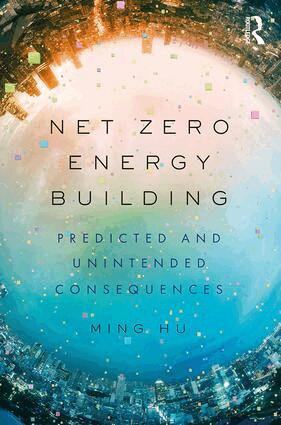
    Net Zero Energy Building

    Predicted and Unintended Consequences

    AvMing Hu

    Inbunden, Engelska, 2019

    2 495 kr

    Beställningsvara. Skickas inom 10-15 vardagar. Fri frakt över 249 kr.

    Fler format och utgåvor

    Häftad

    600 kr

    E-bok

    710 kr

    E-bok

    708 kr

    Beskrivning

    What do we mean by net zero energy? Zero operating energy? Zero energy costs? Zero emissions? There is no one answer: approaches to net zero building vary widely across the globe and are influenced by different environmental and cultural contexts.Net Zero Energy Building: Predicted and Unintended Consequences presents a comprehensive overview of variations in 'net zero' building practices. Drawing on examples from countries such as the United States, United Kingdom, Germany, Japan, Hong Kong, and China, Ming Hu examines diverse approaches to net zero and reveals their intended and unintended consequences. Existing approaches often focus on operating energy: how to make buildings more efficient by reducing the energy consumed by climate control, lighting, and appliances. Hu goes beyond this by analyzing overall energy consumption and environmental impact across the entire life cycle of a building—ranging from the manufacture of building materials to transportation, renovation, and demolition. Is net zero building still achievable once we look at these factors?With clear implications for future practice, this is key reading for professionals in building design, architecture, and construction, as well as students on sustainable and green architecture courses.

    Produktinformation

    • Utgivningsdatum:2019-04-16
    • Mått:156 x 234 x 12 mm
    • Vikt:440 g
    • Format:Inbunden
    • Språk:Engelska
    • Antal sidor:162
    • Förlag:Taylor & Francis Inc
    • ISBN:9780815367796

    Utforska kategorier

    • Arkitektur inom Kultur
    • Byggnadsteknik inom Naturvetenskap och teknik

    Mer om författaren

    Ming Hu is an Assistant Professor at the School of Architecture, Planning and Preservation, University of Maryland, USA. She teaches technology courses which focus on the integration of architectural design with structural, materials, and building performance assessment. She is an architectural practitioner, educator, and researcher with expertise in high-performance building design, life cycle assessment, building performance measurement, and benchmarking. She has more than 14 years’ experience of working on international high-profile projects in firms including HOK’s Washington, DC office. Her background includes training in the architectural discipline and years of practice across disciplines, which gives her a unique perspective and ability to weave these fields together in her research.

    Recensioner i media

    "Ming Hu has not only given us the history of net-zero buildings and a detailed analysis of their design, but has taken net-zero to the next logical level, demanding "zero-impact" building."Dr. William W. Braham, FAIA, University of Pennsylvania"The need for increasingly aggressive energy efficiency goals parallels the rising need to curb greenhouse gas emissions. Carbon Neutrality has given way to Net Zero, a simple standard which Professor Ming Hu lucidly explains in its many achievable and some complex variations. This book will help policy makers pick an interpretation which is both effective and achievable; an essential accessory for this next phase of green design and building."Ralph Bennett, FAIA, LEED AP (BD&C), Bennett Frank McCarthy Architects, Inc"Net Zero Building provides practitioners and policymakers the critical expertise and motivation needed for a net zero future in architecture and urbanism. Clear and illustrated chapters provide us with critical expertise on the definitions, the drivers, the quantification, and the innovations that will ensure zero impact through the full life cycle of the built environment. Ming Hu has created an irreplaceable reference for our shared future."Vivian Loftness, FAIA, University Professor and Paul Mellon Chair in Architecture, Carnegie Mellon University"The pitfalls of ecological construction are thus dealt with excellently in a concise manner."Rijkert Knoppers, www.technischweekblad.nl Net Zero Energy Building by Professor Ming Hu covers a wide range of issues and aspects related to net zero energy building… It is informative, inspiring, and handy for readers when they can find various definitions and illustrative examples placed side by side with supplemental technical information. The insightful discussions on the benefits and unintended consequences of zero net building allow readers to fully grasp the complexity of the phenomenon… This is a rather motivating and idea-packed book. It is a great source of information for policy-makers, design professionals, researchers, scholars, and college students. Yimin Zhu, Ph.D. Professor, Department of Construction Management, Louisiana State University

    Innehållsförteckning

    • Table of Contents Acknowledgements ForewordPrefaceChapter One: The Evolution of Net-Zero Energy Building Background and ecological origin – ecological economics1930-1969 Early Solar House1970-1989 First energy crisis and the emerge of net-zero energy building 1990-2006 Second Energy Crisis and The Consensus of Net-Zero Energy Building2076-2010 Finical Crisis and Rapid Development of Net-Zero Energy Building 2010–2016 Financial Recovery and Blooming Net-Zero Energy Building 2017–Beyond Net-Zero Energy Building Conclusion Chapter Two: Principles of Zero: Metrics and AssessmentExisting Definition of Net-Zero Energy Building The equation behind the definitionsExisting energy calculation method Metrics and Measurement Tools Conclusion Chapter Three: Predicted Impact of Net Zero Building Trends and Opportunities Direct Benefits of Net-Zero BuildingIndirect Benefits Culture-Social Shift – Impact on CommunityConclusion Chapter Four: Unintended Consequences Net Zero Building – from a life cycle perspectiveNet Energy and Its Ecological Economics OriginUnintended Consequence One: environmental impact associated with embodied energy Unintended Consequence Two: societal impact - more sprawl and green life style? Unintended Consequence Three: ecological degradation Conclusion Chapter Five: Future Drivers and EconomicsEnvironmental Drivers Regulatory Drivers: mandates, regulations and incentivesHuman Health Drivers Technology Drivers Economic Drivers Conclusion Chapter Six: Advanced Building Materials and Systems- Smart Green BuildingNanomaterialPhase Changing Material Smart Systems: Advanced Building Envelope Fabric Materials Conclusion Chapter Seven: Zero-Impact Building – new framework based on life cycle assessment Problems of Existing net zero definition Additional Impact Indicators Proposed definition of net zero impact building – from life cycle perspective Proposed measurement and evaluation framework for net zero impact building Conclusion Chapter Eight: Future Development – A Case Study Introduction Carbon Neutral Built Environment and CityThree Case Studies Conclusion