• Fri frakt över 249 kr
  • •
  • Snabba leveranser
  • •
  • Billiga böcker
Kundservice

Du är på sajten för privatpersoner.

Företag, bibliotek eller offentlig verksamhet?

Du handlar på classic.bokus.com, där alla dina funktioner finns intakta.
Till classic.bokus.com
Bokus logotyp. Gå till startsidan.
  • Erbjudanden
  • Student
  • Topplistor
  • Barn & ungdom
  • Bokus Play
  • E-böcker
  • Ljudböcker
  • Pocketböcker
  • Spel och pussel

5% studentrabatt – använd koden KURSBOK27 →

Sidfot

Mina sidor

    Hjälp

    • Kundservice
    • Vanliga frågor och svar
    • Frakt och leverans
    • Retur vid ångerrätt
    • Reklamera vara
    • Betalning
    • Köpvillkor
    • Allmänna villkor
    • Information om webbplatsens tillgänglighet

    Om Bokus

    • Om oss
    • Pressrum
    • För studenter
    • För företag
    • För bibliotek och offentlig verksamhet
    • För leverantörer
    • Hållbarhet

    Populärt

    • Aktuella erbjudanden
    • Presentkort
    • Studentlitteratur
    • Nya böcker
    • Topplistor
    • Signerade böcker
    • Engelska böcker

    Inspiration

    • Boktips
    • BookTok
    • Barnbokskaraktärer
    • Populära författare
    Logotyp för Bokus
    Följ oss på Facebook (extern länk)Följ oss på Instagram (extern länk)Följ oss på YouTube (extern länk)Följ oss på TikTok (extern länk)
    bokus @ CookiesAnpassa cookiesIntegritetspolicyKöpvillkor
    Till Citymail hemsida (extern länk)Till Budbee hemsida (extern länk)Till Postnord hemsida (extern länk)Till Schenker hemsida (extern länk)Till Early Bird hemsida (extern länk)Till Walleys hemsida (extern länk)
    1. Historia och arkeologi
    2. Arkeologi

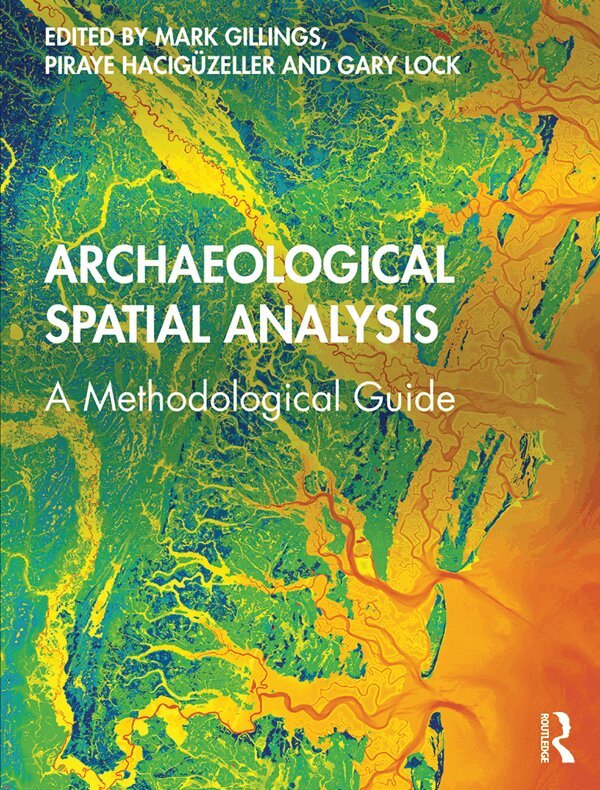
    Archaeological Spatial Analysis

    A Methodological Guide

    AvMark Gillings,Piraye Hacıgüzeller

    Häftad, Engelska, 2020

    621 kr

    . Fri frakt över 249 kr.

    Beskrivning

    Effective spatial analysis is an essential element of archaeological research; this book is a unique guide to choosing the appropriate technique, applying it correctly and understanding its implications both theoretically and practically. Focusing upon the key techniques used in archaeological spatial analysis, this book provides the authoritative, yet accessible, methodological guide to the subject which has thus far been missing from the corpus. Each chapter tackles a specific technique or application area and follows a clear and coherent structure. First is a richly referenced introduction to the particular technique, followed by a detailed description of the methodology, then an archaeological case study to illustrate the application of the technique, and conclusions that point to the implications and potential of the technique within archaeology. The book is designed to function as the main textbook for archaeological spatial analysis courses at undergraduate and post-graduate level, while its user-friendly structure makes it also suitable for self-learning by archaeology students as well as researchers and professionals.

    Produktinformation

    • Utgivningsdatum:2020-01-29
    • Mått:189 x 246 x 26 mm
    • Vikt:1 430 g
    • Format:Häftad
    • Språk:Engelska
    • Antal sidor:512
    • Förlag:Taylor & Francis Inc
    • ISBN:9780815373230

    Utforska kategorier

    • Arkeologi inom Historia och arkeologi

    Mer om författaren

    Mark Gillings is a Professor of Archaeology in the Department of Archaeology & Anthropology at Bournemouth University. His research interests concentrate upon the productive spaces that emerge through the integrated study of landscape, archaeological theory and digital archaeology, with a particular focus upon the potentials of all things geospatial and virtual. Much of his recent research has centred upon the prehistoric landscapes of south-western Britain, and the relationships that animated the complex, multi-scalar motleys of monumental structures and traces of everyday dwelling that characterise this region. Piraye Hacıgüzeller is a senior postdoctoral researcher at the Ghent Centre for Digital Humanities and the Archaeology Department of Ghent University. Her research interests are the theory and practice of digital archaeology and, more generally, digital humanities, specifically in the cases of geospatial data visualisation, management and analysis. She is the co-editor of a recent book on archaeological mapping, Re-mapping Archaeology: Critical Perspectives, Alternative Mappings (Routledge, 2018).Gary Lock is Emeritus Professor of Archaeology at the University of Oxford where he has spent 35 years teaching and researching several areas of archaeology. One of his specialisms is the British Iron Age, especially hillforts, and he was Co-PI of the Atlas of Hillforts of Britain and Ireland. His other main area of interest is computer applications in archaeology, especially GIS and spatial archaeology, in which he has published several books. He has recently retired as Chair of the Computer Applications in Archaeology conference.

    Recensioner i media

    "[The book] will be a welcome addition to libraries and bookshelves in both academia and heritage practice." - Will Megarry, Journal of Irish Archaeology

    Innehållsförteckning

    • List of figures. List of tables. List of contributors. 1. Archaeology and spatial analysis. 2. Preparing archaeological data for spatial analysis. 3. Spatial sampling. 4. Spatial point patterns and processes. 5. Percolation analysis. 6. Geostatistics and spatial structure in archaeology. 7. Spatial interpolation. 8. Spatial applications of correlation and linear regression. 9. Non-stationarity and local spatial analysis. 10. Spatial fuzzy sets. 11. Spatial approaches to assignment. 12. Analysing regional environmental relationships. 13. Predictive spatial modelling. 14. Spatial agent-based modelling. 15. Spatial networks. 16. Space syntax methodology. 17. GIS-based visibility analysis. 18. Spatial analysis based on cost functions. 19. Processing and analysing satellite data. 20. Processing and analysing geophysical data. 21. Space and time. 22. Challenges in the analysis of geospatial ‘Big Data’. 23. The analytical role of 3D realistic computer graphics. 24. Spatial data visualisation and beyond. Index.