Gary Lock – författare
Visar alla böcker från författaren Gary Lock. Handla med fri frakt och snabb leverans.
25 produkter
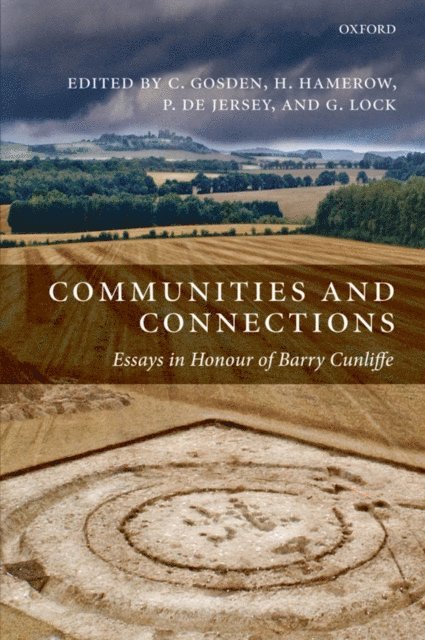
Communities and Connections
Essays in Honour of Barry Cunliffe
Av Gary Lock, Philip de Jersey m. fl.
E-bok, 2007
1964 kr
Lägg i varukorg
For almost forty years the study of the Iron Age in Britain has been dominated by Professor Sir Barry Cunliffe. Between the 1960s and 1980s he led a series of large-scale excavations at famous sites including the Roman baths at Bath, Fishbourne Roman palace, and Danebury hillfort which …
Communities and Connections
Essays in Honour of Barry Cunliffe
Av ET AL GOSDEN, Chris Gosden m. fl.
Inbunden, 2007
3083 kr
Lägg i varukorg
For almost forty years the study of the Iron Age in Britain has been dominated by Professor Sir Barry Cunliffe. Between the 1960s and 1980s he led a series of large-scale excavations at famous sites including the Roman baths at Bath, Fishbourne Roman palace, and Danebury hillfort which …
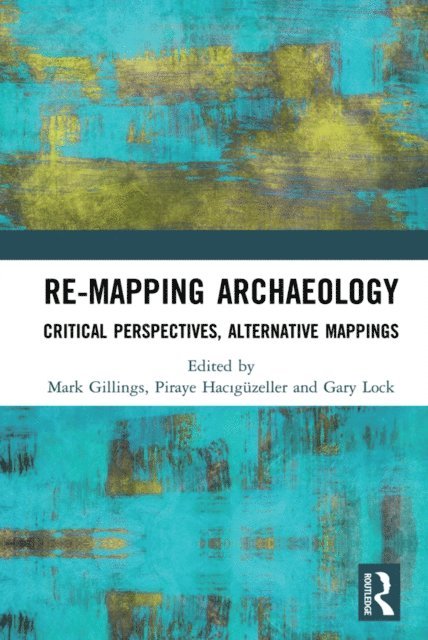
Re-Mapping Archaeology
Critical Perspectives, Alternative Mappings
Av Mark Gillings, Piraye Hacıgüzeller m. fl.
Häftad, 2020
725 kr
Lägg i varukorg
Maps have always been a fundamental tool in archaeological practice, and their prominence and variety have increased along with a growing range of digital technologies used to collect, visualise, query and analyse spatial data. However, unlike in other disciplines, the development of archaeological …
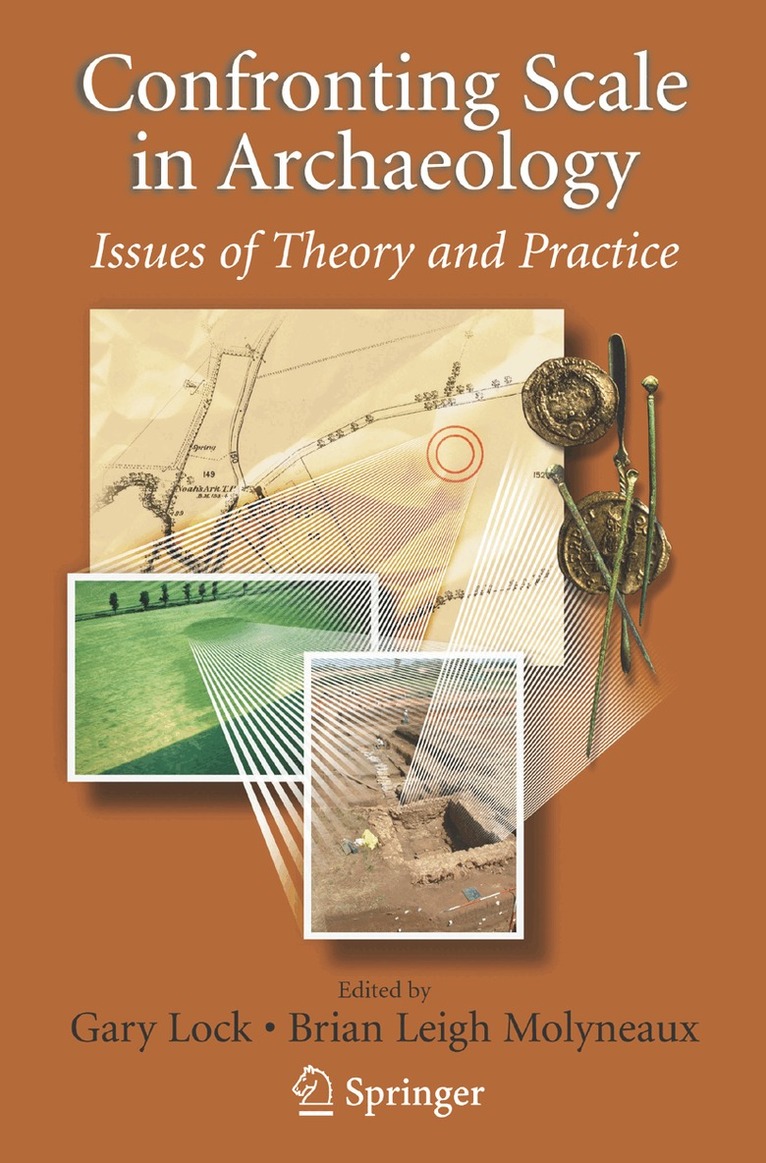
Confronting Scale in Archaeology
Issues of Theory and Practice
Inbunden, 2006
1126 kr
Lägg i varukorg
Archaeological analysis operates on a continuum of scale from the microscopic analysis of a single artifact to regional interpretations of cultural adaptations over thousands of years. A common assumption is that shifting from one scale to another in space and time is a seamless process. Scale in …
Confronting Scale in Archaeology
Issues of Theory and Practice
E-bok, 2006
755 kr
Lägg i varukorg
Archaeological analysis operates on a continuum of scale from the microscopic analysis of a single artifact to regional interpretations of cultural adaptations over thousands of years. A common assumption is that shifting from one scale to another in space and time is a seamless process. Scale in …
Confronting Scale in Archaeology
Issues of Theory and Practice
Häftad, 2007
567 kr
Lägg i varukorg
Archaeological analysis operates on a continuum of scale from the microscopic analysis of a single artifact to regional interpretations of cultural adaptations over thousands of years. A common assumption is that shifting from one scale to another in space and time is a seamless process. Scale in …
Using Computers in Archaeology
Towards Virtual Pasts
Av Gary Lock
Inbunden, 2003
2591 kr
Lägg i varukorg
Today, archaeologists are spending more and more time examining the past with the aid of computers. How does this increased dependence on technology affect the theory and practice of archaeology?Using Computers in Archaeology is a comprehensive review of computer applications in archaeology from …
Using Computers in Archaeology
Towards Virtual Pasts
Av Gary Lock
Häftad, 2003
788 kr
Lägg i varukorg
Today, archaeologists are spending more and more time examining the past with the aid of computers. How does this increased dependence on technology affect the theory and practice of archaeology?Using Computers in Archaeology is a comprehensive review of computer applications in archaeology from …
Archaeological Spatial Analysis
A Methodological Guide
Av Mark Gillings, Piraye Hacıgüzeller m. fl.
Inbunden, 2020
2591 kr
Lägg i varukorg
Effective spatial analysis is an essential element of archaeological research; this book is a unique guide to choosing the appropriate technique, applying it correctly and understanding its implications both theoretically and practically. Focusing upon the key techniques used in archaeological …
Archaeological Spatial Analysis
A Methodological Guide
Av Mark Gillings, Piraye Hacıgüzeller m. fl.
Häftad, 2020
654 kr
Lägg i varukorg
Effective spatial analysis is an essential element of archaeological research; this book is a unique guide to choosing the appropriate technique, applying it correctly and understanding its implications both theoretically and practically. Focusing upon the key techniques used in archaeological …
Computer Applications and Quantitative Methods in Archaeology 1991
Av Gary Lock, Jonathan Moffett
Häftad, 1992
938 kr
Lägg i varukorg
Using Computers in Archaeology
Towards Virtual Pasts
Av Gary Lock
E-bok, 2003
927 kr
Lägg i varukorg
Today, archaeologists are spending more and more time examining the past with the aid of computers. How does this increased dependence on technology affect the theory and practice of archaeology? Using Computers in Archaeology is a comprehensive review of computer applications in archaeology from …
Using Computers in Archaeology
Towards Virtual Pasts
Av Gary Lock
E-bok, 2003
907 kr
Lägg i varukorg
Today, archaeologists are spending more and more time examining the past with the aid of computers. How does this increased dependence on technology affect the theory and practice of archaeology? Using Computers in Archaeology is a comprehensive review of computer applications in archaeology from …
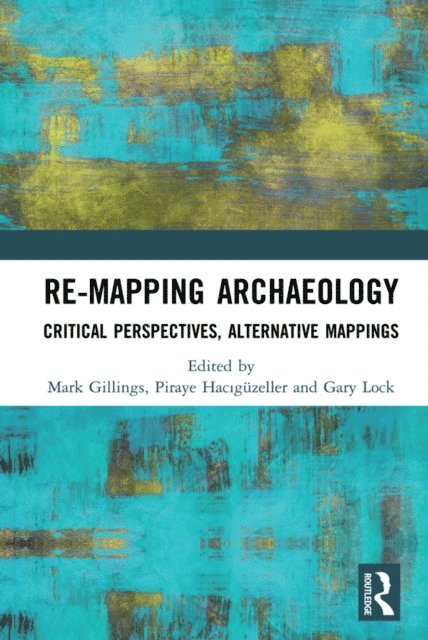
Re-Mapping Archaeology
Critical Perspectives, Alternative Mappings
Av Mark Gillings, Piraye Hacıgüzeller m. fl.
Inbunden, 2018
2591 kr
Lägg i varukorg
Maps have always been a fundamental tool in archaeological practice, and their prominence and variety have increased along with a growing range of digital technologies used to collect, visualise, query and analyse spatial data. However, unlike in other disciplines, the development of archaeological …
Archaeological Spatial Analysis
A Methodological Guide
Av Gary Lock, Piraye Haciguzeller m. fl.
E-bok, 2020
767 kr
Lägg i varukorg
Effective spatial analysis is an essential element of archaeological research; this book is a unique guide to choosing the appropriate technique, applying it correctly and understanding its implications both theoretically and practically. Focusing upon the key techniques used in archaeological …
Archaeological Spatial Analysis
A Methodological Guide
Av Gary Lock, Piraye Haciguzeller m. fl.
E-bok, 2020
767 kr
Lägg i varukorg
Effective spatial analysis is an essential element of archaeological research; this book is a unique guide to choosing the appropriate technique, applying it correctly and understanding its implications both theoretically and practically. Focusing upon the key techniques used in archaeological …
Re-Mapping Archaeology
Critical Perspectives, Alternative Mappings
Av Gary Lock, Piraye Haciguzeller m. fl.
E-bok, 2018
838 kr
Lägg i varukorg
Maps have always been a fundamental tool in archaeological practice, and their prominence and variety have increased along with a growing range of digital technologies used to collect, visualise, query and analyse spatial data. However, unlike in other disciplines, the development of archaeological …
Re-Mapping Archaeology
Critical Perspectives, Alternative Mappings
Av Gary Lock, Piraye Haciguzeller m. fl.
E-bok, 2018
856 kr
Lägg i varukorg
Maps have always been a fundamental tool in archaeological practice, and their prominence and variety have increased along with a growing range of digital technologies used to collect, visualise, query and analyse spatial data. However, unlike in other disciplines, the development of archaeological …
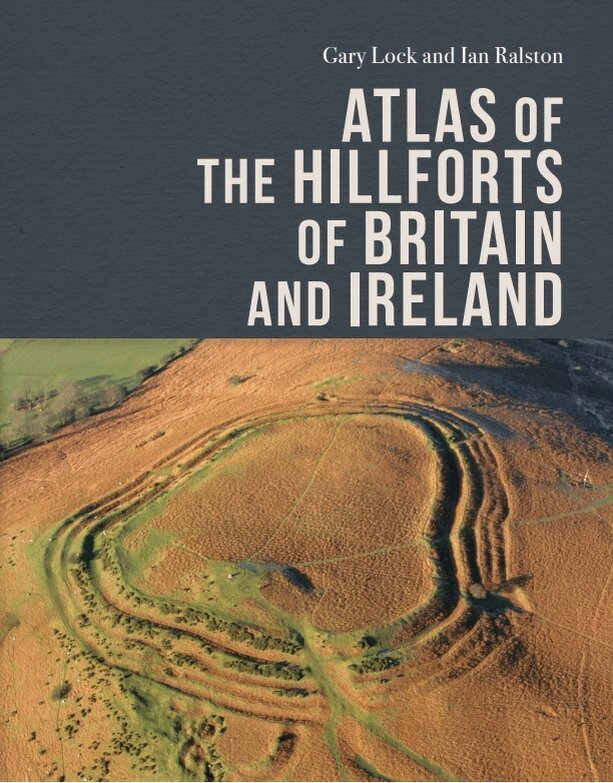
Atlas of the Hillforts of Britain and Ireland
Av Gary Lock, Ian B. M. Ralston
Inbunden, 2022
2342 kr
Lägg i varukorg
This book provides the first comprehensive series of maps of the hillforts of Britain and Ireland, with accompanying commentaries and broader overviews which interpret the survival and detection of this evidence in its later prehistoric and early historic contexts. The authors expertly assess and …
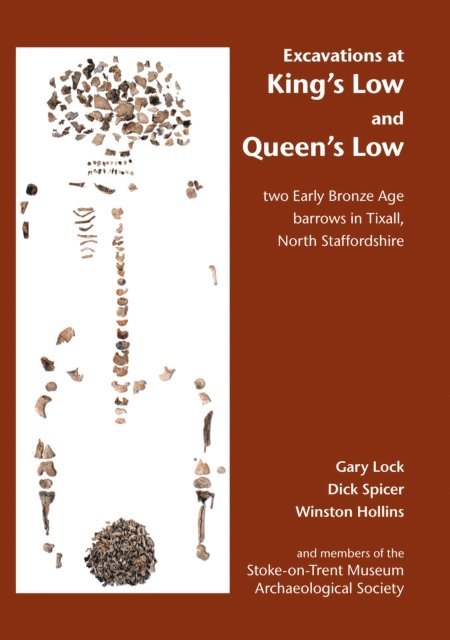
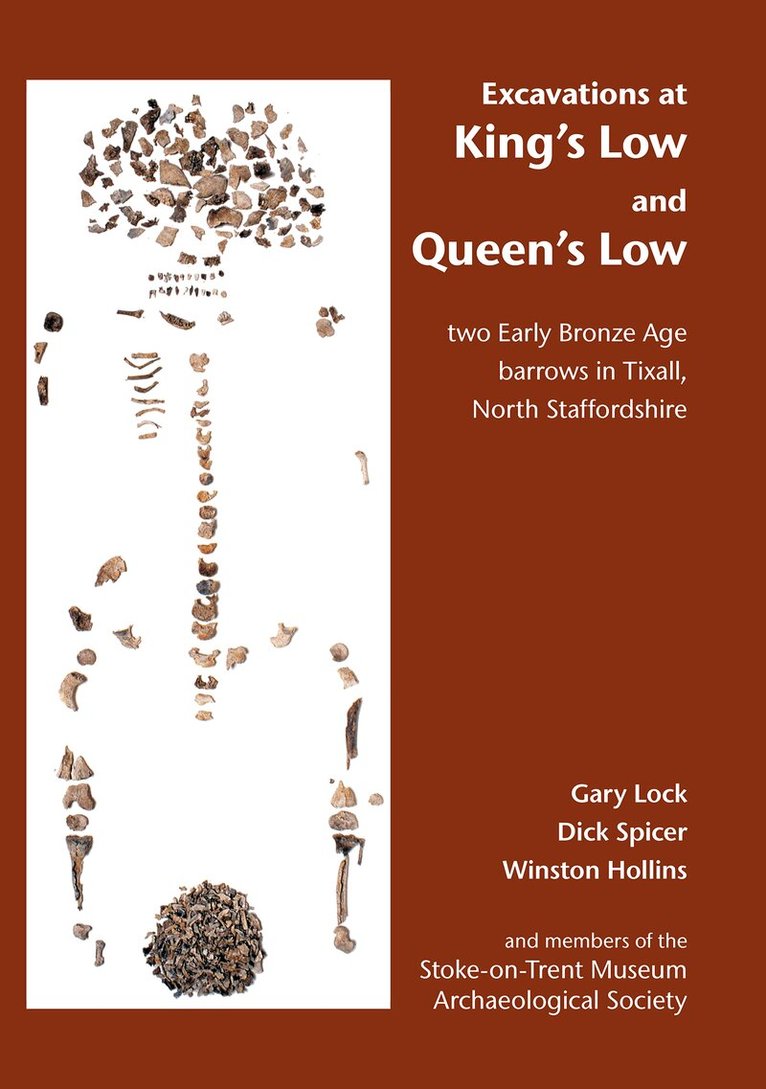
Excavations at King's Low and Queen's Low
Two Early Bronze Age barrows in Tixall, North Staffordshire
Av Wilson Hollins, Dick Spicer m. fl.
E-bok, 2014
230 kr
Lägg i varukorg
These two barrows in the parish of Tixall, north of Stafford, were excavated by the Stoke‐on‐Trent Museum Archaeological Society between the years 1986 and 1994. They are approximately one kilometre apart with King’s Low still extant but Queen’s Low badly damaged by ploughing. The results are …
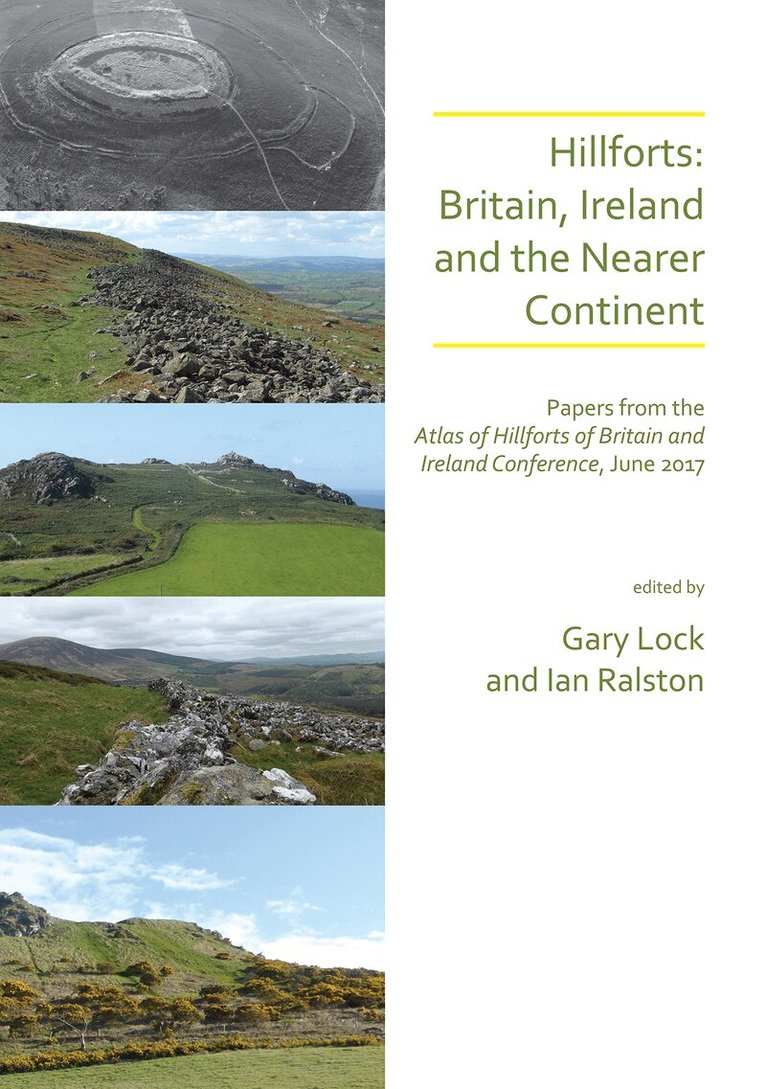
Hillforts: Britain, Ireland and the Nearer Continent
Papers from the Atlas of Hillforts of Britain and Ireland Conference, June 2017
Av Gary Lock, Ian Ralston
Häftad, 2019
715 kr
Lägg i varukorg
Funded by the AHRC, the Atlas of Hillforts of Britain and Ireland project (2012-2016) involved a team drawn from the Universities of Oxford, Edinburgh and Cork which was responsible for compiling a massive database, now freely available online at https://hillforts.arch.ox.ac, on hillforts in …
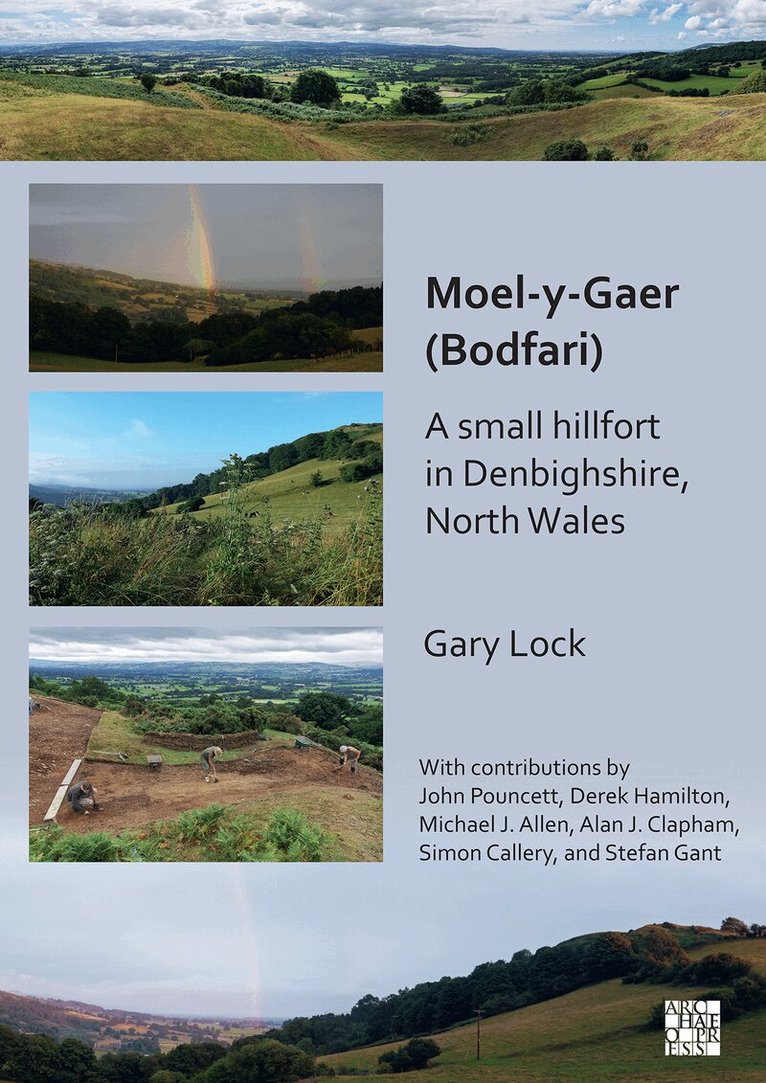
Moel-y-Gaer (Bodfari): A Small Hillfort in Denbighshire, North Wales
Av Gary Lock
Häftad, 2022
688 kr
Lägg i varukorg
Moel-y-Gaer (Bodfari) is the northernmost of a series of hillforts atop the Clwydian hills in north-eastern Wales. Nine seasons of survey and excavation have revealed details of Moel-y-Gaer’s ramparts, entrances and interior. This small hillfort started with a single rampart, later to be enlarged …
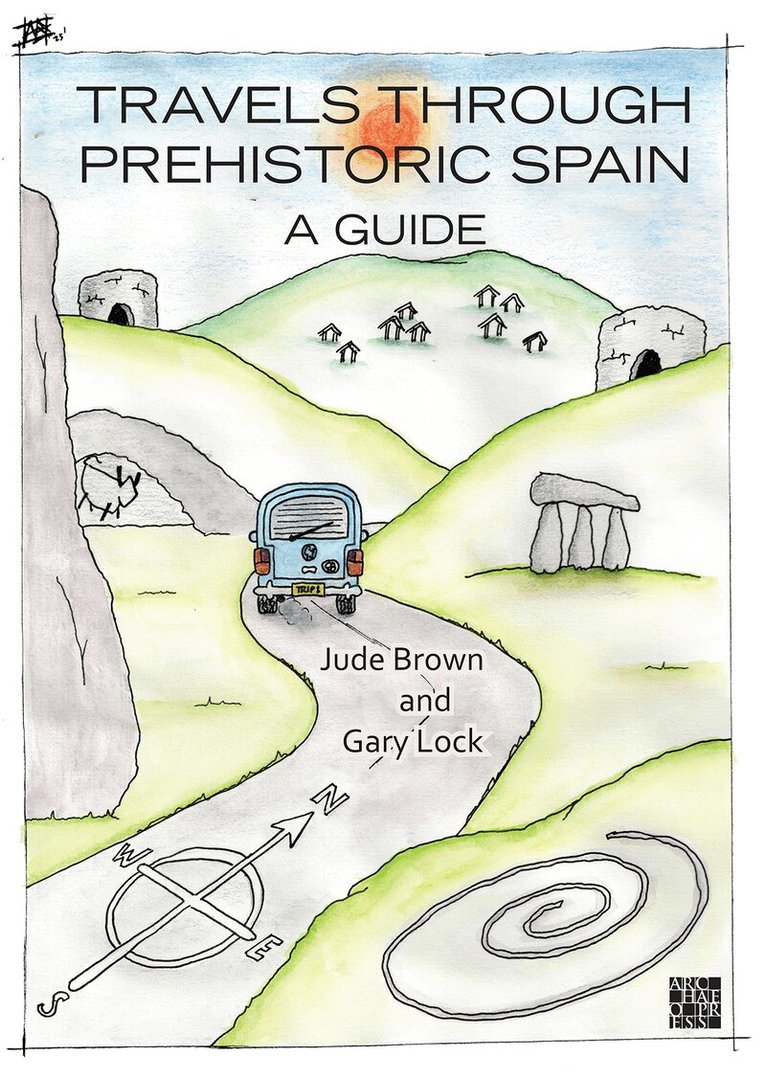
Travels through Prehistoric Spain: A Guide
Av Jude Brown, Gary Lock
Häftad, 2025
479 kr
Lägg i varukorg
Spain is a big country with many thousands of prehistoric monuments and associated museums. This guide provides information on a small number of the best ones. It details how to access over 220 prehistoric sites, museums and interpretation centres in many of Spain’s autonomous regions. It also …
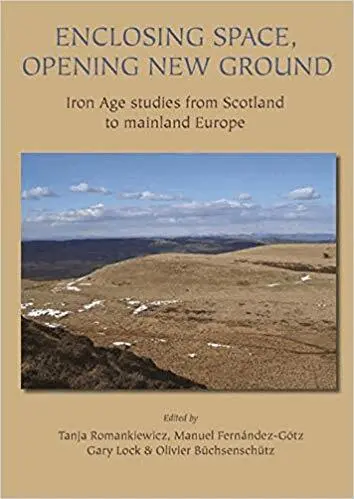
Enclosing Space, Opening New Ground
Iron Age Studies from Scotland to Mainland Europe
Av Tanja Romankiewicz, Manuel Fernández-Götz m. fl.
Inbunden, 2019
971 kr
Tillfälligt slut
Enclosures are among the most widely distributed features of the European Iron Age. From fortifications to field systems, they demarcate territories and settlements, sanctuaries and central places, burials and ancestral grounds. This dividing of the physical and the mental landscape between an …
Excavations at King's Low and Queen's Low
Two Early Bronze Age barrows in Tixall, North Staffordshire
Av Gary Lock, Dick Spicer m. fl.
Häftad, 2014
283 kr
Tillfälligt slut
These two barrows in the parish of Tixall, north of Stafford, were excavated by the Stoke‐on‐Trent Museum Archaeological Society between the years 1986 and 1994. They are approximately one kilometre apart with King’s Low still extant but Queen’s Low badly damaged by ploughing. The results are …